Skip to content
Planning a Uganda Safari with Kids can turn an ordinary family holiday into an exciting journey filled with wildlife, nature, culture and shared discovery. Uganda’s national parks offer opportunities to watch elephants, giraffes, lions, zebras, hippos, monkeys and colorful birds in their natural environments.
The country provides much more than traditional game drives. Families can take guided boat safaris, visit conservation centers, explore community projects, spend time beside Lake Bunyonyi and discover the landscapes surrounding the River Nile.
Uganda is also known for mountain gorillas and chimpanzees. However, these primate activities have strict minimum-age requirements. Gorilla tracking is reserved for visitors aged 15 and older, while chimpanzee activity rules vary by destination and program. Families traveling with younger children need well-organized alternative experiences.
The success of a family safari depends on pacing. Uganda is a relatively large country, and driving between national parks can take several hours. A family itinerary should include shorter travel days, regular breaks, comfortable accommodation and enough time for children to rest.
This guide explains the best destinations, age-appropriate activities, accommodation, health preparation, transportation, costs and sample itineraries for families visiting Uganda.
Is Uganda Suitable for a Family Safari?
Uganda can be an excellent family safari destination when the journey is planned around the children’s ages, interests and travel experience.
The country offers:
- Big-game viewing
- Guided boat safaris
- Forests and wetlands
- Birdwatching
- Primates
- Cultural learning
- Lakes and rivers
- Conservation education
- Family-friendly lodges
- Private safari vehicles
Uganda’s wildlife circuit is often less crowded than some better-known safari regions. Families may experience quieter game drives and smaller lodges.
However, parents should be prepared for long road transfers, changing road conditions, early activity times and limited specialist facilities in remote areas.
Why choose Uganda for a family holiday?
Uganda offers exceptional ecological variety. A family can move from the shores of Lake Victoria to savannah, rainforest, volcanic highlands and lakes within one holiday.
Children can learn about:
- Animal behavior
- Habitats
- Conservation
- Geography
- Local communities
- Rivers and wetlands
- Primates
- Birds
- Responsible tourism
An experienced private guide can explain these subjects in an engaging, age-appropriate way.
Which families will enjoy Uganda most?
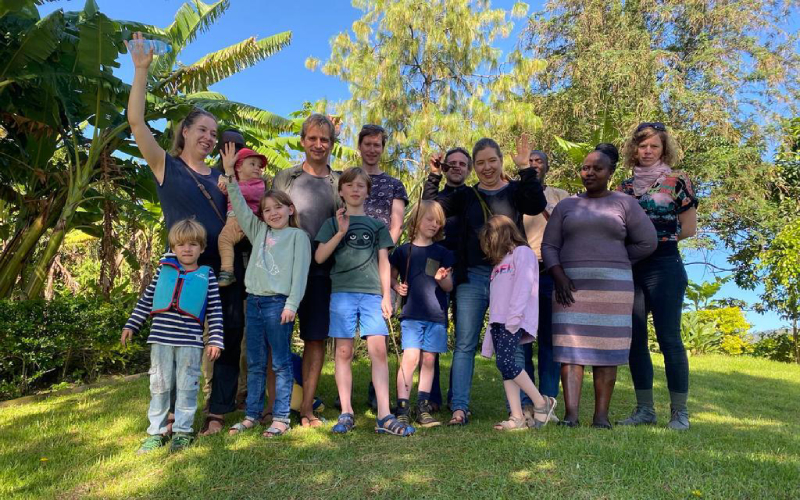
A Uganda family safari is particularly suitable for:
- Families interested in wildlife
- Children comfortable with road travel
- Teenagers who enjoy outdoor experiences
- Families looking for an educational holiday
- Multigenerational groups
- Families combining Rwanda and Uganda
- Parents seeking a private, customizable itinerary
Families whose children need constant entertainment, highly predictable schedules or extensive resort facilities should choose properties and routes carefully.
Best Ages for a Uganda Safari with Kids
There is no single perfect safari age. The right time depends on the child’s temperament, health, attention span and travel experience.
Traveling with babies and toddlers
A safari with babies or toddlers requires substantial planning.
Parents should consider:
- Car-seat availability
- Diaper and food supplies
- Heat
- Insects
- Medical access
- Long driving times
- Sleep routines
- Pool supervision
- Noise around wildlife
- Lodge fencing
Some safari lodges may not accept very young children, while others may restrict families to particular rooms.
Boat trips, long game drives and unfenced lodges require close adult supervision.
Children aged four to seven
Children in this age group can enjoy shorter game drives, pools, boat trips and watching easily recognizable animals.
Daily activities should remain relatively short. A four-hour game drive may be too long unless there are breaks.
Choose an itinerary with:
- Two- or three-night stays
- Shorter transfers
- Flexible private transport
- Family rooms
- Early dinners
- Rest time
- Simple wildlife activities
Children aged eight to twelve
This can be an excellent age for a first African safari. Children can understand guide explanations, use binoculars, identify animals and participate in suitable lodge programs.
They may enjoy:
- Game drives
- Boat cruises
- Bird checklists
- Nature interpretation
- Cultural activities
- Conservation centers
- Photography
- Lake excursions
Primate-tracking age restrictions still apply.
Teenagers
Teenagers can participate in a wider range of activities, subject to the rules of each park and provider.
Visitors aged 15 and older may qualify for gorilla tracking. Uganda Wildlife Authority rules set the minimum gorilla-tracking age at 15 and limit standard visits to eight people per gorilla family. Uganda Wildlife Authority gorilla rules
Teenagers may also enjoy longer wildlife drives, photography, community learning and appropriate guided walks.
Always verify minimum ages directly because different activities can have different requirements.
Best Destinations for a Uganda Safari with Kids
Uganda has ten national parks, but families do not need to visit all of them. A successful itinerary normally focuses on two to four well-matched destinations.
Entebbe: A Gentle Beginning
Entebbe is located beside Lake Victoria and close to Uganda’s international airport. It is a convenient place to spend the first or final night.
Starting in Entebbe allows children to recover from their flight before beginning a long journey.
Family activities may include:
- Botanical gardens
- Conservation-focused wildlife education
- Lake Victoria views
- Birdwatching
- Hotel swimming
- Relaxed meals
- Short boat excursions with suitable operators
Entebbe is generally a calmer starting point than driving directly into central Kampala after a long flight.
How long should families stay?
One or two nights are usually enough. Families arriving late should spend the following morning resting instead of immediately starting a full-day transfer.
Murchison Falls National Park
Murchison Falls National Park is Uganda’s largest national park. It combines savannah wildlife with the River Nile and the powerful Murchison Falls.
Family-friendly experiences include:
- Game drives
- Nile boat safaris
- Giraffes
- Elephants
- Buffaloes
- Antelopes
- Hippos
- Crocodiles
- Birdlife
- Scenic viewpoints
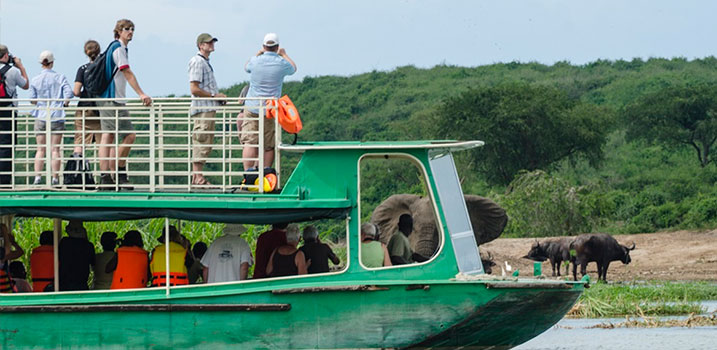
A boat safari can be particularly engaging for children because animals and birds appear at regular intervals along the river.
Game drives with children
Morning game drives often begin early. Families with younger children can request a later departure or a shorter route.
A private vehicle allows the guide to return to the lodge when children become tired.
Boat safari considerations
Parents should confirm:
- Life-jacket availability
- Boat capacity
- Shade
- Toilet arrangements
- Duration
- Boarding access
- Current minimum ages
Children must remain seated and follow the boat crew’s instructions.
How many nights?
Three nights provide a comfortable visit. Two nights can work but may feel rushed after the long drive from Entebbe.
Queen Elizabeth National Park
Queen Elizabeth National Park is one of Uganda’s most varied safari areas. It includes savannah, wetlands, crater landscapes, forests and the Kazinga Channel.
Families can enjoy:

- Game drives
- Kazinga Channel boat safaris
- Elephants
- Buffaloes
- Hippos
- Antelopes
- Lions
- Birdlife
- Scenic crater areas
The park is about 410 kilometers from Kampala, and the direct road journey can take at least seven to eight hours. Most family itineraries therefore include an overnight destination along the route or connect Queen Elizabeth with Kibale and southwestern Uganda. Uganda Wildlife Authority: Queen Elizabeth National Park
Kazinga Channel boat safari
The Kazinga Channel is one of Uganda’s strongest family wildlife experiences. Visitors may see hippos, crocodiles, buffaloes, elephants and waterbirds.
The boat allows children to observe wildlife without spending another long period in a vehicle.
Ishasha sector
Southern Queen Elizabeth National Park is known for lions that may rest in fig trees. Sightings are not guaranteed.
Ishasha can be visited while traveling between the main Queen Elizabeth area and Bwindi.
How many nights?
Two or three nights work well. Three nights provide a more relaxed schedule with a game drive, boat safari and downtime.
Lake Mburo National Park
Lake Mburo is one of the most convenient national parks for families traveling between Entebbe and southwestern Uganda.
Wildlife includes:
- Zebras
- Impalas
- Elands
- Buffaloes
- Warthogs
- Giraffes
- Hippos
- Birds
The park’s smaller size makes it suitable for shorter game drives.
Depending on age restrictions and current park rules, families may choose:
- Game drives
- Boat trips
- Guided nature experiences
- Birdwatching
- Lodge activities
Any walking, cycling or horse-related activity should be booked only through an authorized provider and selected according to the child’s age, ability and official safety requirements.
Why Lake Mburo works for families
Lake Mburo can break up a long journey between Entebbe and Bwindi. It offers wildlife without requiring several full days.
Two nights allow families to arrive, complete a morning activity and continue without rushing.
Kibale National Park
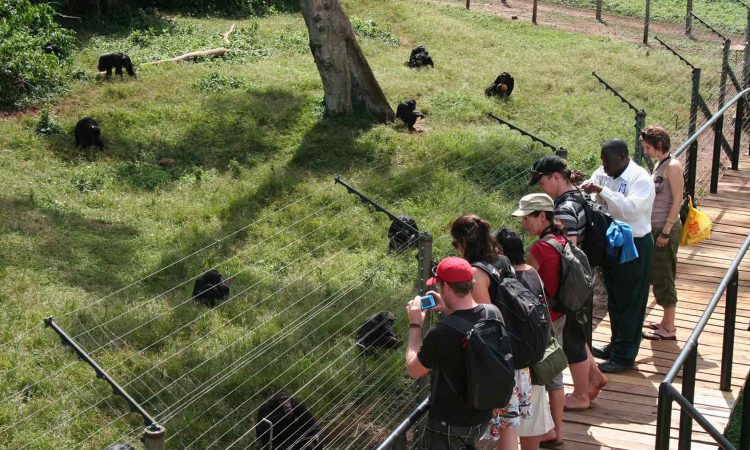
Kibale is famous for primates, particularly chimpanzees. The forest supports many monkey species and rich birdlife.
The Uganda Wildlife Authority states that standard chimpanzee tracking from Kanyanchu is restricted to participants aged at least 16. Current schedules and age requirements should be reconfirmed before booking. Uganda Wildlife Authority: Kibale National Park
Families with younger children can arrange alternative experiences outside the restricted tracking activity.
Possible alternatives include:
- Suitable wetland walks
- Birdwatching
- Community visits
- Tea or farm experiences
- Lodge activities
- Short nature interpretation
- Swimming and relaxation
A responsible adult must remain with children who cannot participate while parents or older siblings track chimpanzees.
Bwindi Impenetrable National Park
Bwindi is Uganda’s main mountain gorilla destination. It is divided into Buhoma, Ruhija, Rushaga and Nkuringo sectors.
Gorilla tracking is limited to visitors aged 15 and older. Younger children cannot join the trek, even when they are physically capable.
Bwindi can still be included in a family itinerary when:
- Eligible adults and teenagers want to trek
- Younger children have a supervised alternative program
- The family stays in appropriate accommodation
- Transportation is carefully coordinated
The Uganda Wildlife Authority lists Bwindi’s international park entry at USD 40, but gorilla tracking has a separate permit price. Uganda Wildlife Authority: Bwindi
Activities for younger children near Bwindi
Depending on lodge location, age and current availability, alternatives may include:
- Community experiences
- Craft activities
- Short village visits
- Age-appropriate nature interpretation
- Lodge activities
- Guided birdwatching
- Relaxation with an assigned adult
Parents should not assume lodge staff will provide childcare. Proper arrangements must be confirmed in advance.
Mgahinga Gorilla National Park
Mgahinga protects Uganda’s section of the Virunga Mountains. It offers gorilla tracking, golden monkey experiences, hiking and birdwatching.
Many park activities have age and fitness restrictions. Families should confirm these before adding Mgahinga.
The volcanic scenery can still make the Kisoro region worthwhile for families who want mountain views and a slower stay.
Lake Bunyonyi
Lake Bunyonyi is often included after gorilla tracking. Its green islands and quiet atmosphere provide a welcome change from forest trekking and road travel.
Possible family activities include:
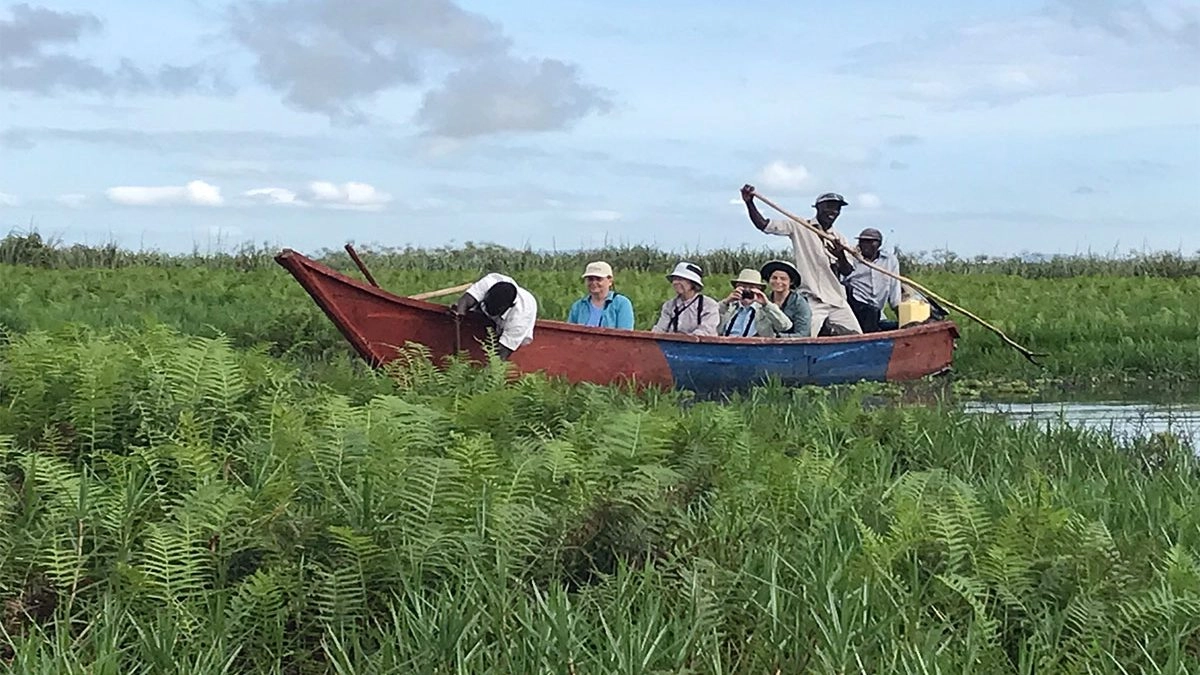
- Supervised boat excursions
- Canoe trips with professional guides
- Birdwatching
- Scenic walks
- Cultural visits
- Lodge relaxation
Parents should confirm life jackets and current water-safety arrangements.
Lake Bunyonyi works particularly well for families in which older members trek gorillas while younger members need a more relaxed program.
Jinja and the River Nile
Jinja is associated with the source area of the River Nile. Families may enjoy scenery, boat trips and cultural or historical visits.
Some Jinja activities are adventurous and have strict age and safety requirements. Families should select only professionally operated, age-appropriate activities and follow the provider’s rules.
A gentle boat excursion is more suitable for many families than high-intensity river activities.
Kidepo Valley National Park
Kidepo offers dramatic scenery and wildlife in northeastern Uganda. Its remote location makes it more challenging for families with young children.
The park can be reached by a long road journey or domestic flight.
Kidepo is most suitable for:
- Families with older children
- Longer itineraries
- Experienced safari travelers
- Families using domestic flights
- Visitors interested in remote landscapes
It should not be added to a short itinerary simply to increase the number of parks.
Planning an Uganda Safari with Kids Under 15
Families with children younger than 15 need to design the trip without relying on gorilla tracking.
A strong itinerary can focus on:
- Murchison Falls
- Queen Elizabeth National Park
- Lake Mburo
- Lake Bunyonyi
- Entebbe
- Suitable cultural activities
- Boat safaris
- Game drives
- Wildlife education
- Birdwatching
Adults who want to trek gorillas can add Bwindi if appropriate childcare and parallel activities are arranged.
Parallel gorilla-day planning
On the gorilla trekking day:
- Eligible adults and teenagers transfer to the briefing point.
- Younger children remain with a parent, relative or authorized caregiver.
- A private guide leads the alternative program.
- Everyone meets again at the lodge after the trek.
Never leave children without clearly confirmed adult supervision.
Planning an Uganda Safari with Kids Aged 15 and Older
Teenagers aged 15 and older can generally qualify for gorilla tracking.
Before booking, consider:
Fitness
- Interest in the activity
- Ability to follow ranger instructions
- Walking experience
- Comfort with mud and rain
- Appropriate footwear
- Health conditions
The minimum age does not mean the trek will be easy. Gorilla locations change, and the walk can take several hours.
Teenagers should understand that gorilla tracking is a quiet, controlled conservation experience rather than an amusement activity.
Family-Friendly Game Drives
Game drives are the foundation of many Uganda family safaris.
A standard adult itinerary may include three- or four-hour drives at sunrise and again in the afternoon. That schedule can be tiring for younger children.
Making game drives comfortable
Ask for:
- Private vehicle
- Flexible departure
- Shorter drives
- Regular rest stops
- Window seat for each child
- Drinking water
- Binoculars
- Wildlife checklist
- Snacks where permitted
- Sun protection
Do not allow children to stand outside designated viewing areas or leave the vehicle without the guide’s permission.
Wildlife activities for children
Turn wildlife viewing into an educational game by identifying:
- Animal tracks
- Different antelope species
- Bird colors
- Herbivores and predators
- Animal groups
- Habitats
- Conservation challenges
Avoid encouraging children to shout or make sounds to attract animals.
Boat Safaris with Children
Uganda’s boat safaris can be easier for children than long game drives.
Popular locations include:
- Kazinga Channel
- River Nile in Murchison Falls
- Lake Mburo
- Lake Bunyonyi
- Lake Victoria
Before booking, verify:
- Child-size life jackets
- Minimum age
- Boat condition
- Shade
- Duration
- Weather policy
- Maximum capacity
- Qualified crew
- Emergency arrangements
Children should remain under direct adult supervision throughout the trip.
Choosing Family-Friendly Safari Accommodation
A lodge can be beautiful without being suitable for children. Ask specific questions rather than relying on the word “family-friendly.”
Family room configuration
Options may include:
- Family cottage
- Interconnecting rooms
- Triple room
- Extra bed
- Two neighboring rooms
- Private villa
Confirm whether bathrooms are shared and whether rooms are connected internally.
Lodge fencing
Many safari lodges are unfenced. Wildlife can move through the grounds.
Families must follow escort rules after dark. Children should never walk around an unfenced lodge alone.
Swimming pools
Ask whether the property has:
- Lifeguard
- Pool fence
- Shallow section
- Fixed opening hours
- Towels
- Adult-supervision rule
Most safari-lodge pools do not have a permanent lifeguard.
Meals
Confirm:
- Early dinner availability
- Children’s menu
- Allergy procedures
- Vegetarian meals
- Packed lunches
- Highchairs
- Safe drinking water
- Flexible breakfast times
Electricity and charging
Remote lodges may use solar power or generators. Electricity may not operate throughout the night.
Families carrying medical equipment should discuss power requirements before confirming.
Laundry
Laundry can reduce the amount of luggage needed. However, some lodges do not wash children’s underwear or delicate clothing.
Transport for a Uganda Safari with Kids
Uganda’s main family safari circuit involves substantial road travel.
A comfortable private vehicle is therefore essential.
What the vehicle should have
Look for:
- Seatbelts
- Reliable maintenance
- Air conditioning where appropriate
- Opening or raised safari roof
- Charging points where available
- Enough luggage space
- Drinking water
- Individual seating
- Experienced driver-guide
Car seats
Families should request age-appropriate car seats well before arrival. Availability and specifications may be limited.
Parents may prefer to bring a familiar travel seat when airline rules allow.
Long driving days
Break longer journeys with:
- Lunch stops
- Bathroom stops
- Scenic viewpoints
- Short activities
- Overnight stays
- Domestic flights
A route that is manageable for adults may be exhausting for children.
Domestic flights
Scheduled flights can reduce driving time to areas near Bwindi, Queen Elizabeth or Kidepo.
Check:
- Luggage allowance
- Soft-bag requirements
- Child fares
- Airstrip transfers
- Weather delays
- Aircraft size
How Long Should an Uganda Family Safari Be?
A seven-day safari can cover two or three areas. Ten to fourteen days produce a better pace for a broader circuit.
Seven days
Suitable for:
- Entebbe
- Lake Mburo
- Queen Elizabeth
- Lake Bunyonyi or Bwindi
Ten days
Suitable for:
- Entebbe
- Murchison Falls
- Kibale region
- Queen Elizabeth
- Lake Mburo
Fourteen days
Suitable for:
- Entebbe
- Murchison Falls
- Kibale
- Queen Elizabeth
- Bwindi
- Lake Bunyonyi
- Lake Mburo
Longer trips should include rest afternoons and multi-night stays.
Sample 7-Day Uganda Safari with Kids
Day 1: Arrive in Entebbe
Meet your private guide and transfer to a family-friendly hotel. Keep the day free for rest.
Day 2: Entebbe to Lake Mburo
Travel toward Lake Mburo with regular stops. Arrive for lunch or an afternoon game drive.
Day 3: Lake Mburo activities
Take a morning game drive or suitable guided activity. Return to the lodge for lunch and pool time.
Day 4: Lake Mburo to Queen Elizabeth
Travel to Queen Elizabeth National Park. Stop for lunch and scenic views.
Day 5: Game drive and Kazinga Channel
Complete a manageable morning game drive. After lunch, take a professionally operated boat safari.
Day 6: Queen Elizabeth relaxation
Enjoy a shorter wildlife activity or a relaxed lodge morning. Avoid filling every hour.
Day 7: Departure
Return toward Entebbe or connect with a regional flight.
This route can be adjusted according to international flight times.
Sample 10-Day Uganda Safari with Kids
Day 1: Entebbe arrival
Transfer to a comfortable hotel.
Day 2: Entebbe family activities
Visit an appropriate conservation or nature attraction and recover from the flight.
Day 3: Travel to Murchison Falls
Drive north with scheduled breaks.
Day 4: Murchison game drive
Take a morning game drive and spend the afternoon at the lodge.
Day 5: Nile boat safari
Enjoy a guided boat excursion and scenic activities.
Day 6: Transfer toward Kibale
Break the journey with lunch and viewpoints.
Day 7: Kibale region
Older eligible family members may track chimpanzees. Younger children complete a supervised alternative program.
Day 8: Queen Elizabeth National Park
Travel to Queen Elizabeth and enjoy a short afternoon game drive.
Day 9: Game drive and Kazinga Channel
Combine a morning safari with an afternoon boat trip.
Day 10: Departure
Fly or drive toward Entebbe, depending on the schedule.
A longer version can add Lake Mburo.
Sample 12-Day Uganda Safari with Teenagers
This itinerary is designed for families whose teenagers meet primate-tracking ages.
Days 1–2: Entebbe
Arrive, rest and visit suitable local attractions.
Days 3–4: Murchison Falls
Take game drives and a Nile boat safari.
Days 5–6: Kibale
Travel to the Kibale region. Eligible participants complete chimpanzee tracking.
Days 7–8: Queen Elizabeth National Park
Enjoy game drives and the Kazinga Channel.
Days 9–10: Bwindi
Travel to the correct gorilla trekking sector. Visitors aged 15 and older complete the gorilla trek.
Day 11: Lake Mburo
Break the return journey with a wildlife stop.
Day 12: Entebbe departure
Return for the international flight.
How Much Does an Uganda Safari with Kids Cost?
Family safari costs depend on group size, hotel category, room arrangement and activities.
Estimated per-person daily prices are:
| Safari level | Adult planning estimate |
|---|---|
| Budget | USD 200–350 |
| Midrange | USD 350–600 |
| Luxury | USD 650–1,200+ |
| Ultra-luxury | USD 1,200–2,500+ |
Children may receive reduced park, hotel or meal rates depending on age. Gorilla and chimpanzee activities follow separate age and permit rules.
Main family safari expenses
- Private vehicle
- Fuel
- Driver-guide
- Accommodation
- Meals
- Park entry
- Game drives
- Boat safaris
- Domestic flights
- Primate permits
- Airport transfers
- Family rooms
- Visas
- Insurance
- Tips
- Personal purchases
Family room savings
A family room may cost less than two separate rooms, but configurations differ. Ask for exact occupancy and bed arrangements.
Gorilla permit costs
Eligible family members aged 15 or older require individual permits. Uganda’s standard foreign non-resident gorilla permit is currently USD 800 per person under the applicable tariff.
A family of four eligible trekkers would therefore pay USD 3,200 for permits alone.
Best Time for an Uganda Safari with Kids
Uganda can be visited throughout the year.
June to September
This popular period may offer drier safari conditions. It overlaps with school holidays in several countries, so family rooms should be reserved early.
December to February
This is another relatively dry period and can suit holiday travel. Christmas and New Year are busy.
March to May
Rain is more frequent. The landscape is green, and some lodges may offer lower prices.
Road and trekking conditions may be more challenging.
October and November
These months can also be wet, but weather varies.
Families should pack for rain regardless of season.
Health Preparation for Families
Parents should consult a qualified travel-health professional well before departure.
Topics may include:
- Routine vaccinations
- Destination-specific vaccinations
- Malaria prevention
- Insect-bite prevention
- Food and water precautions
- Motion sickness
- Allergies
- Prescription medication
- Medical insurance
- Emergency evacuation
Advice depends on each child’s age, medical history and itinerary.
Family medical kit
Parents may carry age-appropriate items recommended by their healthcare professional, including:
- Regular prescriptions
- Thermometer
- Basic wound care
- Hand sanitizer
- Insect repellent
- Sun protection
- Oral rehydration products
- Motion-sickness treatment if prescribed
- Allergy medication if prescribed
Keep medication in original packaging and carry the required documentation.
Food and drinking water
Use safe drinking water supplied by the lodge or tour operator. Children should be reminded not to drink untreated tap, river or lake water.
Inform lodges about allergies before arrival.
Malaria and Insect Protection
Malaria risk and prevention requirements should be discussed with a healthcare professional.
Practical bite-reduction measures include:
- Approved insect repellent
- Long sleeves in the evening
- Long trousers
- Mosquito nets
- Closing screens
- Following lodge instructions
Do not apply a product to a child unless it is appropriate for that child’s age and used according to its label or medical advice.
Travel Insurance
A family policy should be evaluated for:
- Medical treatment
- Evacuation
- Trip cancellation
- Delayed flights
- Lost luggage
- Safari activities
- Primate tracking for eligible travelers
- Pre-existing conditions
- Domestic flights
- Full trip value
Insurance terms vary, so read the policy rather than assuming every safari activity is covered.
What to Pack for an Uganda Safari with Kids
Clothing
Pack:
- Lightweight shirts
- Long-sleeved tops
- Comfortable trousers
- Warm layer
- Rain jacket
- Hat
- Sleepwear
- Underwear
- Socks
- Swimsuit
- Comfortable closed shoes
- Sandals for lodge use
Avoid excessive white clothing because safari roads can be dusty.
Wildlife equipment
Useful items include:
- Child-friendly binoculars
- Camera
- Wildlife guidebook
- Notebook
- Pencils
- Animal checklist
- Small backpack
- Refillable bottle
Travel-day items
Keep accessible:
- Snacks
- Water
- Wet wipes
- Change of clothes
- Medication
- Travel games
- Books
- Headphones
- Charger or power bank
- Important documents
Do not depend entirely on internet access for entertainment.
Sun and rain protection
Bring both sun protection and waterproof clothing. Uganda’s weather can change during the day.
Keeping Children Engaged on Safari
Children often enjoy safari more when they have a role.
Ideas include:
- Keep a wildlife diary
- Identify five new birds each day
- Draw animals
- Learn local greetings
- Take photographs
- Track different habitats
- Record favorite meals
- Ask the guide prepared questions
- Compare animal footprints
- Learn how conservation supports communities
Do not pressure children to remain silent for an unrealistic number of hours. Build breaks into the schedule.
Responsible Family Travel
A safari can teach children how tourism, communities and conservation connect.
Families should: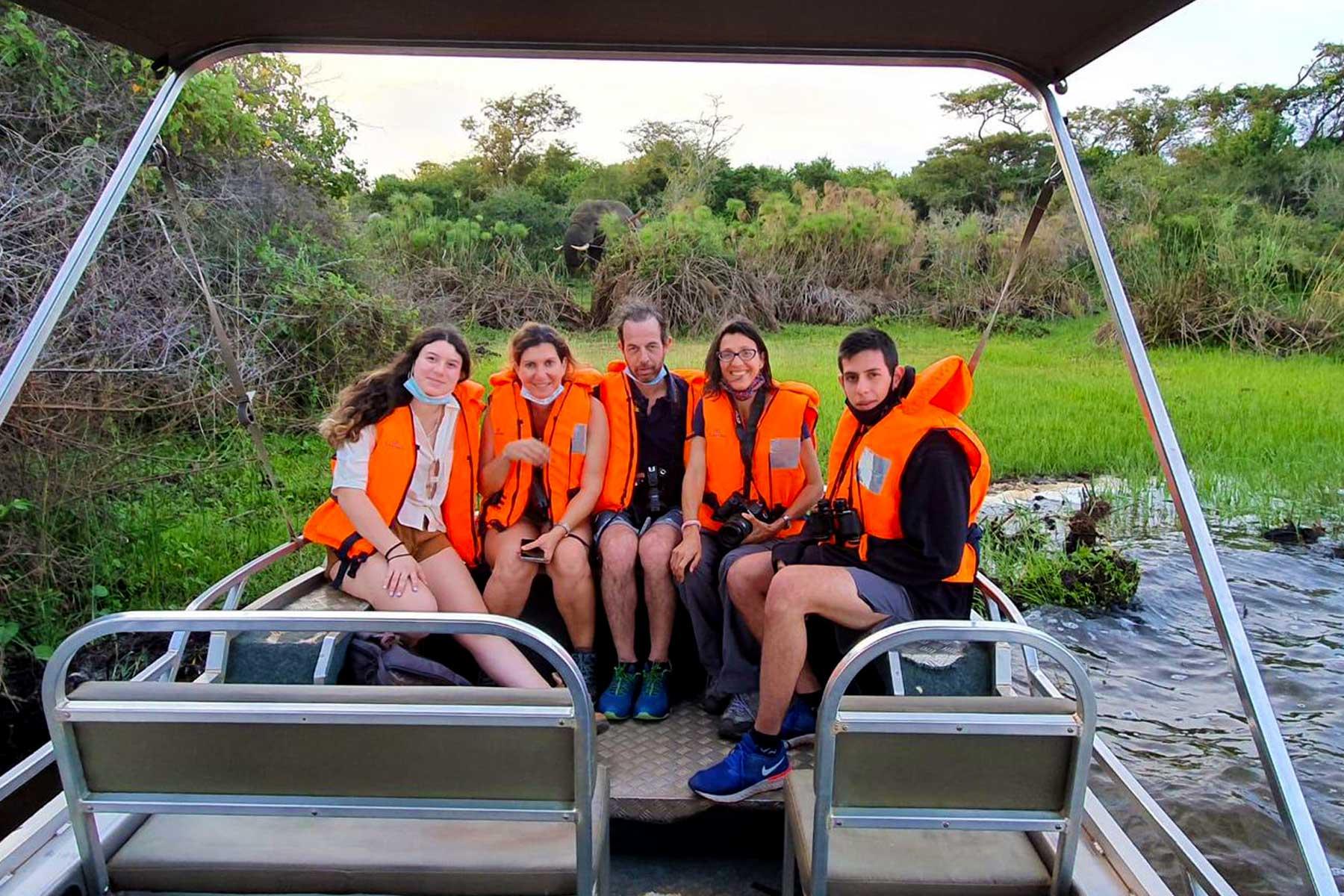
- Follow park rules
- Keep noise low near wildlife
- Avoid feeding animals
- Never litter
- Ask permission before photographing people
- Support authentic local enterprises
- Respect cultural differences
- Use water thoughtfully
- Follow lodge safety instructions
Uganda’s wildlife revenue-sharing system directs a portion of park-entry revenue to neighboring communities. The Uganda Wildlife Authority states that 20% of park entry fees is allocated through local-government mechanisms for community development. Uganda Wildlife Authority revenue sharing
Common Family Safari Mistakes
Including too many destinations
A long list of parks creates exhausting transfers. Fewer destinations with longer stays usually work better.
Booking shared transportation
A private vehicle provides valuable flexibility when children need a break.
Ignoring minimum ages
Confirm every activity’s current rules before presenting it to children.
Forgetting child supervision
Unfenced lodges, pools and boat docks require constant adult attention.
Choosing accommodation by price alone
A cheaper lodge may not have suitable family rooms, safe access or flexible meals.
Planning long game drives every day
Alternate wildlife days with pools, short activities and rest.
Arriving and departing immediately
Allow recovery time after long-haul flights.
Assuming the lodge provides childcare
Childcare must be confirmed explicitly.
Packing too much
Use laundry services where available, but keep essential child supplies with you.
Skipping insurance
Family travel can involve unexpected illness, delay or itinerary changes.
Frequently Asked Questions
Is Uganda good for a safari with children?
Yes. Uganda offers game drives, boat safaris, wildlife, lakes and cultural experiences. The itinerary must match the children’s ages and tolerance for driving.
What is the best age for a Uganda safari?
Children aged eight and older may engage more easily with wildlife and guiding, but younger children can travel successfully with careful planning.
Can children go gorilla trekking in Uganda?
Only visitors aged at least 15 may participate in standard gorilla tracking.
Can children track chimpanzees?
Age limits depend on the park and activity. UWA’s Kibale information currently states that standard tracking participants must be at least 16. Confirm the rule when booking.
What can younger children do while parents trek gorillas?
They can participate in a supervised alternative program, such as a suitable community visit, lodge activity, nature interpretation or Lake Bunyonyi excursion.
Is it safe to take children on game drives?
Game drives are conducted in safari vehicles under guide supervision. Children must remain seated, follow instructions and stay inside the vehicle unless the guide permits otherwise.
Are safari lodges fenced?
Some are fenced, but many are not. Families must use escorts and supervise children closely.
Do lodges offer family rooms?
Many do, but room configurations vary. Reserve early and confirm the bed arrangement.
Are swimming pools supervised?
Most lodge pools do not have permanent lifeguards. Direct adult supervision is essential.
Can babies travel on safari?
It is possible, but parents must consider medical access, heat, insects, car seats, food and lengthy road travel.
Which park is best for young children?
Lake Mburo and Queen Elizabeth can work well because they offer manageable game drives and boat activities. The final choice depends on the route.
Is Murchison Falls suitable for families?
Yes. Wildlife drives and Nile boat safaris are appealing to many children. The road journey should be planned with breaks.
How long should the safari be?
Seven to ten days works for several destinations. Ten to fourteen days is better for a broad circuit at a relaxed pace.
Should we use a private vehicle?
A private vehicle is strongly recommended for families because it allows flexible schedules and rest stops.
What meals are available?
Most lodges provide international and Ugandan dishes. Dietary needs and allergies should be communicated before arrival.
Is bottled water provided?
Many tour operators provide drinking water in the vehicle. Confirm this in the quotation.
Do children receive discounts?
Some hotels and parks offer child rates. The definition of a child varies, so provide exact ages.
What should children wear?
Lightweight clothing, closed shoes, sun protection, a warm layer and rain protection are useful.
Do we need malaria advice?
Families should consult a qualified travel-health professional for current personalized advice.
Can we combine Uganda and Rwanda?
Yes. A cross-border family itinerary can use Kigali or Entebbe as the gateway, subject to visas and current border requirements.
How early should we book?
Book six to twelve months ahead, particularly for family rooms, school holidays and gorilla permits.
Plan Your Uganda Safari with Kids
A successful Uganda Safari with Kids should balance wildlife, education and rest. It should not copy an adult itinerary and simply add children.
The strongest family journeys include:
- A private vehicle
- Two- or three-night stays
- Age-appropriate activities
- Flexible game drives
- Boat safaris
- Comfortable family rooms
- Rest afternoons
- Professional guiding
- Proper child supervision
- Realistic travel times
Universal Ventures Rwanda organizes private Uganda and Rwanda family safaris for parents, children, teenagers and multigenerational groups.
Available arrangements include:
- Uganda family wildlife safaris
- Queen Elizabeth National Park tours
- Murchison Falls safaris
- Lake Mburo family tours
- Lake Bunyonyi stays
- Gorilla trekking for eligible family members
- Supervised alternative activities for younger children
- Private 4×4 transportation
- Airport transfers
- Family-friendly accommodation
- Rwanda and Uganda combinations
- Customized itineraries
Contact Universal Ventures Rwanda
Universal Ventures Rwanda
Address: Kigali, Rwanda
Telephone/WhatsApp: +250 781 441 853
Email: info@universalventuresrwanda.com
Website: www.universalventuresrwanda.com