 Skip to content
Kenya Maasai Cultural Tours give travelers a chance to understand Kenya through its people as well as its wildlife. A safari may introduce you to lions, elephants and open savannah. However, a cultural visit adds another layer to the journey.
The Maasai are among the best-known communities in East Africa. Yet their culture should not be reduced to red clothing, jumping dances or a quick photograph beside a safari vehicle.
A good Maasai cultural experience is much broader.
You may meet a community guide. You can learn how a homestead is organized. Conversations may cover cattle, family life, education, beadwork, changing livelihoods, conservation and the challenges of living beside wildlife.
Traditional songs and dances may also form part of the visit.
However, they are only one part.
Modern Maasai communities are diverse. Some families remain strongly connected to pastoralism. Others combine livestock, tourism, business, education and professional work.
Therefore, the best Kenya Cultural Tours Maasai Experience should treat Maasai culture as living and changing rather than frozen in the past.
This complete guide explains what to expect from Kenya Maasai Cultural Tours, where cultural experiences take place, how long they last, what activities may be included, how to behave respectfully and how to combine a community visit with a wildlife safari.
It also explains how to choose a visit that benefits the host community rather than simply creating another tourist photo stop.
Why Choose Kenya Maasai Cultural Tours?
Kenya is famous for wildlife.
However, wildlife is only part of the country’s story.
Cultural travel helps visitors understand how people live within the same landscapes that support some of Africa’s most famous animals.
The Maasai experience is especially relevant because many Maasai communities live around major wildlife regions.
The Maasai Mara is the best-known example.
Amboseli and parts of Kajiado also have strong Maasai cultural connections.
Likewise, Loita, Laikipia and other pastoral regions can offer different forms of community-based tourism.
Therefore, a Maasai visit can fit naturally into a wider safari.
Instead of treating culture as an extra attraction, think of it as part of understanding the destination.
Kenya Maasai Cultural Tours Go Beyond Wildlife
Wildlife safaris focus on observing animals.
Cultural tours focus on people, history and daily life.
The pace is different.
Instead of searching for a leopard, you may spend time talking with a community guide.
Rather than photographing elephants, you may learn why cattle remain important within many Maasai households.
Questions often become more valuable than photographs.
A conversation about education, land, tourism or livestock may tell you far more about contemporary Kenya than a short performance alone.
For that reason, cultural experiences work best when travelers arrive curious rather than expecting a show.
What Is a Maasai Cultural Experience?
There is no single standard format.
One tour may last an hour.
Another can take a full day.
Some visits happen near safari lodges.
Others involve traveling from Nairobi to a Maasai community.
Current Kenya cultural operators advertise experiences ranging from short village or homestead visits to half-day and full-day activities.
A typical experience may include a welcome, conversation with community members, a walk around the homestead, traditional songs, dance, beadwork and time for questions.
However, activities differ by location.
That difference is important.
Do not expect every community to provide the same program.
Kenya Maasai Cultural Tours and the Meaning of “Village”
Travel websites commonly use the phrase Maasai village.
It is easy for visitors to understand.
However, Maasai terminology is more specific.
A normal family homestead is commonly called an enkang.
The word manyatta, although widely used by the tourism industry for a Maasai village, traditionally has a more specific meaning and can refer to a warriors’ settlement rather than an ordinary family homestead.
This distinction may seem small.
Yet learning the correct terms is part of cultural travel.
It also reminds visitors that Maasai social life has more detail than tourism brochures often show.
Kenya Maasai Cultural Tours Inside an Enkang
An enkang is more than a collection of houses.
Traditionally, the homestead includes family dwellings and space used to protect livestock.
Cattle, sheep and goats may be kept within protected areas during the night.
Thorn fencing has historically helped protect livestock.
The design reflects the close relationship between people, livestock and the surrounding landscape.
During a cultural visit, a community guide may explain how the homestead works.
You might also enter one of the houses if the family permits it.
However, remember that this is someone’s home.
Treat it accordingly.
Why Cattle Matter in Maasai Culture
Cattle have long held economic, social and cultural importance within Maasai communities.
They provide food, wealth and social value.
Pastoralism also remains important to many Maasai households, although modern livelihoods differ widely.
Minority Rights Group notes the central role of cattle and pastoralism within Maasai culture while also highlighting the pressures caused by land loss and changing access to grazing areas.
A thoughtful cultural tour should therefore explain more than livestock traditions.
It can also help visitors understand current questions about land, conservation, education and economic change.
Kenya Maasai Cultural Tours and Modern Maasai Life
One of the biggest mistakes in cultural tourism is assuming that living culture must remain unchanged.
It does not.
A Maasai person can value cultural traditions while using a smartphone.
Children can attend modern schools while learning Maa language and family customs.
A community may depend on livestock while also earning income through tourism or business.
These realities do not make the culture less meaningful.
They make it contemporary.
Therefore, avoid expecting everyone to fit a historic image from a safari brochure.
The most interesting cultural conversations often involve how people combine tradition and modern life.
What Happens on Kenya Maasai Cultural Tours?
Most visits begin with an introduction.
A local guide or community representative explains the visit and what you will see.
From there, the program varies.
You may walk through the homestead.
A family member may explain house construction.
Later, visitors might learn about livestock, beadwork or traditional skills.
Songs and dances can also be included.
Current community-tour pages often combine homestead walks, dance, discussion and craft visits.
However, the conversation should remain central.
Cultural tourism becomes more meaningful when visitors can ask questions instead of simply watching.
Kenya Maasai Cultural Tours and Traditional Welcome Songs
Music may be part of the welcome.
Voices are central to many Maasai performances.
The rhythm may come from singing, chanting and body movement rather than a large set of musical instruments.
Visitors are sometimes invited to join.
If that happens, participate only if you feel comfortable.
You do not need to perform perfectly.
The goal is cultural exchange rather than competition.
Still, follow the lead of your hosts.
Kenya Maasai Cultural Tours and the Jumping Dance
The Maasai jumping dance is one of the most recognizable images associated with Kenya.
It is often called adumu.
Tourism presentations sometimes make it seem like a general dance performed simply for visitors.
However, it has roots within Maasai warrior and ceremonial traditions.
Sources describing the practice connect adumu with young warriors, celebrations and rites of passage.
Therefore, approach the dance as a cultural expression rather than only entertainment.
A good guide can explain its context.
Should Visitors Join the Maasai Jumping Dance?
Sometimes hosts invite guests to participate.
If they do, joining can be fun.
However, do not assume permission.
Wait for the invitation.
Visitors should also avoid turning the moment into a joke.
What looks simple requires skill and has cultural meaning.
Participate respectfully.
Then listen to the explanation behind what you have seen.
That context often becomes more memorable than trying to jump higher than everyone else.
Kenya Maasai Cultural Tours and Beadwork
Beadwork is another strong part of Maasai visual culture.
Necklaces, bracelets, belts and other items may use detailed color patterns.
Styles and meanings can differ.
Women frequently play a major role in beadwork production.
For visitors, buying directly from artisans can be one of the easiest ways to support local income.
Current cultural-tour operators often include craft-market or beadwork time in Maasai visits.
However, do not assume every item has a ceremonial meaning.
Ask.
The artisan or guide can explain far more accurately than a souvenir shop outside the community.
Buying Maasai Crafts Respectfully
Shopping can support the community.
However, the experience should not become uncomfortable.
Ask whether prices are fixed or negotiable.
If bargaining is expected, keep it reasonable.
A handmade item represents time and skill.
Saving one or two dollars is rarely worth turning the exchange into an argument.
Buying directly also gives you the chance to learn who made the item.
That personal connection can make the souvenir far more meaningful.
Kenya Maasai Cultural Tours and House Construction
Traditional houses may be built using locally available materials.
Branches form the structure.
Mud and other natural materials can form the walls.
During some visits, your guide may explain how houses are constructed and maintained.
A family homestead is designed around practical needs.
Protection from weather matters.
Livestock security also matters.
However, building styles continue to change.
Modern materials may appear alongside traditional methods.
Again, culture is living rather than fixed.
Kenya Maasai Cultural Tours and Fire-Making Demonstrations
Some tours include traditional fire-making.
Visitors may see how friction can create an ember.
This is often presented as an example of practical knowledge.
You may be invited to try.
However, cultural experiences differ.
Do not expect every community to include the same demonstration.
What matters more is whether the activity is explained properly and led by community members.
Kenya Maasai Cultural Tours and Traditional Knowledge
Plant knowledge may also form part of some experiences.
A guide might discuss plants historically used for food, medicine or livestock.
Bush walks can provide more context than a short village stop.
However, visitors should avoid treating traditional plant knowledge as medical advice.
The cultural importance is valuable on its own.
A tour is not a substitute for professional health care.
Kenya Maasai Cultural Tours in the Maasai Mara
The Maasai Mara is the most famous place to combine Maasai culture with wildlife.
Many communities live in areas surrounding the reserve and conservancies.
Therefore, cultural visits can be added before or after game drives.
Current Kenya operators commonly offer two- to three-hour or half-day cultural visits around the wider Mara region.
This makes planning easy.
You do not need to sacrifice an entire safari day.
However, avoid squeezing the visit into a rushed thirty-minute stop.
Culture deserves time.
Maasai Mara Cultural Tour Before a Game Drive
Morning can work well.
Temperatures may be cooler.
A relaxed visit also gives you time for conversation.
Afterward, you can continue into the wildlife area.
This creates an interesting contrast.
During the cultural visit, you learn how people live around the ecosystem.
Later, the game drive shows you the wildlife sharing that landscape.
The two experiences help explain one another.
Maasai Mara Cultural Tour After a Game Drive
Late afternoon is another good option.
However, timing should respect the host community.
Do not arrive without notice simply because your game drive finished nearby.
Your operator should arrange the visit in advance.
That allows hosts to plan their day.
It also reduces the feeling that tourists can simply enter a community whenever they want.
Kenya Maasai Cultural Tours Near Amboseli
Amboseli is another strong area for Maasai cultural tourism.
The wider region includes Maasai communities and pastoral landscapes.
Therefore, cultural visits can complement elephant viewing and Mount Kilimanjaro scenery.
A morning or afternoon community visit works well within a longer Amboseli stay.
Some experiences may focus more on beadwork or local community projects.
Others may include homestead visits and conversations about pastoral life.
Ask what the program actually includes before booking.
Kenya Maasai Cultural Tours in Kajiado
Kajiado offers another perspective.
It can work for travelers who want a cultural experience without traveling all the way to the Maasai Mara.
Some Nairobi-based day tours visit Maasai communities within reachable distance of the capital.
Current day-tour listings often involve six to eight hours including transport from Nairobi.
Therefore, it can be a useful option for travelers with limited safari time.
Kenya Maasai Cultural Tours From Nairobi
A Nairobi-based Maasai day tour usually starts in the morning.
Your guide collects you from the hotel.
Then you drive out of the city toward a Maasai community.
The drive may take several hours depending on the location.
Once there, the cultural portion can include introductions, homestead visits, dance, crafts and conversation.
Afterward, you return to Nairobi.
This format works well for business travelers, conference visitors or anyone who cannot fit a full Maasai Mara safari into the trip.
Is a Nairobi Maasai Tour Worth It?
It can be.
However, choose carefully.
A long drive for a very short cultural stop may feel unbalanced.
Look for a program that gives meaningful time with the hosts.
Two or three hours on site can allow better conversation.
A rushed visit may focus too heavily on photographs.
Therefore, ask the operator how long you actually spend with the community.
Kenya Maasai Cultural Tours in Loita
Loita can provide a different cultural setting from the busiest Maasai Mara tourism areas.
The region is often associated with more extended walks, forest experiences and community-based travel.
Therefore, travelers who want a deeper cultural journey may prefer more than a short village visit.
Spending a full day or longer allows the landscape to become part of the experience.
This style is best for people who value slower travel.
Kenya Maasai Cultural Tours in Laikipia
Laikipia offers another model of cultural tourism.
Here, wildlife conservation, ranching, community lands and tourism can intersect in different ways.
Some cultural experiences are linked to community conservancies or lodges.
As a result, travelers may gain insight into the connection between tourism revenue, wildlife and local livelihoods.
However, every project is different.
Ask how the host community participates in the tourism operation.
Kenya Maasai Cultural Tours and Community Conservancies
Community conservancies have become important parts of Kenya’s tourism landscape.
In some areas, tourism and conservation arrangements generate revenue for landowners and communities.
However, these systems are complex.
Visitors should avoid assuming every conservancy works in the same way.
A cultural guide may be able to explain local land-use arrangements and how tourism affects households.
This can become one of the most informative conversations of the trip.
Kenya Maasai Cultural Tours and Conservation
Tourists often hear the phrase people living alongside wildlife.
The reality is complicated.
Wildlife can bring tourism income.
However, predators can also kill livestock.
Elephants may damage crops in areas where farming occurs.
Land is also needed for grazing, homes and infrastructure.
Therefore, conservation is not only about protecting animals.
It also involves people who live within and around wildlife landscapes.
A thoughtful Maasai experience can help visitors understand those trade-offs.
Kenya Maasai Cultural Tours and Land
Land is central to pastoral life.
Grazing depends on access to space and water.
At the same time, tourism, agriculture, towns and conservation all place pressure on land.
Minority Rights Group has documented how land access and conservation policies have affected pastoral Maasai communities in East Africa.
Therefore, contemporary Maasai culture cannot be understood only through dress and dance.
Land, livestock and political economy are important parts of the story too.
Kenya Maasai Cultural Tours and Education
Modern education is another useful topic to discuss.
Children in Maasai communities may attend local schools, boarding schools or institutions farther away.
Education can create new opportunities.
At the same time, communities may work to maintain language and cultural knowledge.
Ask respectful questions.
Avoid assuming that formal education and cultural identity are opposites.
Many people combine both.
Kenya Maasai Cultural Tours and Maa Language
The Maasai language is commonly called Maa.
Learning even one or two words can show interest.
However, pronunciation matters.
Ask your host or guide rather than relying only on an online phrase list.
Language is also a reminder that Maasai culture is not merely visual.
Stories, greetings, songs and oral knowledge carry meaning that clothing alone cannot show.
Kenya Maasai Cultural Tours and Clothing
Red is strongly associated with Maasai clothing in tourism images.
Yet actual clothing can use many colors and patterns.
Shukas, beadwork and jewelry may be worn in different ways.
Modern clothing is also common.
Therefore, do not expect everyone in a community to be dressed for a tourism photograph.
Traditional clothing may be used for ceremonies, performances or daily wear depending on the person and context.
Can Visitors Wear Maasai Clothing?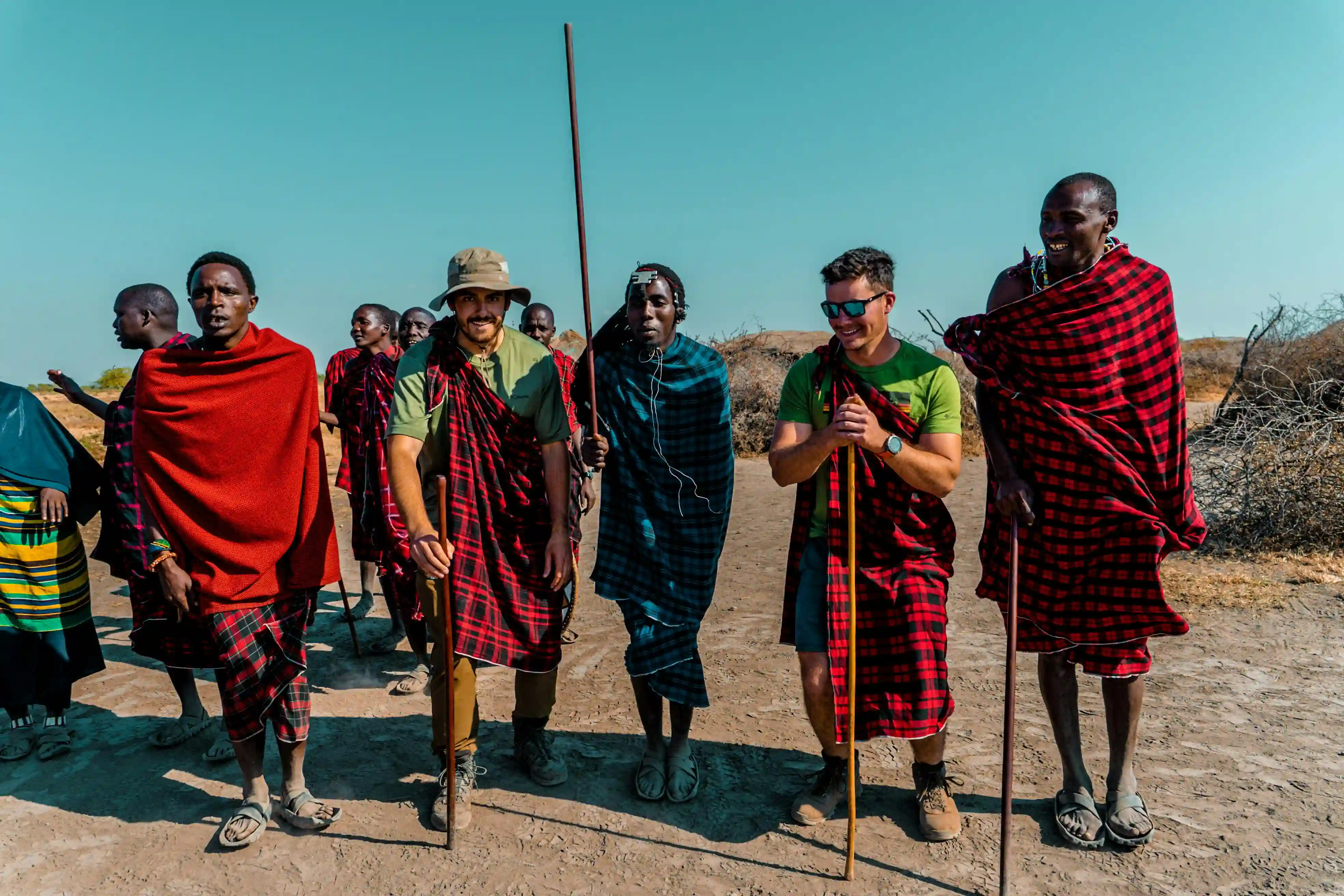
Some cultural experiences invite visitors to wear a shuka.
This can be a friendly activity.
However, follow the hosts.
Do not treat cultural clothing as a costume for mockery.
If invited, wear it respectfully.
Ask how it is normally worn.
That turns the activity into learning rather than simple dress-up.
Photography on Kenya Maasai Cultural Tours
Never assume that payment for a tour gives unlimited photography rights.
Ask before taking close portraits.
Some people may be comfortable being photographed.
Others may not.
Children deserve particular care.
A wide photograph of an organized dance may have different expectations from a close portrait inside someone’s home.
When uncertain, ask your guide.
The question takes only a few seconds.
Photographing Children
Children often attract cameras.
However, they are people, not attractions.
Avoid giving sweets or money simply to create a photograph.
Do not encourage children to perform for pictures unless it is part of an organized community activity.
Whenever possible, let the local guide explain what is appropriate.
Respect should matter more than social-media content.
Kenya Maasai Cultural Tours and Responsible Tourism
Responsible cultural tourism starts with who controls the experience.
Community-led visits are generally stronger when local people guide the tour, decide what visitors see and receive a fair share of the income.
Some current operators explicitly promote direct community arrangements and direct village fees.
Ask your tour company how the visit is arranged.
A simple question can reveal a lot.
Who Receives the Cultural Visit Fee?
This is a reasonable question.
Tourism involves transport, guides and organization, so not every dollar necessarily goes directly to the hosts.
However, the community should benefit fairly.
Ask whether the visit fee supports households, guides, women’s groups, schools or another agreed project.
A transparent operator should be comfortable explaining the structure.
Kenya Maasai Cultural Tours and Craft Purchases
Buying local beadwork can create direct income.
However, do not feel forced to purchase something.
A respectful visit should not depend on shopping.
Likewise, travelers should not assume that buying one bracelet solves larger community challenges.
It is simply one form of economic exchange.
Choose something you genuinely value.
Ethical Maasai Cultural Experience Versus Staged Tourism
Every organized tourism experience has some structure.
Even a community-led visit may include a planned welcome.
Therefore, “staged” and “authentic” are not always simple opposites.
A song performed for visitors can still have cultural meaning.
The better question is whether local people control the presentation and benefit from it.
Another useful question is whether visitors are encouraged to learn rather than merely consume a performance.
Kenya Maasai Cultural Tours and Cultural Respect
Start with basic courtesy.
Listen.
Ask before photographing.
Do not interrupt an elder or guide.
Avoid jokes about cultural practices.
Do not compare everything with how things are done at home.
Questions are welcome when they come from curiosity rather than judgment.
The strongest cultural visits feel like conversation.
Questions to Ask During Kenya Maasai Cultural Tours
You can ask about livestock, language, education, housing, conservation or tourism.
Questions about changing traditions can also lead to interesting discussion.
However, avoid demanding private information.
Income, marriage or family matters may not be appropriate unless the guide raises them.
Use the same social judgment you would use when visiting anyone else’s home.
What Should You Wear on Kenya Maasai Cultural Tours?
There is usually no specialist clothing requirement.
Comfortable safari clothes work well.
Use practical shoes because the ground may be dusty, muddy or uneven.
A sun hat is useful.
Modest casual clothing is generally a safe choice.
If your tour involves a bush walk, follow the guide’s footwear advice.
What Should You Bring?
Water is useful.
Sun protection also helps.
Carry a camera only if you are prepared to ask before photographing.
Some cash may be useful for crafts.
However, your operator should explain whether the community visit fee is already included.
Do not arrive with large quantities of sweets or gifts for children.
Community leaders usually know better what is genuinely useful.
Should You Bring Donations?
Ask first.
Random gifts can create problems.
A school may need books rather than candy.
A women’s group may prefer visitors to buy its work rather than donate unrelated items.
If you want to contribute, speak with the operator or community representatives before the visit.
Useful support should respond to local priorities.
Kenya Maasai Cultural Tours With Children
Cultural tours can be excellent for families.
Children often enjoy seeing homes, livestock, crafts and dance.
More importantly, they meet people rather than experiencing Kenya only through animals.
Keep visits age-appropriate.
A long lecture may not work for younger children.
Interactive activities and conversation usually work better.
Parents should also teach children to ask before touching items or photographing people.
Kenya Maasai Cultural Tours for Couples
Couples can easily add a cultural visit to a private safari.
A smaller group can make conversation easier.
You may also have more flexibility over timing.
For honeymooners, combining wildlife with culture can add depth to an itinerary that might otherwise focus mainly on luxury lodges.
However, avoid treating the cultural visit as a quick entertainment stop between luxury experiences.
Give it real time.
Kenya Maasai Cultural Tours for Solo Travelers
Solo travelers often enjoy cultural experiences because conversation starts quickly.
A private community guide can answer questions in detail.
You also avoid waiting for a large tour group.
However, private transport can cost more.
Joining a small cultural tour from Nairobi or a safari lodge may reduce the price.
Kenya Maasai Cultural Tours for Groups
Groups need more planning.
A large group can overwhelm a small household.
Therefore, the operator should coordinate group size with the hosts.
Smaller groups often create better conversation.
If you are traveling with a school or educational group, a structured discussion can improve the experience.
Ask the community what format works best.
Kenya Maasai Cultural Tours for Photographers
Photography-focused cultural travel requires extra care.
The goal should not be collecting portraits without relationships.
Spend time talking before photographing.
Ask permission clearly.
Show people the photograph when appropriate.
If a professional shoot is planned, discuss payment and permissions in advance.
Commercial photography is different from normal holiday pictures.
Kenya Maasai Cultural Tours for Educational Travel
Schools and universities can gain a lot from community visits.
However, the program should go beyond performance.
Students can learn about pastoralism, land use, conservation, language, tourism and economic change.
A guided question session can be useful.
Local voices should remain central.
The community should not become merely an object of study.
Kenya Maasai Cultural Tours and Women’s Groups
Women’s groups can be an important part of community tourism.
Beadwork, crafts, hospitality and community projects may create income.
Some experiences allow visitors to learn directly from women artisans.
This can add a perspective often missing from tours focused only on warriors and jumping dances.
Ask whether your visit includes women-led activities.
Kenya Maasai Cultural Tours and Youth
Younger Maasai people may have very different perspectives from elders.
Education, technology, employment and city connections shape modern life.
A cultural tour can therefore include discussions about the future as well as the past.
Avoid assuming that young people want exactly the same lives as previous generations.
Cultural identity can remain strong while aspirations change.
How Long Should Kenya Maasai Cultural Tours Last?
One hour can provide an introduction.
Two to three hours gives more time.
A half-day allows deeper conversation.
A full-day program may include meals, walks, crafts or other community activities.
Current Kenya cultural-tour listings commonly range from two or three hours to half-day or full-day visits.
Choose based on your interest.
Do not choose the shortest option simply to tick culture off a list.
Is a One-Hour Maasai Village Visit Enough?
It can give you a glimpse.
However, it may feel rushed.
Introductions, a short walk and dance can fill the hour quickly.
There may be little time left for questions.
If culture is important to you, allow more time.
Even an extra hour can change the visit from observation into conversation.
Half-Day Kenya Maasai Cultural Tours
A half-day format is often ideal.
It is long enough for conversation and activities.
Yet it still fits beside safari plans.
You can visit in the morning and game-drive later.
Alternatively, enjoy a wildlife activity first and visit the community afterward.
This balance works particularly well around the Maasai Mara and Amboseli.
Full-Day Kenya Maasai Cultural Tours
A full day allows more depth.
You may walk farther.
A meal may be included.
Visits to community projects, markets or women’s groups may be possible.
However, do not assume longer automatically means better.
The itinerary should have a clear purpose.
Ask how the extra hours are used.
Overnight Cultural Experiences
Some operators offer deeper community stays or cultural lodges.
These can provide more time for conversation.
However, overnight experiences require careful management of privacy and expectations.
A community is not a theme park that remains available to visitors all night.
The hosts should control when and how interaction happens.
Kenya Maasai Cultural Tours Combined With Safari
Combining culture and wildlife creates one of Kenya’s strongest travel experiences.
For example, a Maasai Mara safari can include several game drives plus a community visit.
Amboseli offers a similar combination.
This reduces additional driving.
It also connects cultural learning to the landscape you are already exploring.
Kenya Maasai Cultural Tours and Maasai Mara Safaris
A classic safari itinerary might include two or three nights in the Mara.
One morning can focus on wildlife.
Later, a cultural visit can add the human side of the ecosystem.
Do not reduce the number of game drives too much if wildlife is also a priority.
Instead, schedule the community experience when animals are less active or when your hosts prefer visitors.
Kenya Maasai Cultural Tours and Amboseli Safaris
Amboseli works particularly well for travelers interested in both wildlife and Maasai culture.
Elephants and Mount Kilimanjaro dominate the safari image.
However, community life adds important context.
A two- or three-night stay gives enough time for both.
Avoid trying to fit everything into one rushed day from Nairobi.
Kenya Maasai Cultural Tours With Lake Naivasha
Naivasha is not primarily known as a Maasai cultural destination.
However, wider Rift Valley itineraries can include cultural visits in nearby or onward regions.
The important thing is route logic.
Do not add several hours of driving simply to force a cultural stop.
Choose the experience that fits your actual safari route.
Kenya Maasai Cultural Tours and Nairobi City Trips
Travelers staying in Nairobi can still experience cultural learning.
A village day tour outside the city is one option.
Another is a cultural institution or organized performance within Nairobi.
However, a community visit and a cultural performance are different products.
Choose based on whether you want direct conversation or a broader introduction to Kenyan cultures.
What Makes the Best Kenya Maasai Cultural Tours?
The best experience is not necessarily the most dramatic.
A quieter conversation can be more valuable than a large dance performance.
Look for local guides.
Check whether visits are scheduled with the community.
Ask where the fees go.
Find out how long you spend on site.
Most importantly, choose a tour that treats hosts as partners rather than attractions.
Kenya Maasai Cultural Tours and Small Group Size
Small groups often create better interaction.
Questions are easier.
The guide can explain more.
Hosts also face less pressure.
Large groups may still work when a community is prepared for them.
However, organized school or conference groups should be arranged well in advance.
How to Choose a Maasai Cultural Tour Operator
Start by reading the tour description.
Does it explain the community or only promise photographs?
Next, ask who guides the visit.
A community member or locally connected guide is a strong sign.
Then ask how the fee supports the hosts.
Finally, check whether photography and shopping are handled respectfully.
Transparency matters.
Red Flags When Booking Kenya Maasai Cultural Tours
Be cautious when a tour promises unrestricted access to people’s homes.
Likewise, avoid operators that cannot explain who receives the visit fee.
A very short visit built only around dance and photographs may provide limited cultural value.
Aggressive pressure to purchase crafts is another warning sign.
Good cultural exchange should feel respectful to both sides.
Kenya Maasai Cultural Tours and “Authenticity”
The word authentic appears constantly in tourism.
Use it carefully.
A community does not become inauthentic because children attend school.
Modern homes do not erase cultural identity.
Mobile phones do not cancel tradition.
A better sign of a meaningful experience is community control.
If local people decide what they share and benefit fairly, the exchange can be genuine even when it is organized for visitors.
Kenya Maasai Cultural Tours and Tourism Performances
A performance for tourists can still have cultural value.
Tourism changes context, but that does not automatically make the activity false.
The key is honesty.
A guide should explain when something is a visitor demonstration rather than pretending it is a spontaneous ceremony.
That transparency builds trust.
Maasai Culture Is Not One Single Experience
Maasai communities cover a wide area.
Regional experiences differ.
Mara tourism may feel different from Amboseli.
Loita can differ from Kajiado.
A community conservancy may operate differently from a short Nairobi day-tour village.
Therefore, avoid saying you have “seen Maasai culture” after one hour.
You have experienced one community and one presentation.
That is still valuable.
Kenya Maasai Cultural Tours and Respectful Language
Use people’s preferred names.
Avoid outdated or insulting labels.
The spelling Maasai is commonly used for the people, while Masai remains widespread in place names and tourism branding such as Masai Mara.
Do not correct community members about how they describe themselves.
Listen first.
Kenya Maasai Cultural Tours and Personal Space
Tourists sometimes become overly familiar because the visit feels welcoming.
Remember normal boundaries.
Do not touch jewelry, clothing or children without permission.
Avoid entering houses until invited.
Likewise, do not wander around the homestead alone.
Follow your guide.
Tipping on Kenya Maasai Cultural Tours
Tipping customs differ.
Ask your operator whether guide tips are expected.
Do not hand money randomly to children.
If you want to give an additional community contribution, ask the local guide how it should be handled.
An organized approach is usually fairer.
Kenya Maasai Cultural Tours and Prices
Prices vary greatly.
Current cultural village listings range from modest per-person community fees to full-day private tours costing much more because transport, guides and Nairobi pickup are included.
For example, one current operator advertises direct cultural village visits from about US$45 per person, while current Nairobi day-tour listings can start around US$50 and rise above US$100 depending on transport and format.
Therefore, compare inclusions rather than only price.
Why a Nairobi Day Tour Costs More
Transport is a major factor.
A driver may spend several hours reaching the community and returning.
Fuel and vehicle costs are included.
A private guide may also stay with you for the entire day.
Therefore, a US$100 day tour is not directly comparable with a US$30 or US$45 village entrance fee near your safari lodge.
They are different products.
Are Cultural Visit Fees Included in Safari Packages?
Sometimes.
Many safari operators list a Maasai village visit as optional.
Others include it.
Check the itinerary carefully.
If the visit is optional, ask the cost before arriving.
Also ask whether payment is included in the main invoice or made directly to the community.
Transparency prevents awkward discussions later.
Best Time for Kenya Maasai Cultural Tours
Cultural tours can generally operate year-round.
They are not dependent on migration seasons in the way wildlife events can be.
However, weather affects roads.
Rain can make rural access slower.
Morning and late afternoon may also be more comfortable during hot periods.
Community availability matters most.
Tours should be arranged around hosts rather than assuming every hour is convenient.
Kenya Maasai Cultural Tours During the Rainy Season
Rain does not prevent cultural travel.
However, bring suitable shoes.
Dirt paths may become muddy.
Travel times can increase.
Outdoor performances may also need adjustment.
Keep the schedule flexible.
The benefit is greener scenery and sometimes fewer tourists.
Kenya Maasai Cultural Tours During Peak Safari Season
Peak wildlife months bring more tourists to areas such as the Maasai Mara.
As a result, popular village visits may feel busier.
If you want a quieter experience, ask your operator about timing or less crowded community options.
Do not assume the most frequently visited village is automatically the best.
Kenya Maasai Cultural Tours for First-Time Kenya Visitors
A cultural experience is particularly valuable on a first trip.
Wildlife may dominate expectations before arrival.
Meeting local people helps broaden the picture of Kenya.
However, do not try to fit too much into one day.
A game drive, long transfer and cultural visit can become exhausting.
Give the experience enough space.
Kenya Maasai Cultural Tours for Repeat Visitors
Repeat travelers can go deeper.
Instead of another short village introduction, consider a community walk, women’s group, conservancy visit or longer cultural program.
You may also explore a different region.
A Loita or Kajiado experience will not necessarily feel like a Mara visit.
Kenya Maasai Cultural Tours and Sustainable Travel
Sustainability is not only about reducing plastic.
It also involves where tourism money goes.
Community participation matters.
Fair pay matters too.
So does respect for cultural privacy.
A sustainable cultural experience should benefit the people hosting it and leave them in control of their own story.
Why Community-Led Kenya Maasai Cultural Tours Matter
Local guides know their culture better than outside interpreters.
They can explain nuance.
They can also decide which topics are appropriate to share.
When visitors ask difficult questions about land, livestock or change, a community member can answer from direct experience.
That creates a stronger exchange.
Kenya Maasai Cultural Tours and Social Media
Social media can inspire travel.
However, it can also reduce culture to visual clichés.
Avoid posting photographs without context.
If possible, name the community or project correctly.
Do not caption people as though they belong to the past.
Remember that the person in the photograph may have their own online life too.
Kenya Maasai Cultural Tours FAQ
What are Kenya Maasai Cultural Tours?
They are cultural experiences that allow travelers to meet Maasai community members, learn about daily life, homesteads, livestock, crafts, music, traditions and contemporary issues.
Where are the best Maasai cultural experiences in Kenya?
Popular regions include the wider Maasai Mara area, Amboseli, Kajiado, Loita and parts of Laikipia. The right choice depends on your safari route.
Can I visit a Maasai village from Nairobi?
Yes. Current Nairobi-based cultural day tours often last about six to eight hours including transport.
How long does a Maasai village visit take?
A short visit may last around one hour. More meaningful community visits often take two to three hours, while half-day and full-day programs are also available.
What happens during a Maasai cultural tour?
Activities may include a homestead walk, conversation with residents, traditional songs, dance, beadwork, livestock discussions and craft shopping.
What is a Maasai homestead called?
An ordinary family homestead is commonly called an enkang. The term manyatta is widely used in tourism, but traditionally has a more specific meaning linked to warriors’ settlements.
What is the Maasai jumping dance?
It is commonly called adumu and is associated with Maasai warrior and ceremonial traditions.
Can tourists join the jumping dance?
Sometimes. Join when invited by the hosts.
Can I take photographs?
Usually, but always ask first, especially for portraits, children or photographs inside homes.
Should I bring gifts?
Ask your operator or host community first. Direct craft purchases or contributions to agreed community projects may be more useful than random gifts.
Can I buy Maasai beadwork?
Yes. Many cultural visits offer locally made jewelry and crafts. Buying directly from artisans can support local income.
Are Maasai cultural tours suitable for children?
Yes. They can be very educational. Parents should teach children to respect homes, people, livestock and photography rules.
Are Maasai village visits staged?
Organized tourism visits often have planned elements. What matters is whether the community controls the experience, explains the context honestly and benefits fairly.
What should I wear?
Comfortable, modest travel clothes and practical shoes are usually suitable.
How much do Kenya Maasai Cultural Tours cost?
Prices vary. Current direct cultural visits may start around US$45 per person, while private Nairobi day tours often cost US$50–100 or more depending on transport and inclusions.
Can I combine a Maasai cultural tour with the Maasai Mara?
Yes. Cultural visits are commonly added to Mara safari stays.
Can I combine a Maasai experience with Amboseli?
Yes. Amboseli is another strong region for combining wildlife and Maasai cultural tourism.
Is one hour enough?
It provides an introduction, but two or three hours usually allows more meaningful interaction.
Is a cultural tour available year-round?
Generally, yes. However, access and timing may change because of weather or community activities.
Should I tip the local guide?
Ask your tour operator about local tipping expectations. If tipping, give it to the appropriate adult guide rather than distributing cash to children.
Is it respectful to wear a Maasai shuka?
If community members invite you to wear one, it can be part of the experience. Treat it respectfully rather than as a joke costume.
What language do the Maasai speak?
Maa is the traditional language. Many guides also speak English, Swahili or other languages.
Are all Maasai communities the same?
No. Communities, livelihoods and tourism experiences differ by region, family and local circumstances.
What is the difference between a cultural tour and a safari?
A wildlife safari focuses mainly on animals and landscapes. A cultural tour focuses on people, heritage, contemporary life and community interaction.
How can I make sure my visit benefits the community?
Choose a community-led or transparent program. Ask how visit fees are shared and consider buying crafts directly from local artisans.
Final Advice on Kenya Maasai Cultural Tours
The best Kenya Maasai Cultural Tours do not treat culture as a performance that exists for visitors.
They create conversation.
They give local people control over what they share.
They also allow travelers to understand Kenya beyond wildlife.
A dance may be part of the experience.
So may beadwork.
You may enter a traditional home.
However, the most valuable part is often what happens between those activities.
It could be a conversation about cattle.
Another discussion may focus on school.
You might hear about conservation, tourism or land.
Perhaps a young guide explains how modern business fits alongside cultural identity.
Those moments turn a simple village visit into a real cultural exchange.
Therefore, choose the experience carefully.
Look for community involvement.
Allow enough time.
Ask before taking photographs.
Buy crafts when you genuinely want them.
Avoid treating children as photo opportunities.
Most importantly, arrive ready to listen.
A Kenya safari can show you some of the world’s greatest wildlife.
A thoughtful Kenya Cultural Tours Maasai Experience can help you understand the people who have lived within these landscapes for generations.
Combining both creates a much richer journey.
Book Kenya Maasai Cultural Tours With Universal Ventures Rwanda
Universal Ventures Rwanda can assist travelers planning Kenya Maasai Cultural Tours, cultural safari experiences, Maasai Mara journeys, private East African safaris and customized trips combining Kenya with Rwanda and Uganda.
Whether you want to add a respectful Maasai community visit to a Kenya wildlife safari, arrange a private cultural tour or design a longer East African journey, contact:
Universal Ventures Rwanda
Email: info@universalventuresrwanda.com
Phone / WhatsApp: +250 781 441 853
Address: KK 15 Road, Opposite IPRC Main Entrance, BGRD Building, Kigali, Rwanda
Website: universalventuresrwanda.com


