 Skip to content
This Kenya Safari for Beginners guide answers those questions in simple, practical language so you can plan your first safari with confidence.
Planning your first African safari can feel exciting and confusing at the same time. You may already picture lions resting beneath acacia trees, elephants walking across open plains, giraffes silhouetted against a glowing sunset and thousands of wildebeest moving through the Maasai Mara. Then the practical questions begin. Which park should you visit? How many days do you need? What does a Kenya safari cost? Should you stay inside a national park or in a private conservancy? Is Kenya safe for first-time safari travelers? And when exactly should you travel?
Kenya has been one of Africa’s great wildlife destinations for generations. Its combination of famous national parks, wildlife-rich reserves, private conservancies, professional safari guides, diverse landscapes and established tourism infrastructure makes it especially suitable for people taking their first African safari.
You can watch lions and cheetahs in the Maasai Mara, photograph elephants beneath Mount Kilimanjaro in Amboseli, look for rhinos around Lake Nakuru, take a boat ride among hippos on Lake Naivasha, explore the enormous wilderness of Tsavo or travel north to Samburu in search of species rarely seen in southern Kenya.
The challenge is not finding somewhere interesting to visit. The challenge is choosing the right combination without turning your holiday into a marathon of long transfers.
A successful first Kenya safari therefore depends less on visiting every famous park and more on creating the right balance between wildlife, scenery, accommodation, game-drive time and travel time.
Why Kenya Is Excellent for a First African Safari
For many travelers, Kenya represents exactly what they imagine when they hear the word safari.
Wide grasslands stretch toward distant horizons. Lions rest beside tracks. Elephants move between wetlands and dusty plains. Giraffes browse acacia trees while zebras, wildebeest and antelopes fill the surrounding landscape.
But Kenya’s attraction goes beyond its wildlife.
The country has decades of experience welcoming safari travelers. Nairobi provides excellent international flight connections and acts as the main gateway to most safari circuits. From the capital, travelers can reach destinations including Amboseli, Lake Naivasha, Lake Nakuru and the Maasai Mara by road or light aircraft.
Kenya Wildlife Service manages a broad network of parks that includes Amboseli, Lake Nakuru, Tsavo East, Tsavo West, Nairobi National Park, Aberdare and several other protected areas.
That diversity allows travelers to design very different types of Kenya safari holidays.
A wildlife enthusiast can concentrate on predator-rich savannah. A photographer may prefer elephants and Kilimanjaro in Amboseli. Birders can combine lakes, wetlands and dry northern ecosystems. Families can choose comfortable lodges with swimming pools and shorter game-drive schedules. Honeymooners can stay in intimate tented camps and private conservancies.
You do not need previous safari experience, specialist outdoor skills or extreme fitness. On a conventional Kenya wildlife safari, most wildlife viewing takes place from a safari vehicle with an experienced driver-guide.
That makes Kenya an accessible introduction to Africa while still providing extraordinary wilderness experiences.
Kenya Safari for Beginners: Where Should You Go First?
One of the biggest mistakes people make while planning their first Kenya safari is trying to visit too many destinations.
Kenya looks manageable on a map, but driving between parks takes time. Road conditions vary, wildlife reserves are large and traffic around major towns can slow transfers.
A first safari should give you enough time to experience each location rather than simply arrive, sleep and leave again.
For most first-time visitors, the strongest starting combination includes the Maasai Mara plus one or two complementary destinations.
Depending on your available days, those destinations might include Amboseli, Lake Nakuru, Lake Naivasha or Samburu.
Maasai Mara National Reserve: The Classic First Safari Destination
If there is one destination most closely associated with a Kenya safari, it is the Maasai Mara.
Located in southwestern Kenya along the Tanzanian border, the reserve forms part of the wider Mara–Serengeti ecosystem. It is famous for open grasslands, predators, large herbivore populations and the seasonal movements associated with the Great Migration.
For beginners, the Mara is attractive because wildlife viewing can be extremely rewarding even outside migration season.
Lions, elephants, buffaloes, giraffes, zebras, hyenas, wildebeest, antelopes and many other animals remain in the ecosystem throughout the year. Leopards and cheetahs are also among the most sought-after sightings.
The open landscape often makes animals easier to observe than in heavily wooded habitats.
A first-time traveler should normally spend at least two nights in the Maasai Mara. Three nights are even better because they give you more opportunities for morning and afternoon game drives without rushing.
During migration season, longer stays can be worthwhile because river crossings are unpredictable. No responsible operator should promise that you will see a crossing on a particular day.
Wild animals operate according to rainfall, grazing conditions, river levels and instinct rather than tourism schedules.
What Is the Great Migration?
The Great Migration is a continuous movement of large numbers of wildebeest and other grazing animals through the Serengeti–Mara ecosystem.
It is often described as an event occurring during a few months, but the migration itself continues throughout the year. What changes is the location of the herds.
The Kenyan portion receives the most attention when migrating animals move into the Maasai Mara, generally during the dry-season period around July through October, although exact timing varies according to rainfall and environmental conditions.
During this period, travelers may encounter enormous concentrations of wildebeest and zebra.
The dramatic Mara River crossings attract particular attention because animals sometimes have to enter crocodile-inhabited waters while predators wait nearby.
However, river crossings cannot be scheduled.
You could spend hours waiting near a crossing point and see nothing, then leave only for the animals to cross later.
For beginners, it is better to think of migration season as an opportunity to experience a wildlife-rich ecosystem rather than treating one river crossing as the only measure of a successful safari.
Amboseli National Park: Elephants and Kilimanjaro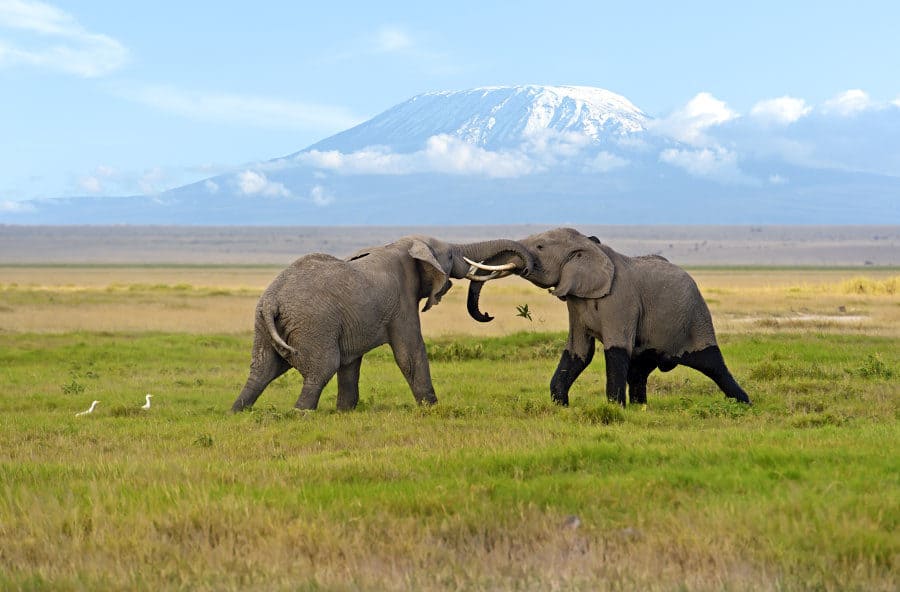
Amboseli is another outstanding destination for travelers taking their first safari in Kenya.
The park is particularly famous for elephants and views toward Mount Kilimanjaro across the border in Tanzania.
Kenya Wildlife Service describes Amboseli as one of Africa’s leading destinations for close encounters with large elephant herds. The ecosystem combines grassland, woodland, marshes and other habitats and supports considerable birdlife as well.
For photographers, Amboseli provides one of Africa’s most recognizable wildlife scenes: elephants crossing open plains with snow-capped Kilimanjaro rising in the distance.
Mountain visibility is never guaranteed. Early mornings often offer better opportunities before clouds build around the summit.
Amboseli also provides lions, buffaloes, giraffes, zebras, wildebeest, hippos, hyenas and numerous antelope species.
Two nights usually provide a comfortable introduction.
A typical stay might include an afternoon game drive on arrival, a longer morning safari the following day, an afternoon drive and another shorter drive before departure.
Lake Nakuru National Park: An Excellent Place to Look for Rhinos
Lake Nakuru provides an entirely different landscape from the Maasai Mara and Amboseli.
The lake, woodland, cliffs and surrounding habitats create a compact safari environment with excellent birdlife and opportunities to see large mammals.
Most importantly for beginners hoping to complete their Big Five experience, Lake Nakuru is known for both black and white rhinos. Kenya Wildlife Service identifies the park as an important sanctuary for both species.
Visitors may also encounter buffaloes, giraffes, zebras, waterbucks, baboons and other wildlife.
Flamingos can occur around the lake, although their numbers and locations vary according to water conditions and food availability. Travelers should avoid booking a Lake Nakuru safari solely because they expect enormous permanent flamingo gatherings.
Its location makes Nakuru particularly useful when creating a road itinerary between Nairobi and the Maasai Mara.
One night may be sufficient for a short itinerary, although two nights allow a more relaxed visit.
Lake Naivasha: A Relaxing Break Between Game Drives
Lake Naivasha offers something different from traditional vehicle-based safari experiences.
Instead of spending another full day inside a 4×4, visitors can take a boat excursion across the lake while watching hippos and waterbirds.
Depending on the itinerary, travelers may combine Naivasha with Crescent Island or nearby Hell’s Gate National Park.
The destination works particularly well as a pause between more intensive game-drive destinations.
For families and first-time travelers, this variety can be valuable. Sitting in safari vehicles for several days in succession can become tiring even when wildlife sightings are excellent.
Naivasha introduces open-air activities and slower travel while still keeping you surrounded by nature.
Samburu National Reserve: Something Different
Travelers with more time should consider adding Samburu to their Kenya safari itinerary.
Northern Kenya is drier and visually very different from the Maasai Mara.
The Samburu ecosystem is known for several animals associated with northern Kenya, including Grevy’s zebra, reticulated giraffe, gerenuk, Beisa oryx and Somali ostrich.
Elephants are another major attraction.
The landscapes feel rugged, warm and distinctly different from the green or golden plains found further south.
Because Samburu requires extra travel time, it tends to work better within a safari of eight days or longer.
Combining Samburu with Ol Pejeta Conservancy, Lake Nakuru and the Maasai Mara creates one of Kenya’s most rewarding extended circuits.
Tsavo East and Tsavo West
Together, Tsavo East and Tsavo West form an enormous safari region in southeastern Kenya.
Tsavo appeals particularly to travelers who appreciate scale, wilderness and landscapes where wildlife may be more dispersed.
The area is famous for elephants that can take on the reddish color of Tsavo’s soil.
Tsavo West combines wildlife with geological and scenic attractions such as Mzima Springs, lava formations and panoramic viewpoints. Kenya Wildlife Service also lists its rhino sanctuary among the park’s major attractions.
Tsavo works especially well for travelers continuing toward Kenya’s Indian Ocean coast.
A route through Tsavo can eventually connect with Mombasa, Diani Beach or other coastal destinations.
Nairobi National Park: Safari Without Leaving the Capital
Few major world capitals have a national park immediately beside the city.
Nairobi National Park therefore provides an unusual opportunity to begin or end a Kenya safari with wildlife viewing close to the international airport and city hotels.
Travelers with limited time can take a morning game drive before continuing with other Nairobi attractions or catching a later flight.
It can also help first-time safari travelers become familiar with game-drive routines before moving into larger reserves.
However, someone with five or more safari days should not use Nairobi National Park as a substitute for destinations such as the Maasai Mara or Amboseli.
Think of it as an excellent addition rather than the centerpiece of a longer Kenya safari.
What Animals Can You See on a Kenya Safari?
Wildlife is usually the main reason people book their first Kenya safari.
The country supports extraordinary diversity, but sightings always depend on habitat, season, weather, location and luck.
The most famous target is the Big Five: lion, leopard, elephant, buffalo and rhino.
The expression originally developed from hunting terminology and referred to animals considered particularly difficult and dangerous to hunt on foot. Modern photographic safaris have transformed the meaning into a wildlife-viewing checklist.
Kenya provides opportunities to see all five.
Lions are widespread in several major safari destinations. Elephants are particularly impressive in Amboseli, Tsavo and Samburu. Buffalo occur in numerous parks. Leopards are present but often difficult to locate because of their secretive behavior. Rhinos are more localized, making destinations such as Lake Nakuru and selected conservancies especially valuable.
But beginners should not allow the Big Five checklist to dominate their safari.
Cheetahs hunting on open plains can be just as memorable as seeing a lion.
Watching a giraffe drink, a newborn antelope struggle onto its feet, elephants communicate silently within a family group or hippos emerge from water after sunset can become equally powerful experiences.
Zebras, wildebeest, impalas, gazelles, warthogs, hyenas, jackals, baboons, monkeys, crocodiles and countless birds all contribute to the ecosystem.
The best safari travelers quickly learn that wildlife behavior is often more interesting than simply recording species.
How Many Days Do You Need for a Kenya Safari?
For most beginners, five to eight safari days provide a strong balance.
Three days can work for travelers with limited time, especially if the itinerary concentrates entirely on the Maasai Mara.
However, travel time becomes significant when attempting to combine multiple destinations.
A five-day Kenya safari can comfortably combine two areas.
A seven-day safari allows two or three major destinations at a better pace.
Ten days opens opportunities for Samburu, Ol Pejeta, the Rift Valley and Maasai Mara, or for a longer route combining Amboseli, lakes and the Mara.
Travelers staying two weeks can create a deeper Kenya wildlife safari or add several days on the Indian Ocean coast.
Current first-time safari guides also commonly identify five to seven days as an effective range for introductory itineraries rather than packing many parks into a short schedule.
Sample 3-Day Kenya Safari for Beginners
If you only have three days, concentrate on one destination.
Day 1: Nairobi to Maasai Mara
Leave Nairobi in the morning and travel toward the Great Rift Valley before continuing through Narok and into the Maasai Mara region.
Arrive at your lodge or tented camp, enjoy lunch if timing allows and take an afternoon game drive.
Your first hours in the Mara may immediately introduce you to zebras, giraffes, elephants, antelopes or predators.
Day 2: Full-Day Maasai Mara Safari
Spend the day exploring the reserve.
Depending on wildlife movement and your preferred pace, you may take a full-day game drive with a picnic lunch or separate morning and afternoon drives.
During migration season, your guide may explore areas near the Mara River. At other times of year, the focus may shift toward resident predators, plains game and watering areas.
Day 3: Maasai Mara to Nairobi
Take a final morning drive when possible before breakfast and departure.
Return to Nairobi for an evening flight or overnight stay.
A three-day safari is short, but keeping the itinerary focused provides far more wildlife time than attempting to squeeze in multiple parks.
Sample 5-Day Kenya Safari for Beginners
Five days allow a more complete introduction.
One practical combination is Maasai Mara plus Lake Nakuru or Lake Naivasha.
Day 1: Nairobi to Lake Nakuru
Travel from Nairobi toward the Great Rift Valley.
Arrive around Lake Nakuru and enjoy an afternoon wildlife drive looking for rhinos, buffaloes, giraffes and birdlife.
Day 2: Lake Nakuru to Maasai Mara
Enjoy another short game drive where timing permits, then continue toward the Maasai Mara.
Arrive in time for an afternoon safari.
Days 3 and 4: Maasai Mara
Spend two full days exploring the ecosystem.
Your guide can adapt each drive according to recent animal movements, weather, season and sightings reported by other guides.
Day 5: Maasai Mara to Nairobi
Enjoy breakfast and return to Nairobi.
Travelers seeking fewer road hours can replace some road transfers with scheduled bush flights, depending on budget.
The Classic 7-Day Kenya Safari for First-Time Travelers
Seven days provide enough time to experience contrasting landscapes without turning every day into a transfer.
A popular route combines Amboseli, the Rift Valley and Maasai Mara. Similar seven-day circuits appear frequently among current first-timer itineraries because they combine elephants, lakes or rhinos, and classic Mara wildlife.
Day 1: Nairobi to Amboseli National Park
Depart Nairobi after breakfast and drive south toward Amboseli.
After checking into your lodge, have lunch and rest before your first afternoon game drive.
Watch for elephants emerging from marshes and, if weather permits, views of Mount Kilimanjaro.
Day 2: Full Day in Amboseli
Leave early when temperatures are cooler and wildlife is active.
Morning light also provides some of the strongest opportunities for Kilimanjaro photography.
Return to your lodge for breakfast or lunch and relax during the warmer middle part of the day.
Take another game drive in the late afternoon.
Day 3: Amboseli to Lake Naivasha
Leave Amboseli and travel toward the Rift Valley.
Check into your Naivasha accommodation and spend the afternoon enjoying a boat excursion or relaxing beside the lake.
Day 4: Lake Naivasha to Lake Nakuru or Maasai Mara
You can structure this day according to your priorities.
Travelers particularly interested in rhinos can include Lake Nakuru.
Those who want more Mara time can continue toward the Maasai Mara instead.
Day 5: Maasai Mara
Spend a full day exploring the reserve.
The open savannah provides excellent opportunities for photography and wildlife observation.
Day 6: Maasai Mara
A second complete day prevents the Mara experience from feeling rushed.
Consider an optional hot-air balloon safari, a conservancy experience or another extended wildlife drive.
Day 7: Maasai Mara to Nairobi
Enjoy breakfast and return to Nairobi.
Depending on your international flight schedule, an additional Nairobi night may be wise rather than planning an immediate international departure after a long road transfer.
10-Day Kenya Safari for Beginners
With ten days, your itinerary can reach beyond Kenya’s classic southern circuit.
One attractive route is:
Nairobi → Samburu → Ol Pejeta → Lake Nakuru → Lake Naivasha → Maasai Mara → Nairobi.
This itinerary shows how dramatically Kenya’s ecosystems change as you travel.
Samburu provides northern species and semi-arid scenery. Ol Pejeta adds conservation experiences and rhinos. Nakuru introduces lake scenery and more rhino opportunities. Naivasha provides a relaxing break, while the Maasai Mara finishes the trip with classic savannah and predators.
Another excellent ten-day route combines Amboseli, Tsavo West, Tsavo East and the coast.
This works especially well for travelers who want a Kenya safari and beach holiday.
Best Time to Visit Kenya for Safari
There is no single month when Kenya suddenly becomes good for wildlife and another when it becomes bad.
Kenya offers safari experiences throughout the year.
What changes is the landscape, rainfall, animal distribution, crowd levels and price.
January to March
January and February are often relatively dry in many safari areas.
Vegetation can be easier to see through than during wetter periods, and wildlife tends to gather around reliable water.
Temperatures can be warm, especially in lower and northern regions.
These months can provide excellent conditions for photography and general wildlife viewing without the intense migration-season demand found later in the year.
April and May
These months commonly overlap with Kenya’s main rainy season.
Landscapes can become dramatically green.
Rain can affect unpaved roads, and some camps may temporarily close.
However, travelers who accept occasional rain may find lower accommodation prices and fewer safari vehicles.
The countryside can also look magnificent.
Photographers sometimes appreciate the dramatic skies, clean air and lush backgrounds.
June
June is an attractive transition month.
The heavier rains are usually easing, landscapes may remain green and visitor numbers are generally lower than during the July and August peak.
For travelers who want comfortable safari conditions without concentrating entirely on migration season, June can be a strong choice.
July to October
These months form Kenya’s best-known safari period.
Conditions are generally dry, wildlife viewing is excellent and migration herds may be present in the Maasai Mara.
July through October is commonly cited as the broad Mara migration window, but exact herd movement and river-crossing timing cannot be guaranteed.
This is also one of the busiest times.
Popular lodges, camps and flights can fill months ahead, while premium properties may charge their highest seasonal rates.
Travelers visiting during this period should plan early.
November
Short rains may arrive during November.
They often differ from the prolonged rains associated with the main wet season.
The return of fresh grass can make landscapes attractive, while lower visitor numbers may provide a quieter experience.
December
December can be a very enjoyable safari month, particularly around the holiday period.
Demand increases toward Christmas and New Year, so early booking becomes important for popular safari lodges.
Kenya Safari Cost for Beginners
One of the most common first-time questions is: How much does a Kenya safari cost?
There is no single answer.
Two itineraries visiting the same national parks may have dramatically different prices because of accommodation category, group size, vehicle type, park fees, internal flights, season and included activities.
As a broad planning framework, a budget or group safari might fall around USD 150–300 per person per day, while many private mid-range safaris fall around USD 300–700 per person per day. Premium and luxury safari experiences can rise above USD 700–1,500 per person per day, sometimes considerably higher at exclusive camps and private conservancies.
Current Kenya safari planning guides show similarly wide ranges, illustrating why travelers should compare what is actually included rather than looking only at the final package price.
These are planning estimates rather than fixed prices.
Safari rates change according to season and individual lodge policies.
What Usually Makes a Kenya Safari Expensive?
Accommodation is one major factor.
A simple tented camp outside a reserve costs far less than an exclusive luxury camp inside a private conservancy.
Transport is another.
A private 4×4 Land Cruiser with a dedicated professional guide naturally costs more per traveler when only two people share it compared with six travelers.
Park and conservancy fees also contribute significantly.
Premium safari destinations may charge substantial daily conservation or entry fees.
Domestic flights increase the price but can save many hours of driving.
Activities such as hot-air balloon safaris, private bush dinners and specialist photographic vehicles add further costs.
What Is Normally Included in a Kenya Safari Package?
A professionally organized private safari often includes safari transport, the services of an English-speaking driver-guide, accommodation, meals while staying at safari lodges or camps, park entry fees specified in the itinerary, game drives, airport transfers and bottled drinking water in the vehicle.
Some packages include domestic flights and selected activities.
Others do not.
Always request a written list of inclusions and exclusions.
Items commonly excluded include international flights, travel insurance, visa or travel authorization charges, gratuities, premium alcoholic beverages, laundry, optional balloon safaris and personal expenses.
Budget, Midrange or Luxury Kenya Safari?
Your accommodation category strongly affects both price and atmosphere.
Budget Safari
Budget does not necessarily mean a poor wildlife experience.
Wildlife does not care whether your room costs USD 100 or USD 1,500 per night.
A good guide in a well-maintained safari vehicle can provide extraordinary game viewing while guests stay in relatively simple accommodation.
Budget travelers may use permanent camps outside protected areas or join scheduled group departures.
The main compromises usually involve privacy, room quality, food variety and distance from prime wildlife areas.
Midrange Kenya Safari
Midrange safaris provide the best balance for many first-time visitors.
You can expect comfortable rooms or permanent tents, private bathrooms, good meals and convenient safari locations without paying ultra-luxury rates.
A private midrange itinerary also gives travelers flexibility over game-drive timing and stops.
For couples, families and small groups, this category often delivers excellent value.
Luxury Kenya Safari
Luxury safari experiences emphasize privacy, location, personalized service and highly refined accommodation.
Camps may contain only a small number of tents or suites.
Some include private plunge pools, exceptional dining, spa services, bush breakfasts and highly personalized guiding.
Private conservancies can further enhance the experience by reducing vehicle density and allowing activities that may not be permitted in some national parks or reserves.
For honeymooners, photographers and travelers celebrating special occasions, this can transform the atmosphere of the safari.
Private Safari or Group Safari?
Both approaches have advantages.
A group safari lowers the per-person cost because travelers share transport and guiding expenses.
It can also be social and enjoyable for solo travelers.
However, game-drive decisions are shared.
If another traveler wants to leave a lion sighting while you want to remain for another hour, the group must compromise.
A private safari provides far more flexibility.
You control departure times, photography stops and the general pace.
Families with children, couples, photographers and travelers with particular wildlife interests often benefit significantly from a private vehicle.
For a first-time safari where the budget allows it, a private Kenya safari is usually worth considering.
Safari Land Cruiser or Safari Van?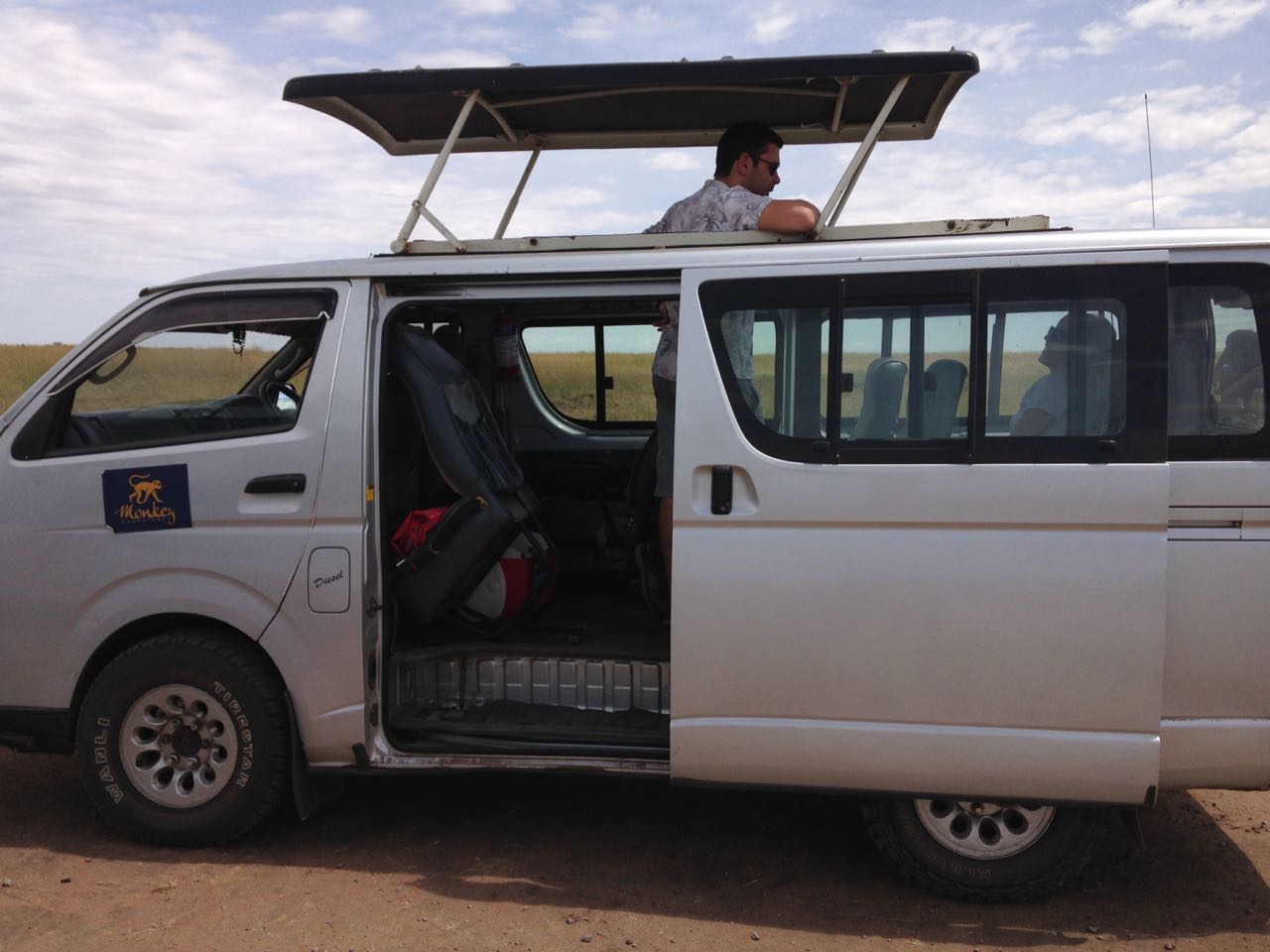
Vehicle choice matters more than many beginners expect.
The classic safari vehicle is a modified 4×4 Land Cruiser, normally fitted with a pop-up roof that allows travelers to stand while watching and photographing wildlife.
Land Cruisers perform well on rough tracks and during challenging weather.
Safari vans with pop-up roofs are also widely used, particularly for lower-cost Kenyan safaris.
They can be comfortable on established routes and may offer good value.
However, serious photographers and travelers following more demanding itineraries often prefer a 4×4 Land Cruiser.
Before booking, ask exactly which vehicle is included.
If photography is important, also ask how many people will share each vehicle.
Having a window position for each guest makes a noticeable difference.
Driving Versus Flying Between Safari Parks
Road travel allows you to see more of Kenya beyond the national parks.
You pass through towns, farming areas, highlands and Rift Valley landscapes.
Driving is also generally more economical.
The disadvantage is time.
A road transfer may consume much of a day.
Flying from Nairobi’s Wilson Airport to safari airstrips can dramatically reduce travel time.
Light-aircraft flights are particularly popular for the Maasai Mara.
Fly-in safaris work well for travelers with higher budgets, limited vacation time or a preference for luxury camps.
There is no requirement to choose one method for the entire holiday.
Many itineraries combine road and air travel.
For example, you could drive through Amboseli and the Rift Valley before flying from the Maasai Mara back to Nairobi.
What Is a Typical Day on Safari Like?
Beginners often imagine spending twelve continuous hours driving through the wilderness.
Sometimes full-day game drives happen, but many safari days follow a different rhythm.
You may wake before sunrise, drink coffee or tea and depart camp around dawn.
Early morning temperatures are pleasant and many animals are active.
After several hours of wildlife viewing, you return for breakfast or continue with a picnic depending on the plan.
The middle of the day often provides time for lunch, relaxation, reading, swimming or sleeping.
Late afternoon brings another game drive.
As temperatures drop, predators become more active and warm evening light creates excellent photography conditions.
You return to camp around sunset or according to park regulations.
Dinner follows, sometimes around a campfire or overlooking the surrounding wilderness.
In private conservancies where regulations permit, night drives may extend the wildlife experience beyond sunset.
The next morning begins early again.
After several days, most travelers naturally adapt to this rhythm.
What Should Beginners Pack for a Kenya Safari?
Safari packing should emphasize practicality.
You do not need an expensive expedition wardrobe.
Neutral, lightweight clothes work well.
Earth tones such as beige, brown, olive and khaki are practical because they do not show dust easily.
Bring several breathable shirts, comfortable trousers or shorts, a fleece or light sweater and a warmer layer for early morning drives.
Beginners are often surprised by how cool an open safari vehicle can feel before sunrise.
A lightweight waterproof jacket is useful during wetter periods.
Comfortable closed shoes are sufficient for most vehicle-based safaris.
Heavy hiking boots are unnecessary unless your itinerary includes substantial walking or trekking.
Sun protection is essential.
Pack sunscreen, sunglasses and a hat.
Insect repellent should also be included.
A small day bag makes it easy to keep your camera, phone, power bank, binoculars and personal items accessible during game drives.
Kenya Wildlife Service similarly recommends practical items such as binoculars, sunscreen, insect repellent and a first-aid kit for park visitors.
Should You Bring Binoculars?
Yes.
A safari without binoculars is still enjoyable, but binoculars dramatically improve wildlife viewing.
Animals are not always beside the road.
A leopard may rest in a distant tree.
A lion pride could lie far across open grassland.
Birds may appear high in the canopy.
Even an affordable pair of binoculars reveals behavior and details that are difficult to see with the naked eye.
If traveling as a couple, having one pair per person is ideal because the most interesting moments tend to happen simultaneously.
What Camera Do You Need for a Kenya Safari?
Modern smartphones can produce excellent photographs, particularly when wildlife approaches the vehicle.
However, they struggle when animals remain far away.
Travelers serious about wildlife photography should consider a camera with a telephoto lens.
A focal range reaching approximately 300mm or more can be extremely useful.
You do not need professional equipment to enjoy your safari.
Good composition, patience and understanding animal behavior often matter more than owning the most expensive camera.
Bring spare batteries, memory cards and a power bank.
Dust is common, so store equipment carefully and avoid changing lenses unnecessarily in dusty environments.
Kenya Safari for Beginners: What to Wear
Comfort matters more than fashion.
Safari clothing should handle dust, sunlight and changing temperatures.
During daytime drives, lightweight clothing is usually comfortable.
Morning and evening temperatures can feel surprisingly cool, particularly in highland regions and open vehicles.
Layering solves this problem.
Start with a T-shirt or lightweight long-sleeved shirt, then add a fleece or jacket that can be removed as temperatures rise.
Avoid extremely bright clothing where possible.
Neutral colors are useful, particularly during walking activities.
There is no need to dress in camouflage.
In some African countries camouflage patterns may be associated with military uniforms, so plain neutral colors are simpler.
At lodges, casual clothing is generally appropriate.
Even luxury safari camps rarely require formal evening wear.
Is Kenya Safe for First-Time Safari Travelers?
Millions of travelers visit Kenya for tourism, business and family travel, but safety conditions can change and vary by region.
Safari areas commonly used by international visitors are generally supported by established tourism infrastructure, professional operators, park authorities and lodge security systems.
Nevertheless, travelers should apply ordinary precautions.
Use reliable airport transfers, avoid displaying unnecessary valuables, follow your guide’s instructions around wildlife and consult current government travel advice before departure.
Safari wildlife should always be treated as wild.
Never leave a vehicle unless your guide confirms that it is permitted and safe.
Do not approach animals on foot without an authorized guide.
At unfenced camps, staff may escort guests between rooms and communal areas after dark.
Follow these procedures even if you cannot immediately see wildlife nearby.
Kenya Entry Requirements for Safari Travelers
Entry rules should always be checked close to departure because government requirements can change.
As of September 2026, Kenya’s official Electronic Travel Authorisation system states that travelers who require authorization should obtain an approved eTA before travel. The official application guidance requests a passport valid for at least six months after the planned arrival date, accommodation and itinerary information and other supporting details. Citizens of East African Community partner states are among those exempt under the current rules.
Travelers should use Kenya’s official government eTA platform rather than relying on unofficial third-party websites.
Check the latest requirements for your nationality before purchasing non-refundable travel arrangements.
Health Preparation for a Kenya Safari
Health requirements depend on your itinerary, nationality, origin of travel and personal medical circumstances.
Consult a qualified travel-health professional before departure, particularly regarding vaccinations, malaria prevention and any personal medications.
Yellow-fever certificate requirements can depend on where you are arriving from or traveling afterward.
Bring enough prescription medication for your entire trip and keep essential medicine in your hand luggage.
Staying hydrated is important because safari travelers spend considerable time outdoors in dry environments.
Use bottled or properly treated drinking water according to the guidance provided by your lodge or operator.
Travel insurance that includes emergency medical treatment and evacuation is strongly recommended.
Can Children Go on a Kenya Safari?
Yes.
Kenya can be an excellent family safari destination.
The key is adjusting the itinerary to children’s ages and attention spans.
Very young children may struggle with repeated four-hour game drives.
Families often benefit from private vehicles because game drives can be shortened or returned to camp when necessary.
Choose lodges with swimming pools, family rooms and activities between wildlife drives.
Some camps and walking activities have minimum age requirements, so confirm these before booking.
Children who are interested in wildlife often find safari exceptionally engaging because every drive becomes a real-world nature lesson.
Guides can make a significant difference by explaining tracks, animal behavior and ecosystems in an accessible way.
Kenya Safari for Seniors
Age alone should not prevent someone from enjoying a safari.
Most wildlife viewing happens while seated inside a vehicle.
However, getting into and out of high 4×4 vehicles can be difficult for travelers with restricted mobility.
Long drives on rough roads may also become uncomfortable.
If mobility is a concern, tell your safari operator during planning rather than after arrival.
They can adjust the itinerary, recommend accessible accommodation, reduce road transfers and consider internal flights.
A slower safari with longer stays in fewer parks is often more enjoyable for senior travelers than a fast circuit involving daily transfers.
First Kenya Safari for Solo Travelers
Kenya is also suitable for solo safari travelers.
The main challenge is cost.
Private safari vehicles and rooms priced for single occupancy can make a private trip expensive.
Joining a small group departure reduces these costs.
Solo travelers who value flexibility can still book private safaris but should request a detailed quotation showing single-room supplements and transport costs.
Tented camps are naturally social environments, particularly around shared lounges, dining spaces and evening campfires.
Solo travelers frequently meet people from around the world without needing to travel in a permanent group.
Kenya Honeymoon Safari
Kenya combines particularly well with honeymoon travel.
Couples can spend several nights in private safari camps and finish with a beach stay in Diani, Watamu, Lamu or another coastal destination.
Private conservancies around the Maasai Mara often appeal to honeymooners because they can provide quieter game viewing, boutique camps and personalized experiences.
Luxury properties may arrange private dinners, breakfast in the bush, sundowners or other romantic experiences.
Avoid making the itinerary too busy.
For a honeymoon, three nights in one excellent camp can create a stronger experience than moving every evening simply to increase the number of destinations visited.
Kenya Safari and Beach Holiday
One of Kenya’s greatest advantages is the ability to combine world-class wildlife with the Indian Ocean.
After early mornings and dusty safari tracks, several days on the coast can provide the perfect ending.
Diani Beach is among the most popular options.
Travelers can swim, relax, enjoy seafood, explore marine environments or simply sleep later after days of sunrise game drives.
Watamu provides another excellent coastal option and combines beaches with marine attractions.
Lamu offers a very different atmosphere shaped by Swahili history and architecture.
Flights can connect Nairobi or safari regions with the coast, making a Kenya safari and beach holiday practical even within a ten-to-fourteen-day vacation.
Maasai Mara Reserve or Private Conservancy?
This distinction confuses many beginners.
The Maasai Mara National Reserve is the famous public reserve where many traditional game drives take place.
Around it are privately or community-managed conservancies.
Conservancies frequently limit the number of camps and vehicles using their land.
Depending on the conservancy, activities may include night drives, guided walks and off-road approaches to selected sightings under controlled conditions.
The reserve provides excellent wildlife viewing and access to important migration areas.
Conservancies can offer quieter experiences.
Many travelers combine both.
For example, staying in a conservancy camp may allow game drives within the conservancy while also providing access to the main Maasai Mara Reserve.
Always confirm exactly which park and conservancy fees your package includes.
How to Choose a Kenya Safari Lodge
Do not judge safari accommodation by photographs alone.
Location matters enormously.
A beautiful lodge located far outside your main game-viewing area can add substantial daily driving.
Ask how long it takes to reach the nearest park gate or prime wildlife area.
Consider room comfort, meal plan, electricity availability, charging facilities, Wi-Fi, swimming pools, family facilities and whether the camp is fenced.
For photographers, location and game-drive flexibility may matter more than luxury finishes.
For families, reliable electricity, a swimming pool and larger rooms might matter more.
Honeymooners may prioritize privacy and scenery.
Choose accommodation according to how you actually travel rather than according to star labels.
How to Choose a Kenya Safari Operator
Your safari operator can influence almost every part of the experience.
Look for clear communication, transparent pricing and realistic wildlife expectations.
A professional operator should explain what the price includes, which vehicle will be used, where you will stay and which park fees are covered.
Be cautious when prices seem dramatically lower than comparable offers.
Ask what has been removed.
It might involve cheaper accommodation, a safari van instead of a Land Cruiser, a larger group size, fewer game drives or excluded park fees.
Also ask about payment terms and cancellation conditions before transferring money.
Your itinerary should list confirmed or proposed accommodation, meal basis, activities and transportation clearly.
Why Your Safari Guide Matters So Much
Travelers often spend weeks comparing lodges and only a few minutes thinking about their guide.
That priorities should almost be reversed.
A skilled guide knows how to read tracks, landscapes, bird alarms and animal behavior.
They understand where predators might move as temperatures change.
They know when to wait rather than rush toward another reported sighting.
They can explain why elephants behave differently around calves or why antelopes suddenly stare in one direction.
They also manage logistics.
A knowledgeable guide can adjust routes around road conditions, crowds and weather while keeping the experience relaxed.
When comparing Kenya safari packages, guiding quality deserves serious attention.
Common Kenya Safari Mistakes Beginners Should Avoid
The first mistake is visiting too many parks.
A rushed itinerary may look impressive on paper but feel exhausting in reality.
Spending one night in every destination means repeatedly packing, checking out, driving for hours and checking in again.
The second mistake is focusing entirely on the Great Migration.
The Maasai Mara offers excellent wildlife throughout the year.
Migration season is extraordinary, but Kenya should not be treated as if it becomes empty afterward.
The third mistake is selecting accommodation purely by price or appearance.
Location can have a greater impact on your experience than the room itself.
The fourth mistake is booking an international flight immediately after a long safari road transfer.
Road delays happen.
Leave a comfortable buffer, particularly before important international departures.
Another mistake is expecting safari sightings to follow a checklist.
Wildlife viewing is unpredictable by definition.
A good safari becomes more enjoyable when you appreciate behavior, landscapes and unexpected encounters rather than treating every drive as a mission to photograph five specific animals.
How Far in Advance Should You Book a Kenya Safari?
For peak periods, earlier is better.
July through October is especially popular in the Maasai Mara, as are Christmas and New Year dates.
Small camps have limited rooms, so the best-value properties may fill early.
Booking six to twelve months ahead provides strong accommodation choice for high-demand periods.
Travelers planning luxury camps, large family groups or migration safaris may benefit from even earlier planning.
During quieter months, shorter lead times are often possible.
However, early planning still allows better route design and lodge selection.
Should You Tip Safari Guides in Kenya?
Tipping is customary in safari tourism but should remain discretionary and linked to service.
Your tour operator or lodge can provide current recommended guidelines because practices vary between properties and safari styles.
Carry small amounts of cash for gratuities where appropriate.
Some lodges use communal tip boxes for behind-the-scenes staff, while guides may be tipped separately.
Do not allow tipping anxiety to dominate your trip.
Professional operators understand that customs differ internationally and can explain expectations.
Food on a Kenya Safari
Safari lodges generally provide generous meals.
Breakfast may include fruit, cereal, eggs, breads and hot options.
Lunch can be served at the lodge or packed as a picnic during full-day game drives.
Dinner is often a multi-course or buffet meal.
Vegetarian, vegan, gluten-free and other dietary requirements can usually be accommodated when communicated in advance.
Travelers with serious allergies should provide clear written information before arrival.
Safari lodges in remote locations purchase and transport supplies over considerable distances, so advance notice helps kitchens prepare properly.
Wi-Fi and Electricity on Safari
Most modern safari lodges provide some form of electricity, although systems vary.
Remote camps may use solar power or generators.
Electricity can sometimes be available only during particular hours.
Wi-Fi quality ranges from surprisingly fast to extremely limited.
Treat internet access as a convenience rather than a guarantee.
If you need reliable connectivity for work, discuss this before choosing accommodation.
Bring a power bank for phones and other small electronics.
Photographers carrying multiple batteries should confirm charging facilities before traveling.
Sustainable Kenya Safari Travel
Wildlife tourism works best when conservation, local communities and travelers all benefit.
Choose operators and accommodations that support responsible wildlife viewing and conservation practices.
Never pressure guides to drive too close to animals simply for a photograph.
Do not encourage off-road driving where it is prohibited.
Keep noise low during sightings.
Never feed wildlife.
Reduce unnecessary plastic use and carry a reusable water bottle where your operator provides safe refill options.
Kenya’s protected areas exist because conservation requires long-term investment.
Park fees and responsible tourism can contribute directly or indirectly to protecting these ecosystems.
Respectful Cultural Experiences in Kenya
A safari is also an opportunity to learn about Kenya’s people and cultures.
Maasai cultural visits are common around several safari regions.
Choose experiences that provide meaningful interaction and clearly benefit participating communities.
Ask questions respectfully rather than treating communities as attractions.
Photography should always happen with permission.
Buying locally made crafts can help support artisans, but avoid assuming that every roadside item is locally produced.
A knowledgeable guide can help you identify authentic community experiences.
Should You Add a Hot-Air Balloon Safari?
A balloon safari over the Maasai Mara is one of Kenya’s most famous optional activities.
Flights normally take place around sunrise when winds are suitable.
The experience provides a completely different perspective of the landscape.
Instead of searching for individual animals from ground level, you see river systems, wildlife trails and plains spread beneath you.
Balloon safaris are relatively expensive and weather dependent.
They are not essential for enjoying the Maasai Mara.
However, travelers with the budget often consider them a memorable addition, particularly on honeymoons or milestone trips.
Reserve in advance during busy seasons.
Is a Night Game Drive Worth It?
Night drives reveal a different side of African wildlife.
Some predators and smaller mammals become more active after sunset.
Guides use spotlights responsibly to search for nocturnal species.
Night drives are not permitted everywhere.
They are commonly associated with private conservancies and selected private areas.
If this experience interests you, confirm that your accommodation and location actually allow it rather than assuming every Maasai Mara safari includes night driving.
Walking Safaris in Kenya
Walking changes your perspective completely.
Inside a vehicle, attention naturally goes toward large animals.
On foot, tracks, insects, plants, dung, birds and smaller ecosystem details become far more noticeable.
Walking safaris must take place in designated areas under qualified guidance.
They are not opportunities to walk independently among dangerous wildlife.
Some conservancies and private camps specialize in guided bush walks.
Beginners who enjoy nature interpretation often find a short walk complements game drives beautifully.
Kenya Safari Photography Tips for Beginners
The most useful photography tip is simple: do not spend the entire safari looking through a camera.
Take photographs, then lower the camera and watch.
Some wildlife encounters last several minutes, giving you time to do both.
Avoid constantly asking your guide to move closer.
Sometimes the strongest photograph comes from showing an animal within the landscape rather than filling the entire frame.
Watch backgrounds.
A small vehicle movement may replace another safari car behind a lion with clean grassland.
Use early morning and evening light whenever possible.
Keep your camera ready before a sighting begins.
Wild animals rarely wait while travelers search through bags for batteries.
Kenya Safari for Beginners: Should You Combine Kenya and Tanzania?
Yes, especially if you have at least ten to fourteen days.
Kenya’s Maasai Mara and Tanzania’s Serengeti form part of the same wider ecosystem, making the combination geographically and thematically natural.
A Kenya–Tanzania safari can include the Maasai Mara, Serengeti and Ngorongoro Crater, with optional additions such as Amboseli, Lake Manyara or Tarangire.
The main consideration is border logistics.
Vehicles and guides may change depending on operator arrangements and regulations.
Flights can also connect major safari regions.
A combined trip usually costs more than concentrating on one country, but it provides remarkable landscape and wildlife diversity.
For a first African safari lasting only six or seven days, staying within Kenya generally creates a more relaxed itinerary.
Kenya Safari From Nairobi
Nairobi is the gateway for most Kenyan safaris.
Jomo Kenyatta International Airport receives international flights, while Wilson Airport handles many domestic safari flights.
Depending on arrival time, spending the first night in Nairobi may be sensible.
This allows travelers to recover from international flights before starting early road transfers.
From Nairobi, destinations such as Amboseli, Lake Naivasha and Lake Nakuru are relatively practical by road.
The Maasai Mara can also be reached by road, although flying from Wilson Airport can save considerable time.
When building a safari itinerary, treat Nairobi as more than a simple airport code.
Its location affects the logical order of your route.
Kenya Safari for Beginners: The Best Route
There is no universal perfect itinerary because travelers have different priorities.
However, a very balanced first-time route is:
Nairobi → Amboseli → Lake Naivasha or Lake Nakuru → Maasai Mara → Nairobi.
This sequence introduces contrasting landscapes while covering many of Kenya’s headline wildlife experiences.
Amboseli provides elephants and potential Kilimanjaro views.
The Rift Valley introduces lakes, birds, boat activities or rhinos depending on your stop.
The Maasai Mara delivers open savannah, big cats and exceptional general wildlife viewing.
For travelers with only five days, reduce the number of parks instead of speeding up the same route.
For travelers with ten days, add Samburu, Ol Pejeta or additional nights in the Mara.
The strongest first safari is rarely the itinerary with the largest number of park names.
It is the itinerary that gives each destination enough time.
Why Slow Safari Travel Often Produces Better Wildlife Experiences
Safari rewards patience.
A vehicle racing from one radio-reported sighting to another may technically show you more animals but provide less meaningful observation.
Imagine finding a leopard sleeping in a tree.
For twenty minutes nothing happens.
Then the leopard lifts its head.
A herd of impalas appears below.
The cat begins watching.
Another ten minutes pass.
It climbs down.
Suddenly the quiet sighting becomes one of the most exciting moments of the trip.
Travelers who constantly rush may miss these changes.
This is why spending additional nights in a smaller number of parks can produce a richer experience than collecting destinations.
What Makes Kenya Different From Other African Safari Destinations?
Every African safari country has its strengths.
Kenya’s advantage lies in accessibility, diversity and the concentration of famous ecosystems within one destination.
South Africa provides excellent self-drive opportunities and sophisticated infrastructure.
Botswana offers extraordinary wilderness and the Okavango Delta.
Tanzania contains the Serengeti and Ngorongoro.
Uganda and Rwanda specialize particularly strongly in primate experiences alongside savannah wildlife.
Kenya combines classic big-game safari, migration experiences, mountains, lakes, semi-arid northern landscapes and an Indian Ocean coastline.
It also works exceptionally well as part of a broader East African journey.
Travelers can combine a Kenya wildlife safari with gorilla trekking in Rwanda or Uganda, creating one of Africa’s most diverse wildlife itineraries.
Frequently Asked Questions About Kenya Safari for Beginners
Is Kenya good for a first safari?
Yes. Kenya is one of the world’s established safari destinations and offers excellent tourism infrastructure, diverse national parks, professional guides and wildlife experiences suitable for beginners.
How many days should my first Kenya safari be?
Five to seven safari days work very well for most first-time travelers. Three days can provide an excellent Maasai Mara introduction, while seven to ten days allows multiple ecosystems at a more comfortable pace.
Which safari park should I visit first in Kenya?
For many travelers, the Maasai Mara is the natural centerpiece because of its wildlife density, open landscapes and famous predators. Amboseli, Lake Nakuru, Lake Naivasha, Samburu and Tsavo are excellent additions depending on time and interests.
Can I see the Big Five in Kenya?
Yes. Kenya provides opportunities to see lion, leopard, elephant, buffalo and rhino. Actual sightings can never be guaranteed because the animals are wild.
What is the best month for a Kenya safari?
There is no single best month for everyone. July through October attracts travelers interested in the Maasai Mara migration period, while January through March can provide excellent general wildlife viewing. Green-season travel can provide attractive landscapes, lower visitor numbers and potentially better value.
Is the Great Migration guaranteed?
No. The migration is a natural process influenced by rainfall and grazing conditions. The broader July–October period is associated with herds in the Maasai Mara, but specific river crossings cannot be guaranteed.
How much should I budget for my first Kenya safari?
Budget and group safaris may begin around USD 150–300 per person per day. Many private midrange safaris fall around USD 300–700 per person per day, while luxury travel frequently exceeds USD 700 per person per day. Prices vary substantially with season, accommodation, park fees and transportation.
Are meals included on safari?
Most full-board safari lodge packages include breakfast, lunch and dinner. Confirm the exact meal plan because Nairobi stays and beach extensions may operate differently.
Do I need a 4×4 Land Cruiser?
Not necessarily, but 4×4 Land Cruisers are excellent safari vehicles and especially useful on rough roads and during wet conditions. Safari vans can offer more economical alternatives on many standard Kenyan routes.
Should I choose a private safari?
A private safari gives you greater control over timing, photography stops and daily pace. Group departures are usually less expensive. Families, couples and photographers often appreciate private vehicles.
Can I do a Kenya safari without camping?
Absolutely. Most visitors stay in permanent lodges or comfortable tented camps with real beds, private bathrooms and restaurant facilities.
A “tented camp” should not automatically be imagined as basic camping. Many are effectively boutique hotel rooms constructed beneath high-quality canvas.
Is there Wi-Fi in safari lodges?
Many camps and lodges provide Wi-Fi, although speed can be limited because of remote locations. If reliable internet is essential, confirm availability before booking.
Are mosquitoes a problem?
Mosquito presence varies by season and area. Bring appropriate insect repellent and consult a travel-health professional regarding malaria prevention before traveling.
Can I drink tap water?
Follow your accommodation and operator’s guidance. Bottled or safely filtered water is generally supplied on organized safaris.
What currency should I take?
Kenyan shillings are useful for local expenses. US dollars are also widely used for many tourism-related transactions, but notes may need to meet local acceptance conditions. Cards are increasingly common in hotels and larger establishments.
Do I need travel insurance?
Comprehensive travel insurance is strongly recommended. It should cover medical emergencies, evacuation where appropriate, cancellation and other risks relevant to your itinerary.
How early do safari days start?
Morning game drives often begin around sunrise, meaning wake-up calls may occur between approximately 5:00 and 6:00 a.m. depending on location and season.
Will I be able to get out of the safari vehicle?
Only in designated areas or when your guide confirms it is allowed. Never leave a safari vehicle independently around wildlife.
Can I combine Kenya with gorilla trekking?
Yes. Kenya combines exceptionally well with Rwanda or Uganda. Travelers can enjoy a classic savannah safari in Kenya and then fly to Kigali or Entebbe for mountain gorilla trekking.
Can I combine safari with Diani Beach?
Yes. A Kenya safari and Diani Beach combination is one of the country’s most popular holiday styles. Flights and road connections make it possible to transition from wildlife areas to the coast.
Final Advice for Your First Kenya Safari
Your first safari does not need to be complicated.
Start by deciding how many days you genuinely have.
Then identify the wildlife experiences that matter most.
If you want the classic East African landscape, make the Maasai Mara the centerpiece.
If elephants and dramatic photography appeal to you, add Amboseli.
If rhinos are important, consider Lake Nakuru or an appropriate conservancy.
If you want variety between long game drives, Lake Naivasha can provide a welcome change of pace.
If you have ten days or more, northern Kenya becomes possible.
Most importantly, avoid turning your safari into a race.
The purpose of traveling through Kenya is not to collect park names.
It is to have time to watch.
Time to sit beside elephants as they cross the plains.
Time to notice a lion pride beginning to wake after an afternoon sleep.
Time to watch giraffes disappear through acacia woodland.
Time to hear hyenas calling after darkness falls around camp.
Time to understand that a safari is not a zoo visit where every animal appears on schedule.
The unpredictability is part of what makes it unforgettable.
A thoughtfully designed Kenya Safari for Beginners should combine comfortable pacing, excellent guiding, suitable accommodation and enough time in the country’s strongest wildlife areas.
Get those elements right and your first Kenya safari is unlikely to feel like simply another holiday.
It becomes an introduction to East Africa that leaves you wanting to return.
Plan Your Kenya Safari With Universal Ventures Rwanda
Universal Ventures Rwanda organizes tailor-made East African journeys for couples, families, private groups, photographers and travelers visiting Africa for the first time.
We can help you design a personalized Kenya safari based on your travel dates, budget, preferred accommodation standard and wildlife interests. Your journey can include destinations such as the Maasai Mara, Amboseli, Lake Nakuru, Lake Naivasha, Samburu, Tsavo, Nairobi and the Kenyan coast.
Kenya can also be combined with Rwanda gorilla trekking, Uganda gorilla trekking, chimpanzee tracking and other East African wildlife experiences, allowing travelers to experience savannah wildlife and primates within one carefully planned journey.
Whether you prefer a comfortable midrange safari, private 4×4 adventure, family holiday, honeymoon, luxury safari or Kenya-and-Rwanda combination, the itinerary can be designed around the pace and experiences that suit you.
Universal Ventures Rwanda
Address: Kigali, Rwanda
Email: info@universalventuresrwanda.com
Website: www.universalventuresrwanda.com
Safari Services: Kenya Safaris | Rwanda Gorilla Trekking | Uganda Safaris | East Africa Combined Safaris | Private 4×4 Tours | Wildlife & Primate Safaris
Contact Universal Ventures Rwanda to start planning a personalized East African safari built around your dates, budget and travel interests.


