 Skip to content
A Kenya Safari with Beach Extension combines two completely different travel experiences in one journey: the excitement of wildlife viewing across Kenya’s savannahs and the slower rhythm of the Indian Ocean coast. One morning you may be watching lions crossing the grasslands of the Masai Mara, and several days later you can be swimming in warm tropical water at Diani Beach, snorkeling near Watamu or enjoying the cultural atmosphere of Mombasa.
Few African destinations make the transition from wildlife safari to tropical beach as naturally as Kenya. The country’s safari circuit includes the Masai Mara, Amboseli National Park, Tsavo East, Tsavo West, Lake Nakuru, Samburu and several private conservancies. Its coastline, meanwhile, stretches along the Indian Ocean and offers famous beach destinations including Diani, Watamu, Malindi, Mombasa and Lamu.
For international travelers who have crossed continents to visit East Africa, combining these two sides of Kenya can make far more sense than choosing between them. A safari provides early mornings, game drives, wildlife photography and changing landscapes. The beach extension then gives you time to slow down, sleep longer, swim, enjoy seafood, explore marine environments and relax before your international flight home.
A well-designed Kenya safari and beach holiday is therefore not simply a safari with a few beach nights attached at the end. The route needs to be planned intelligently. The right safari parks, beach destination, domestic flights, road transfers, accommodation standards and number of nights should all fit together.
This complete guide explains how to build that journey.
Why Choose a Kenya Safari with Beach Extension?
A Kenya Safari with Beach Extension works because the two halves of the holiday complement each other.
Safari days are usually active. You may wake before sunrise, spend several hours on game drives, stop for breakfast or lunch in the bush, return for a short break and leave again for an afternoon wildlife drive. Depending on your itinerary, you may also change camps or travel between national parks.
That energy is part of what makes an African safari memorable, but after five, six or seven days in the bush, a beach stay feels especially rewarding.
The Kenyan coast changes the pace completely.
Instead of watching the sunrise from a safari vehicle, you can watch it from a white-sand beach. Instead of searching the grasslands for elephants, cheetahs or lions, you may spend the day swimming, snorkeling, diving, taking a dhow excursion or simply doing very little.
This contrast is particularly attractive to honeymooners, couples, families and first-time travelers to Africa.
It also provides excellent value from a long-haul flight. Rather than flying to Kenya for only three or four safari nights, travelers can create a complete 10-, 12- or 14-day African vacation using one international arrival.
What Makes Kenya Ideal for a Safari and Beach Holiday?
Kenya’s geography gives travelers an unusual range of landscapes without requiring travel across an entire continent.
The Masai Mara delivers the classic open-savana safari associated with big cats, wildebeest, zebras, elephants and the wider Serengeti–Mara ecosystem. Amboseli is strongly associated with large elephant herds and views toward Mount Kilimanjaro. Tsavo offers enormous wilderness areas, red-earth landscapes and a logical overland connection toward the coast.
Kenya Wildlife Service describes Tsavo East as the country’s largest national park, covering approximately 13,747 square kilometers, while Tsavo West covers approximately 9,065 square kilometers. Together they form a vast conservation landscape in southeastern Kenya, making the Tsavo circuit particularly useful for travelers continuing toward Mombasa or Diani.
Once travelers reach the coast, the landscape changes from dry savannah and acacia country to palm trees, coral reefs and warm Indian Ocean water.
That geographical variety is the core appeal of a Kenya bush and beach safari.
Kenya Safari with Beach Extension: Which Safari Parks Should You Choose?
There is no single correct safari route.
Your best combination depends on the wildlife you most want to see, your available days, budget and preferred beach.
Masai Mara for a Kenya Safari with Beach Extension
For many first-time visitors, the Masai Mara is the natural starting point.
The Mara forms the northern part of the wider Serengeti–Mara ecosystem and is renowned for open grasslands, predator viewing and the seasonal movement of wildebeest and other grazing animals between Tanzania and Kenya.
Even outside the main migration period, the Mara has strong resident wildlife populations.
A typical stay is three or four nights.
Three nights allow travelers to experience several game drives without making the safari feel rushed. Four nights are especially useful for photographers or anyone who wants to include a conservancy, balloon safari or slower wildlife-viewing schedule.
From the Mara, flying to the coast is generally more practical than attempting a very long overland journey.
This makes a Masai Mara and Diani Beach holiday one of the cleanest Kenya safari beach combinations.
Amboseli National Park and the Kenya Coast
Amboseli is another excellent component of a Kenya safari beach itinerary.
The park lies in southern Kenya, close to the Tanzanian border, and is famous for elephant viewing and dramatic scenery dominated by Mount Kilimanjaro across the border in Tanzania.
Travelers often combine Amboseli with the Masai Mara before continuing to Diani.
Another option is Nairobi → Amboseli → Tsavo West → Tsavo East → Diani.
That sequence is particularly logical for travelers who prefer traveling by road because the route gradually moves southeast toward Kenya’s Indian Ocean coast.
Kenya Wildlife Service notes that Amboseli has road connections toward Tsavo West, further supporting its role in a southern Kenya safari circuit.
Tsavo East National Park
Tsavo East is especially important when planning a Kenya safari and beach holiday by road.
Its location between Nairobi and the coast means it can form a natural bridge between safari country and the Indian Ocean.
The landscape feels different from both Amboseli and the Mara. Red soil, broad horizons, the Galana River and the vast semi-arid wilderness create a safari atmosphere that is unmistakably Tsavo.
Elephants frequently take on the reddish color of the park’s soil after dust bathing, producing the famous image of Tsavo’s “red elephants.”
A Tsavo East safari is particularly convenient when your final beach destination is Mombasa, Diani, Watamu or Malindi.
Tsavo West National Park
Tsavo West offers a more varied landscape, including hills, lava formations, springs and wooded areas.
Mzima Springs is one of its best-known geographical features. KWS describes Tsavo West as a landscape of lava flows, springs, savannah and river environments.
Combining Tsavo West and Tsavo East creates a strong two-park safari without requiring travelers to fly across Kenya.
For families, repeat Africa visitors or travelers who prefer road journeys over multiple small aircraft flights, a Tsavo safari followed by a Diani Beach extension can be a very practical choice.
Lake Nakuru National Park
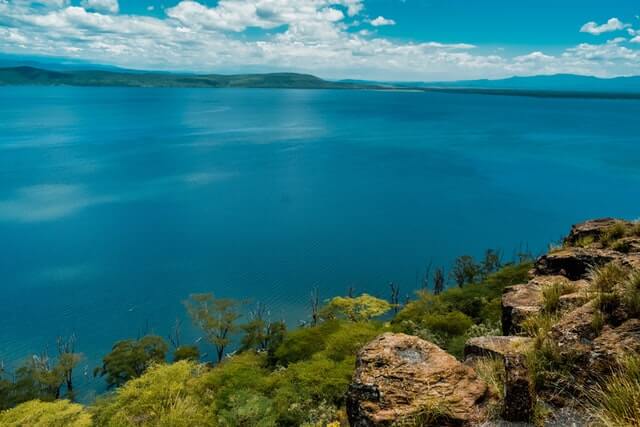
Lake Nakuru can be added between Nairobi and the Masai Mara or incorporated into a longer safari circuit.
Its appeal differs from the Mara. Travelers generally include Nakuru for ecological diversity, birdlife and opportunities to see species that may be more difficult elsewhere on a short Kenya safari.
However, adding every possible park does not necessarily make a safari better.
If you only have eight or nine days, spending two or three nights in a destination is normally more rewarding than changing hotels every night.
Lake Naivasha
Lake Naivasha is not a substitute for a major game reserve, but it can provide an interesting change in pace.
Boat experiences, lakeside accommodation and its position between Nairobi and western safari areas make Naivasha a useful stop on longer itineraries.
A typical circuit might run Nairobi → Naivasha → Masai Mara → Amboseli → Diani Beach.
For a 10-day trip, however, this may feel too busy. For 12 to 14 days, it becomes much more comfortable.
Samburu National Reserve
Samburu is an excellent option for repeat safari travelers or visitors who want landscapes and wildlife different from the traditional southern circuit.
Its location north of Nairobi means that combining Samburu with the coast requires more careful flight planning.
A Samburu → Masai Mara → Diani itinerary can be extraordinary, but it makes most sense for longer luxury or fly-in safaris where travel time can be minimized.
Which Is the Best Beach for a Kenya Safari and Beach Holiday?
Choosing your safari parks is only half the decision.
The Kenyan coast has several beach destinations, and they offer noticeably different experiences.
Diani Beach: The Classic Kenya Safari Beach Extension
Diani is the beach destination most frequently associated with a Kenya Safari with Beach Extension, and there are good reasons for its popularity.
Located on Kenya’s south coast, Diani combines a long stretch of white sand with a mature range of hotels, boutique properties, villas and resorts. Ukunda Airstrip provides convenient domestic flight access, which makes Diani especially attractive after a fly-in safari.
Travelers can spend several days doing almost nothing, or they can fill their stay with snorkeling, diving, boat trips, kitesurfing, spa experiences and excursions.
Diani is particularly suitable for honeymooners and couples because it can easily be made luxurious without losing the relaxed coastal atmosphere.
Families also benefit from the wide accommodation choice.
For first-time travelers who simply want the easiest answer to “Where should we go after our Kenya safari?”, Diani deserves serious consideration.
Kisite-Mpunguti and Marine Experiences Near Diani
A beach extension does not have to mean spending every day beside the hotel swimming pool.
South of Diani, the Kisite-Mpunguti Marine Protected Area provides access to coral environments and marine activities.
Kenya Wildlife Service identifies snorkeling, coral gardens, marine biodiversity, turtles and dolphin-related excursions among the area’s attractions. The protected area lies around the Shimoni–Vanga seascape in Kwale County.
This makes a marine excursion an excellent addition for travelers who want one active day during their beach stay.
A four-night Diani extension might therefore include two completely relaxed beach days and one marine excursion.
That balance keeps the coast portion interesting without recreating the busy schedule of the safari.
Watamu: Beach, Reefs and a Quieter Coastal Atmosphere
Watamu sits farther north along Kenya’s coast and has a different personality from Diani.
Travelers often choose Watamu because of its marine environment, reef activities and smaller-scale coastal character.
Kenya Wildlife Service manages Watamu Marine National Park and Reserve as part of its coastal protected-area network.
Watamu can be particularly attractive to divers, snorkelers and travelers who prefer spending more time exploring the ocean rather than staying entirely within a resort.
It also combines naturally with Malindi.
From a safari-planning perspective, Watamu can work especially well after Tsavo East because the eastern side of Tsavo provides road access toward the northern coast.
Diani vs Watamu
The choice is not about which beach is objectively better.
It is about travel style.
Diani usually provides the most straightforward all-round combination of beach quality, resort selection, air connections and safari compatibility.
Watamu may appeal more strongly to travelers interested in reefs, marine life, boutique coastal stays and a somewhat quieter holiday rhythm.
For a honeymoon centered on privacy and resort time, either can work.
For a first trip where simplicity matters, Diani is normally easier to integrate.
Mombasa: Beach Plus Swahili History and City Life
Mombasa should not be treated as simply another version of Diani.
It is Kenya’s major coastal city, with a long history shaped by Indian Ocean trade and Swahili culture.
Travelers choosing Mombasa can combine beach time with urban and historical exploration.
This makes the destination particularly useful for travelers who do not want four days of pure resort relaxation.
The Mombasa area also has easy links with Tsavo.
A route such as Nairobi → Amboseli → Tsavo West → Tsavo East → Mombasa allows the journey itself to create a geographical progression from inland Kenya to the ocean.
It can also reduce the need for domestic flights.
Lamu: A Slower and More Cultural Beach Extension
Lamu offers yet another type of coast experience.
It is more suitable for travelers drawn to atmosphere, Swahili architecture, history, sailing and slow travel than those looking primarily for a large beachfront resort.
Adding Lamu after a safari generally requires flights and therefore tends to work best on longer or higher-budget itineraries.
A Masai Mara safari followed by several nights in Lamu can be an excellent honeymoon combination.
The transition is dramatic: from wildlife-filled grasslands to a historic island environment shaped by centuries of Indian Ocean culture.
Kenya Safari with Zanzibar Extension
Although Zanzibar is in Tanzania rather than Kenya, searches for Kenya safari with Zanzibar extension are closely related to Kenya bush-and-beach holidays.
The combination is attractive because Zanzibar offers numerous beachfront resorts, Stone Town, spice-farm excursions, diving and an established international tourism infrastructure.
Travelers may complete the safari section in the Masai Mara or Amboseli and then fly toward Zanzibar, normally through a regional hub depending on current flight schedules.
Zanzibar becomes particularly attractive when travelers want to combine Kenya and Tanzania in one East African journey.
For example, a honeymoon might include four nights in the Masai Mara followed by five nights at a Zanzibar beach resort.
However, crossing an international border creates additional considerations. Travelers need to check current entry requirements, flight schedules and immigration procedures for both countries.
If simplicity is the main priority, staying on the Kenyan coast generally requires fewer moving parts.
Should the Safari or Beach Come First?
In most cases, safari first and beach second creates the better journey.
Safari requires earlier mornings, more structured schedules and greater daily activity. Finishing at the coast allows travelers to relax rather than trying to shift mentally from several quiet beach days back to 5:30 a.m. game-drive departures.
The beach also provides recovery time before a long international flight.
There are exceptions.
Travelers arriving in Mombasa might begin with a beach night before entering Tsavo.
Families arriving after a difficult overnight flight may also appreciate one relaxing day before starting the safari.
But for a classic Nairobi arrival and Diani departure, safari followed by beach is the most natural sequence.
How Many Days Do You Need for a Kenya Safari with Beach Extension?
The right length depends on whether your priority is wildlife, beach relaxation or an equal combination.
Seven days is possible.
Ten days is much more comfortable.
Twelve to fourteen days gives you the strongest balance.
Current ranking itinerary pages also commonly center their products around roughly 7–14 days, with 10- and 12-day structures appearing frequently.
7-Day Kenya Safari and Beach Holiday
With seven days, keep the plan simple.
Trying to visit four parks plus the beach will turn the trip into a series of transfers.
A better structure is one major safari destination plus one beach.
Spend approximately three nights in the Masai Mara and three nights in Diani, using domestic flights where possible.
Another solution is two nights in Tsavo plus four nights on the coast.
The second option works particularly well for travelers already arriving through Mombasa.
10-Day Kenya Safari with Beach Extension
Ten days gives you much more flexibility.
You could combine Masai Mara and Amboseli with Diani or spend longer in the Mara before the beach.
A balanced journey gives approximately five nights to the safari portion and four nights to the coast, with the remaining time used for arrivals or transfers.
For most first-time travelers, this is one of the strongest formats.
There is enough time to experience serious wildlife viewing without arriving at the beach exhausted.
12-Day Kenya Safari and Beach Itinerary
Twelve days allows the journey to become more diverse.
You can comfortably combine the Masai Mara with Amboseli and still spend four nights on the coast.
Alternatively, add Lake Nakuru or Naivasha between safari areas.
A 12-day itinerary also provides a little protection against flight disruptions or inconvenient international arrival times.
14-Day Kenya Bush and Beach Safari
Two weeks is ideal for travelers who want the safari and beach components to feel like complete holidays rather than short extensions.
You might spend eight nights across three wildlife destinations and five nights beside the Indian Ocean.
Another option is a slower safari using two major parks rather than three.
For example, four nights in the Masai Mara, three nights in Amboseli and five nights in Diani creates substantial time in every destination.
7-Day Kenya Safari with Beach Extension Itinerary
A compact trip can still work extremely well when unnecessary transfers are removed.
Day 1: Nairobi to Masai Mara
Arrive in Nairobi and connect to the Masai Mara by road or light aircraft depending on your schedule and budget.
A flight saves time and allows the safari experience to start quickly.
After arriving at the camp, enjoy an afternoon game drive if timing permits.
Day 2: Masai Mara Safari
Spend the day exploring the Mara.
Morning and afternoon game drives usually provide flexibility, although some travelers prefer a longer full-day drive with a picnic lunch.
The focus is not simply checking species from a list.
Good guiding means spending time understanding animal behavior, landscapes and the ecosystem.
Day 3: Masai Mara
Enjoy another full safari day.
Travelers visiting during migration season may concentrate on areas where large herds are present, while year-round safaris may focus more strongly on resident predators and general game.
Day 4: Masai Mara to Diani Beach
Take a morning game drive if flight timing allows, then connect toward the coast.
Arrive at Diani and check into your beach resort.
The transformation from savannah to tropical coast is part of the experience.
Day 5: Diani Beach
Keep the first full coast day free.
After several safari mornings, many travelers appreciate having absolutely nothing scheduled.
Swim, walk along the beach or enjoy your resort facilities.
Day 6: Diani or Kisite-Mpunguti Excursion
Choose between another relaxed beach day and a marine excursion.
Snorkeling and ocean activities in protected coastal areas can add an entirely different wildlife dimension to the holiday.
Day 7: Departure
Transfer to Ukunda or Mombasa depending on your onward flight arrangements.
Where possible, avoid planning a tight connection between a domestic flight and an international departure.
10-Day Kenya Safari with Beach Extension Itinerary
For many travelers, ten days gives an excellent balance.
Day 1: Arrival in Nairobi
Arrive at Jomo Kenyatta International Airport and transfer to your Nairobi hotel.
If the flight arrives early enough, you may continue directly toward the safari circuit, but a Nairobi night can make the first day less stressful.
Day 2: Nairobi to Masai Mara
Travel to the Masai Mara and begin your safari.
An afternoon game drive introduces the ecosystem and gives you the first chance to encounter wildlife.
Day 3: Masai Mara
Enjoy morning and afternoon wildlife viewing.
Patience matters on safari.
Instead of continually moving from sighting to sighting, allow your guide time to read animal behavior.
A lion pride sleeping at 8:00 a.m. may become dramatically more interesting an hour later.
Day 4: Masai Mara
Use the third Mara day to explore a different section of the reserve or conservancy.
Optional experiences can include a balloon safari or a carefully arranged cultural visit, depending on where you are staying.
Day 5: Masai Mara to Amboseli
Connect toward Amboseli.
Depending on the itinerary, this may involve flying through Nairobi or traveling partly by road.
Do not underestimate transfer time when designing a multi-park safari.
Day 6: Amboseli National Park
Spend a full day in Amboseli.
Wildlife viewing is influenced by season, water availability and animal movement, so no ethical operator can guarantee a particular sighting.
The landscape itself is a major part of the Amboseli experience.
Day 7: Amboseli to Diani
Continue toward Kenya’s coast.
Travel can be arranged by a combination of road and air depending on the current schedule and the rest of your itinerary.
Check into your beach property and enjoy the evening.
Day 8: Diani Beach
Enjoy a free beach day.
Day 9: Diani Beach
Choose between resort relaxation and an optional marine or coastal activity.
Day 10: Departure
Transfer for your onward flight.
This itinerary is straightforward, geographically varied and suitable for couples, families and first-time safari travelers.
12-Day Kenya Safari with Beach Extension
Travelers with twelve days can slow the pace and add another landscape.
Day 1: Arrival Nairobi
Meet your representative and transfer to your hotel.
Day 2: Nairobi to Lake Nakuru or Naivasha
Travel into the Rift Valley.
This breaks the route toward the Mara and introduces a completely different environment.
Day 3: Continue to Masai Mara
Drive into the Mara region and begin wildlife viewing.
Days 4 and 5: Masai Mara
Spend two complete days exploring the reserve or surrounding conservancies.
Three consecutive nights in one safari destination can dramatically improve the experience compared with constantly changing accommodation.
Day 6: Masai Mara to Amboseli
Travel south toward Amboseli.
Day 7: Amboseli
Enjoy a full safari day.
Day 8: Amboseli to the Kenya Coast
Continue toward Diani using the most efficient available transport for your travel dates.
Days 9, 10 and 11: Diani Beach
Give the coast enough time to feel genuinely relaxing.
Include one optional excursion and leave the remaining days unstructured.
Day 12: Departure
Transfer for your onward international connection.
14-Day Kenya Safari and Beach Holiday
A two-week itinerary can move beyond the basic safari-plus-beach formula.
One strong route is Nairobi → Masai Mara → Lake Naivasha → Amboseli → Tsavo West → Diani.
Another is Nairobi → Samburu → Masai Mara → Diani.
The first emphasizes geographical flow.
The second prioritizes safari diversity before flying to the coast.
A third option, particularly attractive for honeymooners, is to spend fewer nights changing parks and more nights in exceptional accommodation.
You could stay four nights in a private Mara conservancy, three nights in Amboseli and five nights at a boutique beach property.
This slower form of travel is often more satisfying than maximizing the number of locations.
Masai Mara and Diani Beach: The Classic Combination
Search demand around Masai Mara and Diani Beach is strong because the combination is easy to understand.
The Mara represents the image many travelers already associate with Kenya: vast plains, safari vehicles, big cats and grazing herds.
Diani represents its opposite: ocean, white sand, palm trees and relaxation.
Because domestic aviation connects Kenya’s main safari regions with coastal gateways, travelers can avoid spending several days retracing road routes.
This is why Mara + Diani works particularly well for honeymoons.
Couples can invest in a high-quality safari camp for three or four nights, then change completely to a beachfront suite or boutique resort.
Amboseli and Diani Beach Safari
Amboseli and Diani create another powerful combination.
The route works especially well when the safari also includes Tsavo.
A road itinerary can move progressively from Nairobi into Amboseli, then through Tsavo and finally south toward the coast.
Unlike Mara + Diani, which often benefits from flying, the southern safari circuit can make road travel part of the overall experience.
For travelers who enjoy seeing the landscape change gradually, this can be more rewarding than airport transfers.
Tsavo and Diani Safari
A Tsavo and Diani safari is one of the most efficient bush-and-beach combinations for travelers prioritizing the Kenyan coast.
Tsavo East and Tsavo West together create an enormous safari region, and their location means you can finish the wildlife section much closer to the Indian Ocean.
The route is excellent for families because it can reduce the number of small-aircraft flights.
It also works for travelers beginning or ending their holiday in Mombasa.
A typical itinerary may include one or two nights in Tsavo West, two nights in Tsavo East and four or five nights in Diani.
Kenya Safari and Mombasa Beach Holiday
A Kenya safari and Mombasa beach holiday appeals to travelers interested in more than a resort stay.
Mombasa adds a cultural and historical dimension to the beach extension.
The city’s coastal position means travelers can combine Indian Ocean time with urban exploration rather than staying isolated in a resort for the entire beach portion.
Tsavo is the natural safari partner.
For a week-long journey starting at the coast, travelers could spend several nights in Tsavo followed by Mombasa.
For a longer journey from Nairobi, Amboseli can be added before Tsavo.
Kenya Safari and Watamu Beach
Watamu is one of the strongest alternatives to Diani.
It is especially appealing when marine activities are a priority.
The Kenyan coast supports protected marine environments including Watamu Marine National Park and Reserve, Mombasa Marine National Park and Reserve, Kisite-Mpunguti and Diani Chale National Reserve.
A Watamu extension can work particularly well after Tsavo East.
For travelers interested in snorkeling, diving and ocean ecosystems, spending four or five nights here provides enough time for both activities and relaxation.
Best Time for a Kenya Safari with Beach Extension
There is no single month that is perfect for every part of Kenya.
The safari experience, migration movements, coast conditions, rainfall and accommodation prices all vary during the year.
The key is deciding which component matters most.
January to March
The first months of the year can be excellent for Kenya travel.
Safari landscapes can remain productive, temperatures are warm and the coast can be very attractive.
This period is worth considering for couples and honeymooners who are not specifically traveling for the famous Mara river-crossing period.
April and May
Longer rains can affect parts of Kenya during this period.
However, “rainy season” does not automatically mean constant rain from morning to evening.
There can be advantages, including greener landscapes and potentially lower accommodation rates.
The trade-off is increased weather uncertainty and, depending on the location, more challenging road conditions.
Travelers considering this period should prioritize good logistical planning rather than assuming the cheapest offer will provide the best experience.
June
June can be a very attractive transition month.
Landscapes may still show green-season influence while drier conditions begin becoming established.
It can also provide a good balance before some of the busiest travel weeks of July and August.
July to October
This period receives significant attention because it overlaps with the dry season and the period when the Great Migration may be present in the wider Mara area.
Wildlife movement is natural and timing changes from year to year, so specific river crossings should never be promised.
The period is also popular, which means lodges, camps and domestic flights can fill earlier.
If your dream journey involves the Mara followed by Diani, booking well in advance is sensible.
November and December
Shorter rains may occur in parts of the country, but travel remains possible and wildlife viewing continues.
December holiday dates are particularly popular and can command higher accommodation prices.
Travelers considering Christmas or New Year should reserve both safari camps and coastal properties early.
Great Migration Safari and Beach Holiday
The Great Migration is one of the most searched safari experiences in East Africa.
However, it is important to understand what it actually is.
Wildlife does not arrive according to hotel calendars.
The migration is a continuous ecological movement through the Serengeti–Mara ecosystem, influenced by rainfall, grazing conditions and water.
When large herds are present in Kenya, the Masai Mara becomes the obvious safari centerpiece.
A migration-focused Kenya Safari with Beach Extension might include four nights in the Mara rather than two.
That extra time improves your chances of meaningful wildlife viewing and reduces pressure to chase every reported sighting.
Afterward, fly to Diani or another coast destination for four or five nights.
The beach creates a perfect contrast after several intensive safari days.
Kenya Honeymoon Safari and Beach Holiday
Few honeymoon formats work as naturally as safari plus beach.
The two experiences create variety without requiring completely separate vacations.
Begin with a small tented camp or luxury lodge where daily game drives become the central experience.
Finish at the coast in a private villa, boutique resort or beachfront suite.
A honeymoon itinerary should generally avoid excessive hotel changes.
Romantic travel benefits from time.
Rather than trying to see the Mara, Nakuru, Naivasha, Amboseli, Tsavo and Diani in ten days, choose two safari areas and one beach.
For example, three or four nights in the Mara, two nights in Amboseli and four nights in Diani creates a far more comfortable trip.
Another excellent choice is four nights in the Mara followed directly by five nights at the coast.
Luxury can also come from privacy rather than simply selecting the most expensive hotels.
Private transfers, a private safari vehicle, spacious accommodation and careful scheduling often matter more than adding unnecessary activities.
Kenya Family Safari and Beach Holiday
A Kenya safari and beach trip can work extremely well for families.
However, itineraries should be designed differently from adult-only safaris.
Children may not enjoy spending nine hours in a vehicle every day.
A private safari vehicle provides flexibility because families can adjust departure times and return to the lodge when needed.
Swimming pools at safari lodges can also be surprisingly important.
After several wildlife days, the beach gives children space to relax and move freely.
Diani is particularly convenient because of its broad accommodation choice and easy access to family-friendly beach activities.
Parents should always check age restrictions for specific safari activities, room configurations and marine excursions before confirming the trip.
Luxury Kenya Safari and Beach Holiday
A luxury safari is not defined only by expensive accommodation.
The most important upgrades are often logistical.
Flying between remote safari areas can save entire days.
Private vehicles give travelers more control over wildlife sightings.
Smaller camps generally provide more personalized service.
Private conservancies can offer activities that differ from those permitted within some national reserves.
On the coast, luxury may mean a private villa, beachfront suite, boutique property or highly personalized resort.
A luxury Kenya Safari with Beach Extension might therefore combine a fly-in Mara conservancy safari with Diani, Watamu or Lamu.
The itinerary should prioritize seamless travel rather than trying to demonstrate luxury through constant upgrades and extras.
Budget Kenya Safari and Beach Holiday
A combined safari and beach trip does not have to be ultra-luxury.
The biggest cost-saving decisions involve transportation, accommodation category and number of parks.
Road travel costs less than relying entirely on scheduled bush flights, especially for groups.
Midrange lodges can provide excellent comfort without the cost of premium safari camps.
At the beach, choosing a good midrange hotel rather than a private villa can dramatically reduce the package cost.
The key is not to save money in ways that damage the actual experience.
An unrealistic itinerary requiring 10 hours of driving between one-night stays is not good value simply because the headline price is lower.
Fewer destinations with sufficient time in each often provide both a better holiday and better value.
How Much Does a Kenya Safari and Beach Holiday Cost?
There is no meaningful single price because safari costs depend on several variables.
Travel season matters.
Safari accommodation can range from relatively simple camps to exclusive lodges costing several times more.
Private and shared safari arrangements differ.
Park fees, conservancy fees, domestic flights and beach hotel meal plans also affect the final cost.
Current commercial listings illustrate this spread. SafariBookings presently shows hundreds of Kenya safari-and-beach options, while individual 2026 itinerary pages publish packages ranging from lower-midrange trips into several-thousand-dollar luxury combinations.
As a general planning principle, travelers should compare what is included rather than looking only at the final number.
A cheaper package may exclude domestic flights, park fees, drinks, transfers or certain meals.
A more expensive package may include private guiding, better-positioned camps and efficient flights that save significant travel time.
Request a clear written inclusion and exclusion list before paying.
What Should a Kenya Safari Beach Package Include?
A properly quoted package should clearly explain transportation, accommodation and activities.
For the safari portion, confirm whether transportation uses a safari Land Cruiser, safari van or domestic aircraft.
Check whether the vehicle is private.
Confirm which park fees are included.
Accommodation should specify the room type and meal plan.
At the coast, determine whether the property is booked on bed-and-breakfast, half-board, full-board or all-inclusive terms.
Airport and airstrip transfers should also be listed.
The quotation should state whether domestic flights are included and what luggage limits apply.
Do not assume that “all-inclusive safari” automatically means every drink, optional excursion, visa, gratuity or personal expense is covered.
Fly-In Safari vs Road Safari
This decision can significantly change both the price and feel of the holiday.
Fly-In Safari
Flying saves time.
This is particularly valuable when combining the Masai Mara with the coast.
Small aircraft can connect safari regions with Nairobi and, depending on current schedules, coastal airports or airstrips.
A fly-in safari works well for honeymooners, luxury travelers and visitors with limited time.
The main disadvantage is cost.
Luggage limits may also be stricter than those on international aircraft, so travelers should confirm baggage requirements before packing.
Road Safari
Road safaris provide a stronger sense of Kenya’s geography.
You see towns, farmland, escarpments and changing vegetation between wildlife areas.
They can also be considerably more economical for private groups.
Routes involving Amboseli and Tsavo are especially well suited to overland travel toward the coast.
The disadvantage is time.
Distances that appear short on a map may take much longer than expected due to road conditions, traffic, park gates and stops.
The best choice is sometimes a combination: travel overland through parks where the route is interesting, then fly when a long transfer would waste an entire day.
Nairobi to Diani After Safari
Travelers sometimes assume that every Kenya safari must return completely to Nairobi before reaching the coast.
That is not always necessary.
The most efficient connection depends on your final safari location and available domestic flights.
From the Masai Mara, flying is generally the logical option.
From Amboseli, flight and road combinations are possible depending on the schedule.
From Tsavo, continuing by road to the coast can be very practical.
A well-designed itinerary should minimize unnecessary backtracking.
This is one reason travelers benefit from planning the safari and beach portions together instead of booking them independently.
Choosing the Right Beach Hotel
Do not select your beach accommodation only from photographs.
Location matters.
Some travelers want a lively resort with restaurants, entertainment and multiple swimming pools.
Others want privacy and silence.
Families may prioritize connecting rooms, children’s activities and easy meals.
Honeymooners may prefer a smaller property with more private spaces.
Divers may care more about access to a good dive center than about a huge swimming pool.
The meal plan also changes the experience.
An all-inclusive resort can be convenient, particularly for families.
Bed-and-breakfast may be better for travelers who want to explore local restaurants.
Half-board often provides a useful compromise.
Safari Lodge vs Tented Camp
The term “tented camp” sometimes creates the wrong impression for first-time travelers.
Safari tents can range from simple permanent tents to extremely luxurious suites with private bathrooms, large beds, decks and full lodge-style service.
The choice between lodge and camp is primarily about atmosphere.
Large lodges may offer more facilities.
Smaller camps often provide intimacy and a stronger sense of being surrounded by the bush.
For a safari-and-beach holiday, the contrast can be enjoyable.
Stay in a tented safari camp, then switch completely to a beachfront hotel.
The two environments make the journey feel larger and more varied.
What Wildlife Can You See on a Kenya Safari?
Kenya supports extraordinary wildlife diversity, but sightings can never be guaranteed.
The Masai Mara is well known for lions, cheetahs, leopards, elephants, buffalo, wildebeest, zebras, giraffes, hyenas and numerous antelope species.
Amboseli is particularly celebrated for elephants.
Tsavo supports a huge range of mammals and birds across its extensive wilderness.
Rhino viewing opportunities vary by location.
A good safari should not be reduced to racing around for the Big Five.
Watching a cheetah scan the plains, elephants interacting at a water source, giraffes moving through woodland or hyenas communicating can be equally memorable.
Your guide plays a major role in helping interpret these behaviors.
Beach Wildlife and Marine Experiences
The wildlife experience does not end when the safari ends.
Kenya’s marine protected areas support coral ecosystems, fish, turtles and other marine life.
Kisite-Mpunguti, for example, protects coral islands and reefs and offers snorkeling, diving and other marine activities. KWS also identifies the area as habitat for turtles and diverse marine species.
Responsible marine tourism is important.
Wild animals should not be chased, crowded or handled simply to produce photographs.
Choose operators that respect protected-area regulations and wildlife-viewing guidelines.
Kenya Safari and Beach Packing Guide
Packing for both safari and beach requires a little more thought than packing for either experience alone.
Safari clothing should be comfortable and practical.
Neutral colors work well, particularly for walking activities where applicable.
Layers are useful because early mornings can feel much cooler than the middle of the day.
A light jacket or fleece can be valuable.
A wide-brimmed hat, sunglasses and sunscreen are important in both safari and coastal areas.
Binoculars dramatically improve wildlife viewing even when your safari vehicle has one shared pair.
For photography, bring sufficient batteries and storage.
At the beach you will need lightweight clothing, swimwear and suitable sun protection.
Reef-conscious sun protection and responsible water-activity choices are worth considering around marine environments.
If domestic light aircraft are included, pack with the aircraft’s luggage limitations in mind rather than the much larger allowance of your international flight.
Health Preparation for a Kenya Safari and Beach Holiday
Travelers should seek individualized medical advice from an appropriate healthcare professional before traveling.
Health recommendations can depend on your nationality, travel history, age, medical circumstances, exact destinations and length of stay.
Do not rely solely on generic travel blogs for medical decisions.
Malaria risk and recommended precautions can vary by region and individual circumstances.
Travel insurance should include appropriate medical coverage.
For safari activities, travelers should also consider dust, sun exposure, dehydration and long hours in vehicles.
Drink sufficient safe water and protect yourself from excessive sun.
Entry Requirements for Kenya
Entry rules can change, so verify requirements shortly before traveling using official Kenyan government sources.
Do not depend entirely on an old blog post, screenshot or social media comment.
Passport validity requirements, electronic travel authorization processes and rules for minors may change over time.
Travelers combining Kenya with Tanzania or another East African country should separately verify the entry requirements for every border they will cross.
This is particularly important when adding Zanzibar to a Kenya safari.
Travel Insurance
Travel insurance is strongly recommended for an international safari.
A good policy should reflect the value and nature of the trip.
Safaris can involve expensive prepaid accommodation, park arrangements and domestic flights.
Look carefully at cancellation coverage, medical treatment, emergency evacuation, baggage protection and missed connections.
If your itinerary contains high-value non-refundable components, confirm that the policy limits are sufficient.
Buy suitable insurance early rather than waiting until departure week.
Photography on a Kenya Safari
Kenya is an exceptional destination for wildlife photography.
However, successful safari photography is less about owning the biggest camera and more about positioning, light, patience and guiding.
Morning and late-afternoon light often provides softer conditions.
Animal behavior is more important than simply collecting portraits.
Spend time with a subject.
Observe what the animal is doing.
A herd of elephants interacting may produce far stronger images than twenty rushed sightings of unrelated species.
Discuss your photography interests with the operator before the safari.
A private vehicle can be valuable because you control how long you remain at sightings.
Photographers may also benefit from having fewer passengers in the vehicle so everyone can access a window or open roof position.
Kenya Safari with Beach Extension for First-Time Africa Travelers
First-time visitors sometimes try to do too much because they may not know when they will return.
The result can be an exhausting itinerary.
Kenya already offers enormous diversity.
You do not need seven national parks to experience the country properly.
A strong first trip might include the Masai Mara, Amboseli and Diani.
Another might focus on Amboseli, Tsavo and the coast.
Three carefully chosen locations are enough for an excellent 10- or 12-day vacation.
Give yourself time to appreciate them.
Private Kenya Safari and Beach Holiday
A private safari offers several advantages.
You can adjust departure times.
You decide how long to stay at a sighting.
Families do not need to coordinate around unrelated travelers.
Photographers can position themselves more effectively.
Couples can enjoy greater privacy.
A private safari does not necessarily mean an ultra-luxury safari.
Midrange accommodation can still be combined with a private vehicle.
For many travelers, that represents better value than spending significantly more on hotels while sharing every game drive.
Kenya Safari with Beach Extension for Solo Travelers
Solo travelers can also combine safari and beach successfully.
The main challenge is cost.
Private safari transport is divided among fewer people, and accommodation may involve single supplements.
Joining selected shared safari departures can reduce expenses.
Another option is keeping the safari short and high-quality before extending the trip independently at the coast.
Diani, Mombasa and Watamu all offer accommodation across a broad range of price categories.
Solo travelers should pay particular attention to transfer arrangements, especially when arriving at unfamiliar airports or airstrips.
Sustainable Safari and Beach Travel
Responsible tourism is relevant in both halves of the journey.
In national parks, follow park regulations and your guide’s instructions.
Do not pressure guides to drive off established routes where this is prohibited.
Avoid feeding wildlife.
Keep noise levels appropriate around animals.
KWS visitor guidelines emphasize maintaining distance from wildlife, staying on established routes, respecting speed limits and avoiding feeding animals.
At the coast, responsible travel includes respecting reefs and marine animals.
Do not stand on live coral.
Avoid operators who chase or crowd marine wildlife.
Reduce unnecessary plastic use.
Support locally owned businesses and community initiatives where appropriate.
A safari and beach holiday depends directly on healthy ecosystems, so conservation should not be treated as an optional marketing phrase.
Common Mistakes When Planning a Kenya Safari and Beach Holiday
The most common mistake is adding too many destinations.
Changing hotels almost every night might look impressive on an itinerary, but it creates a poor travel rhythm.
Another mistake is underestimating road distances.
A destination that appears close on a map may involve slow roads, gate procedures and traffic.
Travelers also sometimes book their safari and beach holiday separately without checking how the two components connect.
That can create unnecessary Nairobi nights or expensive last-minute domestic flights.
Another mistake is selecting the beach entirely by hotel price.
A cheaper property that does not match your preferred atmosphere can reduce the value of several days of the holiday.
Finally, do not schedule an important international connection too tightly after a domestic bush flight.
Build sensible margins.
Should You Book a Package or Plan Everything Separately?
Independent booking gives travelers full control, but safari logistics are more complicated than standard city travel.
A safari operator can coordinate vehicles, guides, park arrangements, accommodation and domestic connections.
Combining the coast within the same itinerary also means one company can design transfers as part of the complete route.
This does not mean accepting the first package offered.
Ask questions.
Request accommodation names.
Confirm whether the vehicle is private.
Check meal plans.
Ask which park fees are included.
Understand the payment and cancellation terms.
A professional operator should be able to explain the trip rather than simply send a total price.
How Far in Advance Should You Book?
For high-demand travel periods, early booking is strongly recommended.
This is especially true if you want a specific Mara camp, family rooms, a particular beach hotel or travel during migration and major holiday periods.
Luxury camps may have relatively few rooms.
Once they are full, a similar property may not have the same location.
For flexible low-season travel, shorter booking windows can work.
However, international airfare and domestic flight availability can still influence the final itinerary.
Planning early gives you more choice even when it does not necessarily reduce the price.
Choosing a Kenya Safari Operator
The operator matters because the safari is not simply hotel accommodation.
Your vehicle, guide, route design, timing and logistical support shape the experience.
Look for clear communication.
The company should be transparent about what is included.
It should understand the geography of the itinerary rather than suggesting unrealistic driving times.
Ask what happens if a domestic flight schedule changes.
Confirm emergency contact arrangements.
Check recent traveler feedback across independent platforms when available.
For custom East Africa journeys, a regional operator can also make it easier to combine Kenya with Rwanda, Uganda or Tanzania.
Combining Kenya with Rwanda Gorilla Trekking
For travelers with more time, one of the most rewarding East African combinations is Kenya wildlife, Rwanda gorillas and an Indian Ocean beach.
The contrast becomes even greater.
The Masai Mara offers open savannah.
Rwanda’s Volcanoes National Park offers mountain forest and gorilla trekking.
Diani or another coast destination provides tropical relaxation.
Because gorilla permits and regional flights add significant cost, this itinerary usually works best with at least 12 to 16 days.
A possible route is Nairobi → Masai Mara → Kigali → Volcanoes National Park → Kigali → Kenya coast.
Another is Rwanda first, followed by Kenya safari and beach.
The correct order depends mainly on regional flight schedules and international arrival points.
Kenya, Uganda and Beach Extensions
Travelers interested in primates can also combine Kenya with Uganda.
Uganda offers gorilla trekking in Bwindi Impenetrable National Park and Mgahinga Gorilla National Park as well as chimpanzee tracking in destinations such as Kibale.
A longer East African holiday could therefore include Uganda primates, a Kenyan wildlife safari and Diani Beach.
This is a more complex itinerary, but it creates tremendous ecological variety.
Regional planning is essential because unnecessary backtracking can quickly add time and cost.
Kenya Safari with Beach Extension from Europe
Travelers arriving from Europe often have good access to Nairobi through direct or one-stop routes.
A typical itinerary begins at Jomo Kenyatta International Airport and ends either in Nairobi or through a coastal connection.
When comparing international flights, look beyond the cheapest fare.
An open-jaw ticket, where you arrive in Nairobi but depart through another gateway, may reduce internal travel.
Flight schedules change, so your safari should be designed around confirmed international connections rather than assumptions.
Kenya Safari and Beach Holiday from the USA or Canada
North American travelers often spend significant time reaching East Africa, which makes a longer itinerary especially worthwhile.
Ten days on the ground should generally be considered a minimum if you want both a meaningful safari and real beach relaxation.
Twelve to fourteen days works better.
Allow recovery time after long flights.
Beginning with an easy Nairobi night may be wiser than connecting immediately to a long road safari.
At the end of the journey, several nights at the coast can also provide a gentler transition before the international flight home.
Kenya Safari and Beach Holiday from Australia and Asia
For travelers flying from Australia or Asian cities, routing options may involve hubs in the Middle East, Asia or Africa.
Because flight times are long, the same principle applies: do not make the ground itinerary excessively rushed.
A 12- to 14-day Kenya holiday provides far better value from the international journey than trying to squeeze the Mara and Diani into five nights.
Is Diani Better Than Zanzibar After a Kenya Safari?
Diani and Zanzibar both work well, but they solve different travel needs.
Diani keeps the holiday within Kenya.
That generally simplifies logistics and avoids another international border.
It pairs naturally with Amboseli and Tsavo and can also connect with the Mara by air.
Zanzibar adds another country and another cultural environment.
It provides a very large selection of resorts and also allows travelers to explore Stone Town and the island’s cultural attractions.
If ease and efficiency are most important, Diani is difficult to beat.
If you specifically want a Kenya-and-Tanzania journey, Zanzibar may be worth the additional logistics.
Is Diani or Mombasa Better After Safari?
Choose Diani if your priority is a classic beach-resort environment.
Choose Mombasa if you want beach time combined with a larger city, history and coastal culture.
The two areas can even be combined, but most travelers with only three or four coast nights are better choosing one base.
Is Diani or Watamu Better?
Diani generally works well for first-time visitors and travelers who want broad hotel choice.
Watamu is particularly appealing to travelers interested in marine activities, reefs and a quieter north-coast atmosphere.
Safari route matters as well.
Diani fits naturally with southern parks.
Watamu can integrate well with Tsavo East and Malindi-area travel.
How Many Beach Nights Should You Add?
Three nights is the minimum worthwhile beach extension for most travelers.
Four nights is better.
Five or six nights works well for honeymooners, families or travelers who truly want to relax.
Remember that a three-night stay gives you only two full days if the first and last days are used for transfers.
After a long safari, two days can disappear surprisingly quickly.
How Many Safari Nights Should You Have?
For a first Kenya trip, four to seven safari nights provide a strong experience.
With four nights, concentrate on one or two areas.
With seven nights, two or three safari destinations become realistic.
Going beyond seven nights can be extremely rewarding for wildlife enthusiasts and photographers, but not every traveler needs that much safari time.
The goal is balance.
Best Kenya Safari and Beach Itinerary for Couples
For most couples with ten days, a strong design is:
Nairobi arrival, three nights in the Masai Mara, two nights in Amboseli and four nights in Diani.
The route provides classic wildlife, a second safari landscape and enough beach time to relax.
For a more luxurious version, remove one safari transfer.
Spend four nights in the Mara and five nights at Diani.
The reduced movement can make the holiday feel much more exclusive.
Best Kenya Safari and Beach Itinerary for Families
Families can consider Nairobi, Amboseli, Tsavo and Diani.
The route avoids some of the logistical complexity of flying between distant safari areas.
A private vehicle gives the family control over timing.
Finish with at least four nights on the coast.
Choose a beach hotel with spacious rooms, flexible meals and facilities suitable for children.
Best Kenya Safari and Beach Itinerary for Wildlife Lovers
Wildlife-focused travelers should prioritize safari nights.
A 14-day journey might include four nights in the Masai Mara, two or three nights in Amboseli, two nights in Tsavo and four nights on the coast.
The beach is still substantial, but the safari remains the centerpiece.
Best Kenya Safari and Beach Itinerary for Honeymooners
Honeymooners should consider reducing the number of properties.
Choose a high-quality Mara camp for three or four nights.
Add one contrasting safari destination if desired.
Then spend four or five nights at Diani, Watamu, Lamu or Zanzibar.
Private transfers, special dinners and carefully selected rooms can add more romance than including an excessive number of sightseeing stops.
Why Diani Works So Well After Safari
Diani succeeds because it is different enough from safari to feel like a second vacation while remaining easy enough to combine within one country.
After dry savannahs, safari vehicles and early mornings, the Indian Ocean environment feels immediately distinct.
Travelers can remove their watches from the equation.
The days do not need to be optimized.
There is no wildlife checklist.
You can wake when you want, swim when you want and decide your activities according to the weather.
That psychological change of pace is one of the most underrated reasons to combine safari and beach.
The Value of Slowing Down
Modern travel planning often encourages people to maximize destinations.
Safari rewards the opposite approach.
Wildlife does not perform according to a timetable.
The longer you remain in an ecosystem, the more opportunities you have to see behavior rather than simply animals.
Beach holidays also improve when there is no pressure to complete an itinerary.
The best Kenya bush-and-beach trip therefore contains empty space.
Not every morning needs an activity.
Not every transfer day needs an excursion.
Leave room for travel itself.
Kenya Safari with Beach Extension FAQs
Is a Kenya Safari with Beach Extension worth it?
Yes, particularly for travelers making a long international journey to East Africa. Combining safari and beach provides two very different experiences without requiring separate vacations.
How many days are ideal?
Ten to fourteen days gives most travelers the best balance. Seven days can work when the itinerary is limited to one safari region and one beach.
What is the best Kenyan beach after safari?
Diani is one of the easiest choices for first-time visitors because of its beach quality, accommodation range and domestic-flight access. Watamu is excellent for marine-oriented travelers, while Mombasa provides more city and cultural experiences.
Can I fly from Masai Mara to Diani?
Safari-to-coast air connections are commonly used, although schedules and routing vary. Confirm the actual flight schedule for your specific travel dates rather than assuming a direct service operates every day.
Can I drive from safari parks to the coast?
Yes. This works particularly well through Amboseli and the Tsavo parks. Driving directly from the Masai Mara to the coast is much less efficient for a short holiday.
What is the best safari park before Diani Beach?
There is no single answer. The Masai Mara provides the classic Kenya wildlife experience, while Amboseli and Tsavo create a geographically logical southern route to Diani.
Can I combine Kenya safari and Zanzibar?
Yes. It is a popular East Africa combination, but it involves international travel between Kenya and Tanzania, so travelers need to consider flight schedules and current entry requirements.
Is Kenya good for honeymoon safaris?
Yes. Kenya offers small safari camps, private game drives, luxury lodges and Indian Ocean beach resorts, making safari-and-beach honeymoons easy to customize.
Is Kenya safari and beach suitable for children?
Yes, provided the itinerary is designed around reasonable driving times, appropriate accommodation and age restrictions for particular activities.
Do I need a private safari vehicle?
It is not mandatory, but private vehicles provide greater flexibility, especially for families, photographers, honeymooners and small groups.
How many nights should I spend in the Masai Mara?
Three nights is a good starting point. Four nights is excellent for travelers who place a high priority on wildlife or photography.
How many nights should I spend at Diani Beach?
Four nights is a comfortable minimum for travelers who genuinely want to relax after safari. Three nights works for shorter trips, while five or six nights are excellent for honeymoons.
What should I book first?
Secure the most limited components first, normally key safari camps, high-demand beach properties and important domestic flight connections. Then organize the surrounding transfers.
Can I add gorilla trekking to a Kenya safari and beach holiday?
Yes. Rwanda or Uganda can be added for gorilla trekking, although the journey becomes a larger regional East Africa itinerary and requires additional flights, permits and planning.
Planning the Perfect Kenya Safari with Beach Extension
The best Kenya Safari with Beach Extension is not necessarily the trip containing the greatest number of national parks.
It is the journey in which the safari and coast fit naturally together.
For first-time visitors, the Masai Mara and Diani remain an exceptionally strong combination.
Travelers with more time can add Amboseli.
Those who prefer an overland route toward the Indian Ocean should look seriously at Amboseli, Tsavo West and Tsavo East.
Marine enthusiasts may prefer Watamu.
Travelers interested in city history and coastal culture can choose Mombasa.
Honeymooners looking for something quieter may consider Lamu or combine Kenya with Zanzibar.
The right itinerary depends on you.
How many days do you actually have?
Which wildlife experiences matter most?
Would you rather spend more money on luxury accommodation or use that budget for domestic flights and a private vehicle?
Do you want four completely lazy beach days, or would you prefer snorkeling, diving and cultural exploration?
These questions matter far more than copying a standard safari package.
Book a Tailor-Made Kenya Safari and Beach Holiday
Universal Ventures Rwanda organizes customized East African travel experiences and can help combine Kenya wildlife destinations with beach extensions and wider regional journeys.
Whether you are considering a Masai Mara and Diani Beach safari, a Kenya honeymoon safari and beach holiday, an Amboseli and Tsavo safari ending at the coast, a Kenya Safari with Zanzibar Extension, or a longer East African journey incorporating Rwanda and Uganda, the itinerary can be adapted around your travel dates, accommodation preference, group size and budget.
A well-planned Kenya Safari with Beach Extension should give you enough time to experience wildlife without rushing and enough time beside the Indian Ocean to genuinely relax.
That is what turns an ordinary itinerary into a complete East African holiday.
Contact Universal Ventures Rwanda
Universal Ventures Rwanda
Email: info@universalventuresrwanda.com
Telephone / WhatsApp: +250 781 441 853
Address: KK 15 Road, Opposite IPRC Main Entrance, BGRD Building, Kigali, Rwanda
Website: universalventuresrwanda.com


