 Skip to content
This Budget Kenya Safari Guide explains how to plan an affordable Kenya safari in 2026–2027, including expected safari costs, affordable accommodation, park fees, vehicle options, the best destinations for budget travelers, recommended itineraries, the cheapest times to visit and practical ways to reduce your safari expenses without sacrificing the quality of your wildlife experience.
Planning a Kenya safari does not mean you need an unlimited travel budget. Kenya remains one of the best African destinations for travelers who want spectacular wildlife, classic savannah scenery, excellent national parks and professional safari guiding while still controlling their overall holiday costs. With careful planning, travelers can experience lions in the Masai Mara, elephants beneath Mount Kilimanjaro in Amboseli, rhinos around Lake Nakuru, distinctive northern wildlife in Samburu and the vast landscapes of Tsavo without choosing an expensive luxury safari.
Budget safari travel should not mean choosing the cheapest possible tour. A successful affordable safari is about allocating your money intelligently. A good driver-guide, sensible route, reliable safari vehicle and enough time inside wildlife areas are usually more valuable than an expensive room that you only use at night.
Kenya offers an unusually wide range of safari options. Travelers can choose shared camping tours, affordable tented camps, group road safaris, private budget safaris, comfortable mid-range lodges and premium fly-in safaris. This flexibility is one reason Kenya remains one of the strongest destinations in Africa for travelers comparing safari prices.
What Is a Budget Kenya Safari?
A budget Kenya safari is a wildlife tour structured to keep unnecessary expenses under control while preserving the main elements that make an African safari worthwhile. Travelers typically stay in affordable tented camps, simple lodges or guesthouses rather than luxury safari properties. They usually travel by road rather than using charter flights, and couples or solo travelers may join a shared safari vehicle to divide transportation costs.
A budget safari can still provide excellent wildlife viewing.
The animals do not change according to the price of your hotel room. A traveler sleeping in a basic tented camp near the Masai Mara may spend the following morning watching exactly the same lions, elephants, giraffes and cheetahs as somebody staying at a luxury lodge costing several times more.
The main differences between budget, mid-range and luxury safaris are usually accommodation standards, vehicle exclusivity, dining, location, personalized service and optional extras.
Travelers primarily interested in wildlife can therefore save considerably by choosing simple but strategically located accommodation.
How Much Does a Budget Kenya Safari Cost in 2026–2027?
One of the most important questions when planning a trip is: How much does a Kenya safari cost?
Current 2026 market guides generally place a genuine budget safari at approximately US$150–350 per person per day, although the exact figure varies considerably according to group size, accommodation, destination and season. Some shared safari packages can fall toward the lower end, while better budget private arrangements may move toward the upper end or beyond.
A current Kenya safari price guide places budget group tours at approximately US$200–350 per person per day, while another puts budget road safaris around US$150–300.
These figures should be treated as planning ranges rather than fixed prices.
A three-day Masai Mara safari will not cost the same per person as a seven-day private journey covering Amboseli, Lake Nakuru and the Masai Mara.
Several expenses affect your total.
Accommodation is one of the biggest. A permanent tented camp outside a reserve might cost far less than a property inside a famous conservancy.
Transportation is another important factor. Two travelers privately hiring a Land Cruiser must share almost all the vehicle costs between themselves, while six travelers can divide those expenses.
Park fees also form an important part of the safari price.
Seasonality matters as well. July through October normally brings stronger demand, especially in the Masai Mara, and accommodation rates can rise considerably.
The first lesson from this Budget Kenya Safari Guide is therefore simple: do not judge a safari only by its headline price.
Look carefully at what is included.
Kenya Safari Cost: What Are You Actually Paying For?
When travelers receive several Kenya safari quotations, the prices may look dramatically different even when the itineraries appear similar.
This is because safari pricing contains several different components.
The first is the safari vehicle. Every safari requires transport, fuel and a driver-guide. Private trips are therefore expensive for solo travelers and couples because fewer people share those costs.
The second major expense is accommodation.
The difference between a basic tented camp and a luxury conservancy lodge can be hundreds or even thousands of dollars per night.
The third element is national park and reserve entry.
Park fees are compulsory and cannot simply be negotiated away by a tour operator.
Food is another component. Many safari camps operate on full-board arrangements that include breakfast, lunch and dinner.
Additional costs can include airport transfers, bottled drinking water, community fees, conservancy fees, domestic flights and optional activities.
This is why travelers should always request a detailed list of inclusions and exclusions.
Why Kenya Is Excellent for Budget Safaris
Kenya has one of Africa’s most developed safari industries.
That gives budget travelers several advantages.
There is strong competition between camps, lodges and safari companies, creating accommodation and tour options across different price categories.
Kenya also has an extensive road network connecting many major wildlife areas with Nairobi.
This allows travelers to avoid expensive internal flights.
A road safari can connect Nairobi with destinations such as Masai Mara, Lake Nakuru, Lake Naivasha and Amboseli.
Kenya’s variety also helps budget planning.
Travelers do not need to spend an entire week inside the Masai Mara. They can combine a few days in the Mara with less expensive destinations while still enjoying an impressive range of wildlife.
Best Time for a Budget Kenya Safari
Timing can have a major impact on your safari budget.
July through October is one of Kenya’s busiest safari periods because of strong demand connected to the Great Migration in the Masai Mara.
Accommodation availability becomes more limited, and prices tend to rise.
The Christmas and New Year holiday period can also be expensive.
Traveling outside the busiest periods can reduce costs significantly.
January and February can provide excellent wildlife viewing, often with dry conditions and good visibility.
Parts of March, June and November can provide interesting value depending on rainfall and location.
April and May are traditionally wetter months. Some camps may close temporarily, but travelers who are comfortable with variable weather can sometimes benefit from significantly reduced accommodation prices.
The key point is that Kenya’s resident wildlife remains throughout the year.
The Great Migration is spectacular, but travelers do not have to visit during migration season to enjoy an exceptional safari.
Lions, elephants, giraffes, buffaloes, rhinos, leopards, cheetahs, hippos, zebras and many resident antelope species can be encountered during other months.
Budget Kenya Safari Guide to the Masai Mara
The Masai Mara is Kenya’s most famous safari destination and often the first location travelers include in an itinerary.
It forms part of the greater Serengeti-Mara ecosystem and supports extraordinary concentrations of wildlife.
The reserve is particularly famous for lions, cheetahs, elephants, buffaloes, giraffes, wildebeest, zebras, hyenas and hippos.
Leopards can also be encountered, although they are naturally more elusive.
During the migration period, huge numbers of wildebeest and zebras move through the wider ecosystem.
However, the Masai Mara can represent one of the biggest costs on a Kenya safari.
Current 2026 pricing information shows non-resident adult entry at around US$100 per day from January through June and US$200 per day from July through December. Travelers should always confirm fees for their exact travel dates before finalizing their budget because reserve charges can change.
This seasonal difference can add hundreds of dollars to a multi-day safari.
How to Visit Masai Mara on a Budget
One of the easiest ways to save money is to stay in an affordable tented camp outside or near a reserve gate.
Properties located inside premium wildlife areas can cost significantly more.
However, accommodation location matters.
A very cheap camp located far from the entrance can reduce the amount of time available for wildlife viewing.
If travelers need to drive an hour before entering the reserve each morning, the saving may not provide good value.
The ideal choice is therefore an affordable camp with convenient access to the reserve.
Another strategy is joining a shared safari from Nairobi.
Instead of two travelers paying for an entire vehicle and guide, several travelers divide the cost.
Travel outside peak migration season and the total cost can decrease further.
How Many Days Do You Need in Masai Mara?
A three-day, two-night safari is the traditional short Masai Mara itinerary.
Travelers generally depart Nairobi on Day 1, reach the Mara and enjoy an afternoon game drive.
Day 2 provides the main full-day wildlife experience.
Day 3 normally includes departure toward Nairobi, sometimes with additional wildlife viewing depending on the itinerary and park-entry conditions.
Three nights provide a more relaxed experience.
An additional night allows more time to explore different parts of the reserve and increases the opportunities for predator sightings and photography.
For most budget travelers, two or three nights provide a good balance between experience and cost.
Budget Safari in Amboseli National Park
Amboseli is one of Kenya’s strongest safari destinations for budget-conscious travelers.
The park is famous for its large elephant populations and views toward Mount Kilimanjaro.
Few African safari scenes are more recognizable than elephants crossing the plains with Africa’s highest mountain in the distance.
Visitors may also encounter lions, buffaloes, giraffes, zebras, wildebeest, hippos and numerous bird species.
Amboseli works well for affordable safaris because it can be reached by road from Nairobi.
Travelers therefore do not need to pay for a domestic flight.
Two nights usually provide enough time for several game drives.
Budget and mid-range accommodation outside the park can further reduce expenses.
Lake Nakuru Budget Safari
Lake Nakuru National Park is another excellent destination for travelers watching their safari budget.
The park is smaller and more compact than the Masai Mara, allowing visitors to explore much of the wildlife area within a relatively short period.
Lake Nakuru is particularly important for rhino conservation.
Visitors may see both black and white rhinos along with buffaloes, giraffes, waterbucks, zebras, baboons and numerous bird species.
The park’s location makes it particularly useful for an itinerary connecting Nairobi with the Masai Mara.
Instead of driving directly between Nairobi and the Mara, travelers can add a different ecosystem and increase the wildlife diversity of their trip.
Lake Naivasha on a Budget Kenya Safari
Lake Naivasha offers a different experience from traditional game-drive destinations.
Visitors can take boat trips in search of hippos and birdlife while enjoying the freshwater lake environment.
The Naivasha area also offers a broad selection of accommodation, including affordable hotels and guesthouses.
Because the lake is positioned conveniently within Kenya’s Rift Valley, it can be included between Nairobi and other western safari destinations.
Travelers interested in variety can therefore combine wildlife drives with a boat experience without spending heavily on luxury accommodation.
Tsavo East and Tsavo West Budget Safaris
Tsavo East and Tsavo West create one of Kenya’s largest and most dramatic wildlife regions.
Tsavo East is known for enormous landscapes and red-dust elephants.
Tsavo West provides volcanic scenery, springs, hills and varied habitats.
Tsavo becomes particularly valuable for budget travelers planning to finish their holiday at the Kenyan coast.
Instead of taking a separate flight from Nairobi to Mombasa or Diani, travelers can create an overland safari route.
A practical itinerary could run:
Nairobi → Amboseli → Tsavo West → Tsavo East → Mombasa or Diani.
This allows transportation days to become part of the safari experience.
Samburu Budget Safari
Travelers looking for a safari beyond Kenya’s most popular southern route should consider Samburu.
Northern Kenya has a distinctive semi-arid landscape and several species that are much more strongly associated with this region.
These include Grevy’s zebra, reticulated giraffe, gerenuk and Beisa oryx.
Elephants are common, while lions, leopards and other predators may also be encountered.
Samburu is farther from Nairobi, so transportation needs to be calculated carefully.
The destination becomes particularly attractive on longer itineraries combined with Ol Pejeta or Lake Nakuru.
Nairobi National Park: Affordable One-Day Safari
Not every traveler needs a multi-day safari.
Nairobi National Park provides genuine wildlife viewing just outside Kenya’s capital.
Visitors may encounter lions, rhinos, giraffes, buffaloes, zebras and numerous antelope species while Nairobi’s skyline remains visible in the distance.
A Nairobi National Park safari is especially useful for business travelers, stopover passengers or visitors continuing onward to Rwanda, Uganda or Tanzania.
Because there is no need to pay for several nights of safari accommodation, it can also be one of the most affordable ways to experience Kenyan wildlife.
Affordable Safari Accommodation in Kenya
Accommodation is one of the most important areas where travelers can control their safari budget.
Kenya offers public campsites, basic tented camps, permanent safari camps, guesthouses, traditional lodges, boutique properties and ultra-luxury camps.
Permanent tented camps often provide the best balance for budget travelers.
A good affordable tented camp may include a proper bed, private bathroom, meals, electricity and a genuine bush atmosphere at a fraction of luxury lodge prices.
Do not judge a property only by cost.
Location matters enormously.
A camp costing slightly more but positioned near the park gate can provide greater value than a cheaper option located far away.
The goal should be maximizing wildlife time rather than securing the cheapest bed.
Camping Safaris in Kenya
Camping remains one of the cheapest safari styles in Kenya.
However, the word “camping” covers several different levels of comfort.
Basic camping may involve small tents and shared bathroom facilities.
More developed permanent camps can include full beds, private bathrooms, hot showers and restaurant facilities while remaining affordable.
Before paying for a camping safari, travelers should confirm what is provided.
Ask whether bedding is included, whether bathrooms are private or shared, whether electricity is available and whether meals are included.
A clear understanding of accommodation standards helps avoid unrealistic expectations.
Safari Van vs 4×4 Land Cruiser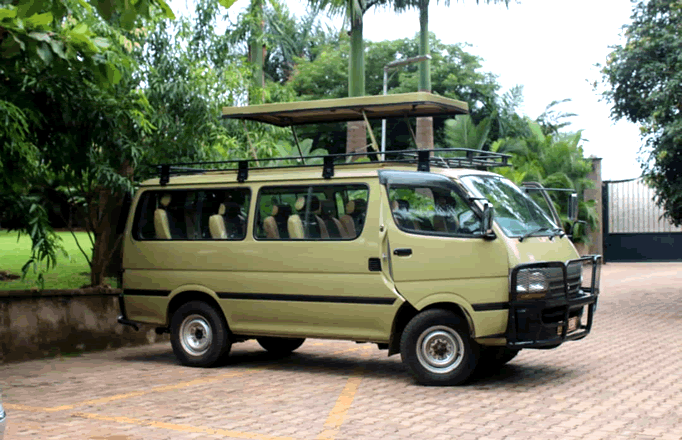
Vehicle choice directly affects the cost of a Kenya safari.
Pop-up-roof safari vans remain common on affordable group tours.
They provide elevated wildlife viewing and are generally cheaper to operate than 4×4 safari vehicles.
A Land Cruiser normally costs more but offers stronger off-road performance, greater ground clearance and better capability when roads become difficult.
For budget travelers visiting major parks during dry weather, a safari van can provide perfectly acceptable value.
For longer itineraries, wet-season travel or destinations involving more challenging tracks, a Land Cruiser may justify its additional cost.
Travelers should therefore select the vehicle according to the route rather than simply choosing the cheapest or most expensive option.
Shared vs Private Budget Kenya Safari
Joining a group can dramatically reduce the cost of a Kenya safari.
The vehicle, fuel and driver-guide have a cost regardless of whether one or six travelers are inside.
When several guests share those expenses, the price per person decreases.
Shared safaris are particularly attractive for solo travelers and couples.
Private safaris cost more but offer significantly greater flexibility.
Travelers can spend more time photographing a lion, leave camp earlier, remain at a wildlife sighting longer and structure game drives around their own interests.
Groups of four to six travelers may find private safaris surprisingly affordable because the vehicle cost is divided among several people.
3-Day Budget Masai Mara Safari
A three-day Masai Mara safari is one of the most popular Kenya budget safari packages.
Day 1: Nairobi to Masai Mara
Depart Nairobi in the morning and travel through the Great Rift Valley toward Narok and the Masai Mara.
Arrive at your affordable safari camp before continuing for an afternoon game drive depending on timing.
The first game drive introduces the Mara’s enormous plains and wildlife.
Return to camp for dinner and overnight.
Day 2: Full-Day Masai Mara Game Drive
After breakfast, spend the day exploring the reserve.
Your guide searches for lions, elephants, giraffes, buffaloes, cheetahs, hyenas, wildebeest, zebras and other wildlife.
A picnic lunch inside the reserve can reduce unnecessary driving back to camp and increase wildlife-viewing time.
Return to the camp in the evening.
Day 3: Masai Mara to Nairobi
After breakfast, begin the journey back toward Nairobi.
Depending on the package structure and park-entry arrangement, additional morning wildlife viewing may be possible.
This itinerary is ideal for travelers with limited time.
5-Day Budget Kenya Safari
Five days allows travelers to combine more than one ecosystem.
A strong budget route is:
Nairobi → Lake Nakuru → Masai Mara → Nairobi.
Day 1 can include Lake Nakuru.
Day 2 continues toward the Masai Mara.
Days 3 and 4 focus on extensive wildlife viewing.
Day 5 returns to Nairobi.
Another excellent option is:
Nairobi → Amboseli → Tsavo → Nairobi or the coast.
The best itinerary depends on whether travelers prioritize big cats, elephants, rhinos, scenery or a beach extension.
7-Day Budget Kenya Safari
Seven days provides one of the best balances for first-time visitors.
An attractive itinerary can combine:
Nairobi → Amboseli → Lake Naivasha → Lake Nakuru → Masai Mara → Nairobi.
Amboseli introduces elephant herds and Kilimanjaro scenery.
Naivasha adds a freshwater lake environment.
Lake Nakuru provides rhino-viewing possibilities.
The Masai Mara completes the trip with classic savannah wildlife and strong predator populations.
Seven days also provides enough time to reduce the feeling of constantly moving between destinations.
10-Day Budget Kenya Safari
Travelers with ten days can experience Kenya more deeply.
One itinerary could connect:
Nairobi → Samburu → Ol Pejeta → Lake Nakuru → Lake Naivasha → Masai Mara → Nairobi.
Another can combine Amboseli and Tsavo before finishing at the Indian Ocean coast.
Longer safaris can sometimes provide better daily value because transportation and guide expenses are spread over more days.
However, every additional day introduces new accommodation and park costs, so unnecessary nights should still be avoided.
Budget Kenya Safari for Couples
Couples frequently assume a private safari will be too expensive.
That is not always true.
Joining a group generally gives the lowest price, but an affordable private safari outside peak season can provide excellent value.
Private travel gives couples greater flexibility over game-drive times, photography stops and daily pacing.
For honeymoons or anniversaries, travelers can save money by using mid-range accommodation while retaining a private vehicle.
This can create a much more personal experience without moving into full luxury pricing.
Budget Kenya Safari for Solo Travelers
Solo safari travel can become expensive because one person carries costs normally shared between several travelers.
Group departures therefore provide strong value.
Solo travelers can join scheduled safaris and share the vehicle with other guests.
Traveling outside peak season may also reduce single-room supplements at some properties.
When comparing packages, solo travelers should ask for the complete final price rather than simply looking at the advertised per-person rate.
Budget Kenya Family Safaris
Kenya is also well suited to family safaris.
Families can often benefit from a private vehicle because the cost is spread across several people.
This provides additional flexibility for meal times, bathroom stops and shorter game drives for children.
Some camps provide family rooms or interconnected tents that reduce accommodation costs compared with purchasing multiple separate rooms.
Families should avoid building overly complicated itineraries.
Two or three strong destinations generally provide a better family experience than trying to visit every major park.
Kenya Safari from Nairobi on a Budget
Nairobi is the most important starting point for Kenya’s major safari circuits.
Travelers can head southwest toward the Masai Mara, northwest toward Naivasha and Nakuru, south toward Amboseli, southeast toward Tsavo or north toward Ol Pejeta and Samburu.
Road departures from Nairobi often provide the best value because domestic flights can add significantly to the overall safari price.
Spend one night in Nairobi if necessary and depart early the following morning.
Travelers combining Kenya with Rwanda can also use Nairobi and Kigali as regional gateways for a multi-country East African itinerary.
How to Save Money on a Kenya Safari
The best safari savings come from good planning rather than cutting essential elements.
Travel outside July–October when your schedule allows.
Join a group if you are a solo traveler or couple primarily concerned with price.
Select simple tented camps near park entrances.
Travel by road instead of using bush flights.
Avoid routes involving unnecessary backtracking.
Limit your itinerary to destinations that genuinely add different wildlife experiences.
Compare full-board package prices rather than accommodation-only rates.
Check whether park fees are already included.
Travel with friends or family and divide the private vehicle cost among more passengers.
Most importantly, compare complete quotations.
A safari advertised at US$900 can easily become more expensive than a US$1,200 safari if park fees, meals or transfers must be purchased separately.
What Should Be Included in a Budget Kenya Safari?
A professionally prepared safari quotation should clearly state every major inclusion.
A typical package may include safari vehicle transportation, driver-guide services, accommodation, meals as specified, game drives and drinking water.
Park entry fees may be included or shown separately.
Airport transfers may also be included depending on the package.
International flights, visas or travel authorization, travel insurance, tips, alcoholic beverages, souvenirs and optional activities are generally separate unless stated otherwise.
Never assume something is included.
Ask before paying.
Hidden Kenya Safari Costs to Check
Some safari quotations initially appear inexpensive because certain expenses have been removed from the headline price.
Park fees are the most important example.
Current Masai Mara entry fees alone can substantially increase the final cost, especially during the higher-priced July–December period.
Other possible additional charges include conservancy fees, balloon safaris, cultural visits, airport transfers, drinks, tips, laundry and single-room supplements.
Some camps also charge mandatory conservation or community fees.
A transparent operator should explain these before payment.
Is a Cheap Kenya Safari Worth It?
A cheap Kenya safari can offer excellent value when the savings come from sensible compromises.
Travelers can stay in simple accommodation.
They can join a shared vehicle.
They can travel by road.
They can visit outside peak season.
None of these automatically damages the wildlife experience.
Problems begin when a safari becomes cheap because important services are removed.
An unreliable vehicle, inexperienced guide, extremely distant accommodation or unrealistic schedule can seriously reduce the experience.
The goal should therefore be affordability rather than simply finding the lowest number.
Budget Kenya Safari vs Mid-Range Safari
Budget and mid-range safaris often visit the same national parks.
The difference normally involves accommodation, vehicle arrangements and comfort.
Budget travelers may stay at simpler camps outside park boundaries and share vehicles.
Mid-range travelers typically stay at more comfortable tented camps or lodges and are more likely to use private 4×4 vehicles.
Wildlife viewing can still be excellent in both categories.
For travelers whose priority is photography or flexibility, upgrading the vehicle arrangement may provide better value than upgrading the hotel.
Budget Kenya Safari vs Tanzania Safari
Kenya and Tanzania both offer exceptional safari experiences.
Kenya provides Masai Mara, Amboseli, Samburu, Lake Nakuru and Tsavo.
Tanzania offers Serengeti, Ngorongoro Crater, Tarangire and several other major wildlife areas.
Kenya’s established shared safari network makes it particularly attractive for budget travelers.
Nairobi is also an important international and regional transportation hub.
Travelers with enough time can combine Kenya and Tanzania rather than choosing between them.
A multi-country itinerary can connect the Masai Mara with Serengeti and Ngorongoro before continuing toward other destinations.
Kenya and Rwanda Safari Combination
One of the strongest East African combinations pairs Kenya’s classic savannah safari with mountain gorilla trekking in Rwanda.
The two experiences are completely different.
Kenya provides open plains, lions, elephants, rhinos, giraffes and cheetahs.
Rwanda offers the opportunity to enter the rainforest of Volcanoes National Park and spend time with a habituated mountain gorilla family.
Travelers can complete several safari days in Kenya, fly from Nairobi to Kigali and continue by road toward Volcanoes National Park.
This combination is ideal for travelers who want more than a traditional Big Five safari.
Universal Ventures Rwanda can assist with multi-country planning connecting Kenya wildlife safaris with Rwanda gorilla trekking.
Kenya, Uganda and Rwanda Safari Combination
Travelers with more time can combine three East African destinations.
Kenya provides classic savannah wildlife.
Uganda offers gorilla trekking in Bwindi, chimpanzee tracking in Kibale and wildlife destinations such as Queen Elizabeth National Park.
Rwanda offers gorilla trekking, Akagera National Park, Nyungwe Forest, Lake Kivu and cultural experiences.
Careful planning is important because crossing several countries introduces additional transportation expenses.
However, travelers already flying long distances to East Africa may achieve excellent overall value by completing several major experiences in one journey.
Budget Kenya Safari for First-Time Africa Travelers
Kenya remains one of the strongest destinations for first-time safari visitors.
The country offers famous wildlife parks, well-established tourism infrastructure, professional safari guides and accommodation at many price levels.
A first safari does not need to be complicated.
Five to seven days covering two or three destinations usually provides an excellent introduction.
Travelers who try to visit too many parks often spend an excessive amount of time driving.
A simple route focusing on Amboseli, Lake Nakuru and Masai Mara can provide elephants, rhinos, predators, savannah scenery and considerable wildlife diversity.
Wildlife You Can See on a Budget Kenya Safari
One misconception is that budget travelers see fewer animals than luxury travelers.
Wildlife depends primarily on destination, season, animal behavior and guiding rather than hotel price.
Kenya provides opportunities to see the Big Five: lion, leopard, elephant, rhino and buffalo.
Other commonly sought animals include cheetahs, giraffes, zebras, wildebeest, hippos, crocodiles, hyenas, warthogs, gazelles, impalas, topis and numerous bird species.
Northern regions introduce species such as Grevy’s zebra, reticulated giraffe and gerenuk.
No responsible operator can guarantee individual wildlife sightings, but well-designed routes maximize the opportunities.
Budget Kenya Safari for Wildlife Photography
Travelers primarily interested in photography should think carefully before choosing the cheapest group safari.
Vehicle space matters.
A vehicle packed with passengers can make it difficult to photograph through the best windows or change positions.
A small shared group or affordable private safari can therefore provide better photographic value.
Spending slightly less on accommodation and more on vehicle exclusivity may be a smart decision.
A telephoto lens is extremely useful for wildlife, while a wider lens can capture landscapes, elephants and environmental images.
Bring spare batteries, memory cards and protective equipment for dust.
What to Pack for a Kenya Budget Safari
Safari packing does not need to be expensive.
Comfortable lightweight clothing in neutral colors works well.
Early mornings can be cool, particularly at higher elevations, so bring a light fleece or jacket.
Useful items include comfortable shoes, sun protection, hat, sunglasses, insect repellent, reusable water bottle and binoculars.
Photography enthusiasts should bring sufficient battery and memory capacity.
A soft travel bag is often easier to pack inside a safari vehicle than a large hard-shell suitcase.
Travelers visiting during wetter periods should also bring a light waterproof jacket.
How Far in Advance Should You Book?
Travelers visiting between July and October should book considerably earlier than those traveling during quieter periods.
Migration-season demand can fill popular camps.
Christmas and New Year should also be booked well in advance.
Budget travelers benefit particularly from early planning because the best-value camps often sell before premium properties.
Outside peak season, greater flexibility may be possible.
However, waiting until the last minute does not always create better safari prices because park fees remain fixed and suitable accommodation may disappear.
How Many Days Are Best for an Affordable Kenya Safari?
Three days works for a short Masai Mara or Amboseli safari.
Five days allows two destinations to be combined comfortably.
Seven days is ideal for travelers wanting several ecosystems without excessive driving.
Ten days provides enough time for a broad Kenya safari or a safari-and-beach combination.
For most first-time travelers, approximately six to eight days creates an excellent balance between cost, variety and game-viewing time.
Is Kenya Safe for Safari Travelers?
Kenya has a long-established tourism industry and receives international visitors throughout the year.
Travelers should use reputable operators, follow their guide’s instructions and respect wildlife regulations.
Normal personal-security precautions should also be used in urban areas.
Because circumstances can change, travelers should check current government travel guidance and obtain comprehensive travel insurance before departure.
Frequently Asked Questions About Budget Kenya Safaris
How much does a budget Kenya safari cost?
Current 2026 guides commonly place budget safaris at around US$150–350 per person per day depending on group size, season, accommodation and route.
What is the cheapest way to safari in Kenya?
Travel by road, join a shared vehicle, stay at affordable tented camps and travel outside peak season.
Is Masai Mara expensive?
It can be. Reserve entry for non-resident adults in 2026 is reported at approximately US$100 per day January–June and US$200 July–December, before accommodation and transportation.
Can I do a Kenya safari in three days?
Yes. Three days works particularly well for Masai Mara or Amboseli.
Is five days enough for Kenya?
Yes. Five days can comfortably combine two safari destinations.
Is seven days better?
Seven days provides more variety while allowing a less rushed itinerary.
Can I combine Kenya with Rwanda?
Yes. Travelers can combine Kenya’s Big Five safari areas with gorilla trekking in Rwanda.
Is Kenya suitable for solo budget travelers?
Yes. Shared safari departures can substantially reduce the costs associated with a private vehicle.
Is a private Kenya safari expensive?
Private travel costs more for one or two travelers but can become very competitive when four to six people share the vehicle.
Can I see the Big Five on a budget safari?
Yes. Budget level does not determine which animals inhabit the parks. Sightings depend on destinations, conditions, wildlife movement and luck.
Final Advice from This Budget Kenya Safari Guide
Planning an affordable safari is not about making every component as cheap as possible.
It is about protecting the parts of the journey that matter.
Invest in a capable safari guide.
Choose reliable transportation.
Stay close enough to wildlife areas that you do not lose hours commuting.
Visit fewer parks rather than rushing through too many destinations.
Travel outside the most expensive season where possible.
Use affordable tented camps rather than unnecessarily expensive lodges.
Join a group if price matters more than privacy.
Choose private travel when your party is large enough to divide transportation costs efficiently.
Most importantly, compare the complete safari price.
A low advertised price means very little if park fees, meals, transfers and game drives are later added as extras.
Kenya remains one of Africa’s strongest destinations for affordable safari travel. Whether you want to see lions across the Masai Mara, elephants under Mount Kilimanjaro, rhinos around Lake Nakuru or the enormous wilderness of Tsavo, careful planning can create an outstanding safari without requiring a luxury-level budget.
For travelers wishing to go farther, Kenya can also be connected naturally with Uganda, Rwanda and Tanzania to create a complete East African wildlife adventure.
Plan Your Kenya Safari with Universal Ventures Rwanda
Universal Ventures Rwanda organizes tailor-made East African travel experiences connecting Rwanda with Kenya, Uganda and Tanzania.
We can help travelers combine a budget Kenya safari with Rwanda gorilla trekking, Uganda primate adventures, Akagera wildlife safaris and other multi-country experiences.
Whether you are planning a short Masai Mara safari, an affordable private Kenya safari, a Kenya and Rwanda safari or a longer East African journey, the itinerary can be designed according to your travel dates, interests, accommodation preference and available budget.
Universal Ventures Rwanda
Email: info@universalventuresrwanda.com
WhatsApp / Telephone: +250 781 441 853
Address: Kigali, Rwanda
Website: universalventuresrwanda.com


