 Skip to content
This Tsavo National Park Safari Guide covers everything travelers need to know when planning a Tsavo safari in 2026–2027. It explains the differences between Tsavo East and Tsavo West, the wildlife you can see, the best time to visit, major attractions, safari accommodation, road connections from Nairobi and Mombasa, recommended itineraries and how Tsavo can be combined with Amboseli, Kenya’s beaches and longer East African journeys
Tsavo is where Kenya begins to feel truly enormous. Stretching across southeastern Kenya between Nairobi and the Indian Ocean coast, the Tsavo wilderness combines immense red-earth plains, volcanic hills, permanent springs, seasonal rivers, rocky escarpments and some of the country’s most impressive concentrations of elephants. Travelers who want a Kenya safari with space, dramatic landscapes and fewer crowded wildlife sightings should seriously consider adding Tsavo to their itinerary.
.Although travelers frequently refer to the entire wilderness simply as “Tsavo National Park,” it consists principally of Tsavo East National Park and Tsavo West National Park. Together they create a protected ecosystem covering roughly 22,000 square kilometers, making Tsavo one of Africa’s great wilderness landscapes. Tsavo East is characterized by vast open country and its famous red-dust elephants, while Tsavo West is greener, hillier and more volcanic, with attractions such as Mzima Springs and Shetani Lava Flow.
Understanding those differences is essential when planning a Tsavo safari.
Why Visit Tsavo National Park?
Many first-time visitors planning a Kenya safari immediately think of the Masai Mara. The Mara deserves its reputation, but Kenya offers several completely different safari environments, and Tsavo is one of the most rewarding.
The defining feature of Tsavo is scale.
Wildlife lives within an enormous ecosystem where animals can move across extensive areas in response to rainfall, vegetation and water availability. This creates a different feeling from smaller or more concentrated safari destinations.
Tsavo also occupies an extremely convenient position between Nairobi and Kenya’s Indian Ocean coast.
Travelers can begin in Nairobi, explore Amboseli and Tsavo, and finish their holiday in Mombasa, Diani Beach or another coastal destination. Alternatively, travelers already staying at the coast can reach Tsavo for a short one-, two- or three-night safari.
This makes Tsavo one of Kenya’s strongest destinations for a combined safari and beach holiday.
Tsavo East and Tsavo West Explained
The first important decision is whether to visit Tsavo East, Tsavo West or both.
The parks belong to the same wider ecosystem but have noticeably different landscapes and safari characteristics.
Tsavo East is the larger of the two. Its landscape is generally flatter, drier and more open, with red-earth plains, thorn scrub, baobabs and the Galana River creating classic African wilderness scenery. Open terrain can make wildlife easier to observe from a distance.
Tsavo West is more varied geographically. Volcanic hills, rocky formations, lava flows, springs and denser vegetation create a more dramatic landscape. Wildlife can sometimes be more difficult to spot because of the thicker bush, but the scenery itself becomes an important part of the safari.
Current safari guides therefore commonly recommend Tsavo East for travelers prioritizing open-country game viewing and Tsavo West for visitors particularly interested in scenery, volcanic features and attractions such as Mzima Springs.
Travelers with three or more days should strongly consider combining both.
Tsavo East National Park Safari
Tsavo East represents the classic image of immense African wilderness.
The park is famous for its red soil, which coats elephants after they dust and bathe, giving them the reddish appearance associated with Tsavo photography.
These are not a separate species of elephant. Their distinctive color comes from the iron-rich earth covering their naturally grey skin.
Watching a large elephant herd moving across the red plains is one of the signature wildlife experiences in Kenya.
The open terrain also provides opportunities to search for lions, buffaloes, giraffes, zebras, cheetahs, hyenas, antelopes and numerous bird species.
The Galana River forms an important wildlife corridor and creates a striking contrast with the surrounding semi-arid landscape.
For photographers, Tsavo East can be exceptional. Red soil, enormous skies, elephants and golden evening light create some of Kenya’s most recognizable safari scenes.
Tsavo West National Park Safari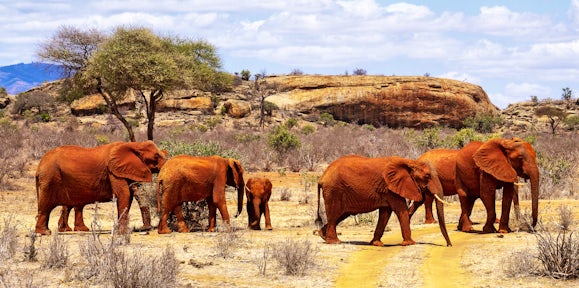
Tsavo West feels remarkably different despite being part of the same ecosystem.
The landscape is more rugged and varied, with volcanic terrain, hills, woodland, lava formations and permanent water sources.
One of its best-known attractions is Mzima Springs, where clear groundwater emerges within the otherwise dry landscape.
Hippos, crocodiles, fish and numerous birds are associated with the spring environment, while surrounding vegetation attracts additional wildlife.
Tsavo West is also important for black rhino conservation.
The Ngulia area has played an important role in protecting rhinos, making the western park particularly interesting for travelers hoping to experience another dimension of Kenyan conservation.
Wildlife spotting can require greater patience because vegetation is generally denser than in Tsavo East.
However, that challenge is balanced by exceptional scenery.
Tsavo East vs Tsavo West: Which Is Better?
Neither park is universally better.
The correct choice depends on what kind of safari you want.
Choose Tsavo East if your priorities are large elephant herds, red-earth landscapes, extensive open plains, easier long-distance wildlife viewing and a convenient safari extension from the Kenyan coast.
Choose Tsavo West if you prefer volcanic scenery, hills, springs, black rhino conservation, Mzima Springs and a more varied landscape.
For wildlife photographers, Tsavo East’s open spaces can make photographing large animals easier.
Landscape photographers may particularly appreciate Tsavo West.
Travelers combining Tsavo with Amboseli can also integrate Tsavo West naturally into the route before continuing toward Tsavo East and the coast.
If your itinerary allows three or four nights, visiting both provides the strongest overall Tsavo experience.
Wildlife in Tsavo National Park
Tsavo supports an extraordinary variety of African wildlife.
Elephants are among the greatest attractions and are closely associated with the park’s identity. Large herds move through the ecosystem, particularly around reliable water sources.
Lions are another major attraction.
Tsavo lions have a fascinating place in Kenyan history because of the famous man-eating lions associated with construction of the Uganda Railway in the late nineteenth century. Today’s safari experience, however, is about observing wild lions naturally within one of Kenya’s largest ecosystems.
Buffaloes can be encountered in substantial herds.
Leopards are present but naturally more difficult to locate.
Black rhinos occur within protected parts of the ecosystem, particularly associated with Tsavo West.
Other wildlife includes giraffes, zebras, cheetahs, spotted hyenas, hippos, crocodiles, warthogs, waterbucks, impalas, lesser kudus, elands, gerenuks and many smaller mammals.
Tsavo is therefore a genuine Big Five safari destination, although no ethical safari operator should guarantee sightings of every species.
Red Elephants of Tsavo
The red elephants are perhaps Tsavo’s most recognizable wildlife symbol.
Elephants naturally have grey skin, but Tsavo’s intensely colored soil changes their appearance.
After bathing, elephants frequently throw dust over their bodies. This behavior can help protect their skin from insects and sunlight.
The red soil adheres to their wet skin, gradually producing the rusty coloration visitors see.
Against the open landscape, these elephants provide extraordinary photography opportunities.
Large herds moving through clouds of red dust at sunrise or sunset can become one of the defining memories of a Kenya safari.
Lions of Tsavo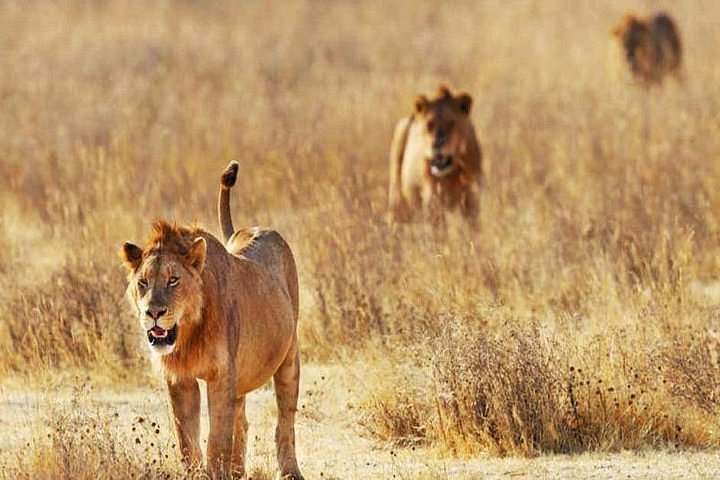
Tsavo also has one of Africa’s most famous lion histories.
During construction of the Kenya-Uganda railway in 1898, two lions repeatedly attacked workers around the Tsavo River area. The story became internationally famous and has subsequently appeared in books, documentaries and films.
Modern visitors come to observe Tsavo’s lions as part of the natural ecosystem.
The immense size of the protected area means finding predators can sometimes require patience, but this also makes successful sightings feel genuinely wild.
Lion behavior varies according to prey distribution, water and environmental conditions.
Early morning and late afternoon game drives generally provide some of the strongest opportunities for predator activity.
Big Five Safari in Tsavo
Travelers hoping to experience the Big Five can include Tsavo in their Kenya itinerary.
Elephants and buffaloes can be relatively prominent.
Lions occur throughout the ecosystem.
Leopards are present but secretive.
Black rhinos are protected within parts of Tsavo West.
Seeing all five during a single short safari should never be expected or guaranteed. Tsavo is enormous, and wildlife is free to move naturally.
This is part of its appeal.
Rather than treating a safari as a checklist, travelers should appreciate encounters with whatever wildlife appears during each game drive.
Birdwatching in Tsavo
Tsavo is also an important destination for birdwatchers.
Its enormous size and variety of habitats support hundreds of bird species.
Open savannah, dry bush, river corridors, springs, rocky landscapes and wetlands create habitats for very different bird communities.
Travelers may encounter eagles, vultures, hornbills, kingfishers, bee-eaters, weavers, starlings, ostriches and numerous waterbirds.
Migratory species add further diversity during parts of the year.
Birders planning a dedicated trip should consider spending time in both Tsavo East and West because their contrasting habitats create a broader range of sightings.
Best Attractions in Tsavo East National Park
Wildlife is the principal reason to visit Tsavo East, but several landscapes and geological features deserve attention.
Yatta Plateau
The Yatta Plateau is one of Tsavo East’s defining geographical features and is widely described as the world’s longest lava flow.
Its immense scale illustrates the geological history that shaped the region.
The plateau stretches alongside sections of the Athi-Galana river system and contributes to the park’s dramatic wilderness scenery.
Galana River
The Galana River provides an essential source of water within Tsavo East.
Its greener riverine vegetation contrasts strongly with the surrounding dry country.
Elephants and other animals frequently use the river corridor, while crocodiles and hippos may occur in suitable sections.
Lugard Falls
Lugard Falls is not a conventional vertical waterfall.
Instead, the Galana River is forced through sculpted rock formations and narrow channels, creating rapids and unusual geological patterns.
It provides an interesting scenic stop during a longer Tsavo East exploration.
Mudanda Rock
Mudanda Rock creates a natural viewpoint across the surrounding landscape.
A seasonal water catchment below the rock can attract elephants and other wildlife, making the area especially rewarding when conditions are favorable.
Best Attractions in Tsavo West National Park
Tsavo West combines wildlife with some of Kenya’s most unusual safari landscapes.
Mzima Springs
Mzima Springs is the park’s most famous attraction.
Clear water emerging from underground sources creates a lush environment surrounded by otherwise relatively dry country.
Hippos and crocodiles inhabit the aquatic ecosystem, while monkeys, birds and other animals can be encountered nearby.
The contrast between clear water, dense vegetation and Tsavo’s volcanic landscape makes Mzima Springs distinctive.
Shetani Lava Flow
The Shetani Lava Flow presents a dramatic expanse of dark volcanic rock.
Its appearance provides an immediate visual reminder of the geological forces that shaped this region.
The word “Shetani” means devil in Swahili, reflecting traditional reactions to the dramatic landscape created by volcanic activity.
Ngulia Rhino Area
Tsavo West plays an important role in black rhino conservation.
Rhino protection programs within the ecosystem have helped preserve one of Africa’s most threatened large mammals.
Sightings can never be guaranteed, but conservation-focused travelers may find this aspect of Tsavo West particularly rewarding.
Chaimu Volcanic Landscapes
Tsavo West contains several volcanic features and viewpoints that distinguish it from Kenya’s open savannah reserves.
These formations create dramatic scenery and add geological interest to a traditional wildlife safari.
Best Time to Visit Tsavo National Park
Tsavo can be visited throughout the year, but seasons influence vegetation, wildlife distribution, photography and road conditions.
The dry months generally provide easier wildlife viewing because vegetation becomes thinner and animals concentrate around reliable water sources.
June through October is widely considered one of the strongest periods for Tsavo game viewing.
January and February can also provide favorable safari conditions.
During greener periods, landscapes become more colorful and birdlife can be exceptional.
Rain can make certain tracks more difficult, but green-season safaris provide their own advantages, including beautiful scenery and potentially fewer visitors.
Travelers primarily interested in photography should therefore decide whether they prefer easier dry-season wildlife viewing or greener landscapes with dramatic skies.
Tsavo National Park Weather
Tsavo is generally warmer and drier than some of Kenya’s higher-altitude safari destinations.
Daytime temperatures can become hot, particularly across open areas.
Early morning game drives are therefore valuable both because wildlife can be more active and because temperatures are more comfortable.
Rainfall patterns vary between years, but Kenya traditionally experiences wetter periods around March–May and shorter rains around October–December.
Climate patterns are not perfectly predictable, so travelers should prepare for changing conditions.
Light clothing works well during the day, while a light layer can be useful for early departures.
How Many Days Do You Need in Tsavo?
The ideal duration depends on which part of Tsavo you intend to explore.
One night can provide a short introduction, particularly for travelers coming from Mombasa or Diani.
Two nights are significantly better because they provide more game-drive opportunities.
Three or four nights allow travelers to combine Tsavo East and Tsavo West without rushing.
For a comprehensive experience, consider approximately three to five days across the wider Tsavo ecosystem.
Remember that Tsavo is enormous.
Trying to cover too much territory during a very short safari can result in excessive driving.
2-Day Tsavo Safari Itinerary
A two-day safari works particularly well for travelers starting from Mombasa or Diani.
Day 1: Coast to Tsavo East
Depart early from your coastal hotel and drive toward Tsavo East.
Enter the park and begin game viewing while traveling toward your lodge or tented camp.
Search for elephants, lions, buffaloes, giraffes, zebras and other wildlife.
After lunch and some rest, return for an afternoon game drive.
Enjoy dinner and overnight inside or near the park.
Day 2: Morning Game Drive and Return
Begin with an early morning game drive when temperatures are cooler and wildlife may be more active.
Return for breakfast before checking out.
Depending on your schedule, continue wildlife viewing while leaving the park and return toward Mombasa or Diani.
3-Day Tsavo East and West Safari
Three days allow travelers to experience both sides of the ecosystem.
Day 1: Nairobi or Coast to Tsavo West
Travel to Tsavo West and begin exploring its volcanic landscapes.
Visit major attractions depending on timing and enjoy an afternoon game drive.
Overnight in or near Tsavo West.
Day 2: Tsavo West to Tsavo East
Enjoy another morning wildlife experience before continuing toward Tsavo East.
The changing landscape becomes immediately noticeable.
Spend the afternoon searching the open plains for elephants, lions, giraffes, buffaloes and other wildlife.
Overnight in Tsavo East.
Day 3: Tsavo East and Departure
Begin with an early morning game drive.
Explore areas around major wildlife corridors before departing toward Nairobi, Mombasa or Diani depending on your wider itinerary.
4-Day Tsavo Safari
Four days create a more comfortable balance.
Travelers can spend two nights in Tsavo West and one or two nights in Tsavo East, or reverse the sequence according to their starting point.
This provides enough time to explore Mzima Springs, volcanic landscapes and rhino conservation areas while still dedicating extensive game-drive time to Tsavo East.
Photographers benefit particularly from the additional morning and evening game drives.
Tsavo Safari from Nairobi
Tsavo is accessible by road from Nairobi using the main Nairobi-Mombasa corridor.
Travelers can visit Tsavo directly or combine it with Amboseli.
A particularly logical route is:
Nairobi → Amboseli → Tsavo West → Tsavo East → Mombasa/Diani.
This creates one of Kenya’s strongest overland bush-and-beach itineraries.
Instead of returning to Nairobi after every park, travelers continue geographically toward the coast.
The route provides Kilimanjaro scenery in Amboseli, volcanic wilderness in Tsavo West, red elephants in Tsavo East and finally the beaches of the Indian Ocean.
Tsavo Safari from Mombasa
Tsavo is one of the best major safari areas accessible from Mombasa.
This makes it ideal for travelers who have booked a beach holiday but want to experience African wildlife without flying across the country.
An early departure from Mombasa can bring travelers into Tsavo East in time for wildlife viewing later that day.
One-night safaris are possible, but two or three days provide a significantly stronger experience.
Travelers with more time can continue through Tsavo West and Amboseli before returning to Nairobi or the coast.
Tsavo Safari from Diani Beach
Diani Beach is another popular starting point.
The combination of white-sand beaches and Tsavo’s red-earth wilderness creates one of Kenya’s classic holiday contrasts.
Travelers can leave Diani early and travel toward Tsavo East.
A two-night safari generally provides better value than attempting a rushed day trip.
Another option is using Tsavo as part of a longer journey from Diani toward Nairobi.
This turns transportation into part of the safari rather than simply paying for a separate flight.
Tsavo and Amboseli Safari
Amboseli and Tsavo complement each other extremely well.
Amboseli is famous for elephants and views of Mount Kilimanjaro.
Tsavo West introduces volcanic scenery, springs and rhino conservation.
Tsavo East then provides huge red-earth plains and the famous red elephants.
A five- or six-day route combining these destinations can provide exceptional wildlife and landscape diversity.
It also fits naturally between Nairobi and the coast.
Tsavo Safari and Beach Holiday
Tsavo is arguably one of Kenya’s best national parks for a bush-and-beach combination.
Its position between Nairobi and the Indian Ocean makes the transition extremely natural.
Travelers can spend several days on safari before continuing to Diani, Mombasa, Watamu or another coastal destination.
Alternatively, beach travelers can begin with several relaxing days on the coast before heading inland for wildlife.
For honeymooners and families, this combination provides two very different holidays within one journey.
Tsavo Safari Accommodation
Tsavo offers accommodation ranging from simple safari camps to comfortable lodges and luxury properties.
The best accommodation is not necessarily the most expensive.
Location should play a major role in the decision.
A strategically positioned lodge can reduce driving time and allow earlier access to wildlife areas.
Properties overlooking waterholes can sometimes provide wildlife viewing without leaving camp.
Travelers should compare room standards, meal plans, location, road access and the amount of game-drive time included rather than comparing accommodation prices alone.
Budget Tsavo Safaris
Tsavo can work well for budget-conscious travelers, particularly when incorporated into an efficient road itinerary.
Traveling by road avoids expensive bush flights.
Small groups can divide vehicle and driver-guide expenses.
Affordable lodges and tented camps can keep accommodation costs under control.
Travel outside peak periods where possible.
The key is to avoid reducing costs in ways that undermine the safari.
Reliable transport, an experienced guide and enough time inside the parks are more important than luxury accommodation.
Mid-Range Tsavo Safaris
Mid-range safaris provide a comfortable balance between affordability and convenience.
Travelers can expect established lodges or permanent tented camps, private bathrooms, full-board meals and comfortable safari transportation.
A private Land Cruiser can significantly improve flexibility for couples, families and photographers.
Mid-range travel is therefore one of the strongest choices for visitors who want comfort without paying premium luxury rates.
Luxury Tsavo Safaris
Luxury travelers can choose exclusive safari properties offering spacious accommodation, premium dining, personalized guiding and carefully designed wildlife experiences.
The greatest advantage of luxury travel is often not the room itself but location, service and privacy.
For honeymooners, photographers and travelers celebrating special occasions, combining a luxury Tsavo property with a beach resort can create an outstanding Kenya holiday.
Tsavo Safari for Families
Tsavo can be an excellent family safari destination.
Children can experience elephants, giraffes, zebras and other iconic African animals while learning about ecosystems and conservation.
Private vehicles are particularly useful for families because game drives can be adapted around children’s energy levels.
Parents should avoid scheduling excessively long driving days.
Combining Tsavo with a beach stay can work particularly well because active safari days are followed by time to relax on the coast.
Tsavo Safari for Couples and Honeymooners
Tsavo’s sense of wilderness makes it attractive for couples.
Compared with some heavily visited safari destinations, the enormous landscapes can provide a stronger feeling of privacy.
Couples can combine sunrise and sunset game drives with comfortable tented accommodation before continuing toward the Indian Ocean.
A route involving Amboseli, Tsavo and Diani can therefore make an excellent Kenya honeymoon itinerary.
Tsavo Wildlife Photography Safari
Tsavo provides some of Kenya’s strongest opportunities for distinctive wildlife photography.
The red elephants are the obvious attraction.
The combination of rust-colored soil, dust, enormous skies and warm evening light can produce exceptional images.
Tsavo East is particularly attractive for photographing elephants and larger animals against open landscapes.
Tsavo West provides stronger opportunities for combining wildlife with hills, vegetation, springs and volcanic scenery.
Photographers should consider private or very small-group vehicles because positioning becomes extremely important.
What to Pack for a Tsavo Safari
Pack light, comfortable safari clothing suitable for warm conditions.
Neutral colors such as khaki, brown and olive work well.
Bring sun protection, sunglasses and a hat because Tsavo can become hot and bright during the day.
A light jacket is useful for early morning drives.
Binoculars dramatically improve wildlife viewing, especially in Tsavo’s enormous landscapes.
Photographers should carry spare batteries, adequate memory cards and protection from dust.
A reusable water bottle, personal medications and insect repellent are also useful.
Tsavo vs Masai Mara
Tsavo and the Masai Mara provide very different safari experiences.
The Masai Mara is famous for exceptional predator density and the Great Migration.
Tsavo is famous for scale, red elephants, wilderness and dramatically varied landscapes.
Wildlife can sometimes be easier to locate in the Mara because of its smaller area and open grasslands.
Tsavo provides a greater sense of exploration.
Travelers who want maximum concentrations of wildlife over a short period may prioritize the Mara.
Travelers looking for elephants, scenery, wilderness and a convenient safari between Nairobi and the coast may prefer Tsavo.
Ideally, a longer Kenya safari can include both.
Tsavo vs Amboseli
Amboseli is considerably smaller and particularly famous for elephants with Mount Kilimanjaro as a backdrop.
Tsavo is much larger and offers greater landscape diversity.
Amboseli works extremely well for short stays because wildlife can be concentrated within a relatively compact area.
Tsavo rewards travelers who have more time.
Rather than choosing one, many travelers combine Amboseli and Tsavo because they sit naturally within the same southern Kenya circuit.
Is Tsavo Worth Visiting?
Absolutely, particularly for travelers who value wilderness and landscape as much as wildlife checklists.
Tsavo offers something different from the Masai Mara.
Its immense scale creates a stronger feeling of being inside genuinely wild country.
The red elephants are unique visually.
Tsavo West’s volcanic terrain adds geographical drama.
The parks’ proximity to Kenya’s coast makes them practical for safari-and-beach combinations.
Travelers who only visit the Masai Mara see one side of Kenya.
Tsavo reveals another.
Frequently Asked Questions About Tsavo National Park
Is Tsavo East or Tsavo West better?
Tsavo East is generally better for open-country game viewing and famous red elephants, while Tsavo West provides more varied scenery, volcanic features, Mzima Springs and important rhino habitat. Travelers with enough time should visit both.
How many days do you need in Tsavo?
Two days provide an introduction, but three to four days are better for combining Tsavo East and West.
Can you see the Big Five in Tsavo?
Tsavo’s wider ecosystem supports lion, leopard, elephant, buffalo and black rhino. However, wildlife sightings are never guaranteed.
What is Tsavo famous for?
Tsavo is particularly famous for its red elephants, vast wilderness, lions, Yatta Plateau, Galana River, Mzima Springs, volcanic landscapes and historical association with the Man-Eaters of Tsavo.
What is the best time to visit Tsavo?
June through October generally provides strong dry-season game viewing, while January and February can also be excellent. Green-season travel provides lush scenery and rewarding birding.
Is Tsavo close to Mombasa?
Tsavo East is one of the closest major safari destinations to Kenya’s coast, making it particularly suitable for Mombasa and Diani safari extensions.
Can I combine Tsavo and Amboseli?
Yes. Amboseli and Tsavo form one of Kenya’s most logical safari combinations.
Can I combine Tsavo with Diani Beach?
Yes. Tsavo East in particular fits naturally into a safari-and-beach itinerary involving Diani.
Are there lions in Tsavo?
Yes. Tsavo supports wild lion populations and is historically famous for the Man-Eaters of Tsavo.
Why are Tsavo elephants red?
The elephants cover themselves with Tsavo’s red soil when dust bathing, giving their skin its distinctive reddish appearance.
Planning the Perfect Tsavo National Park Safari
A successful Tsavo safari begins with understanding the enormous scale of the destination.
Do not try to cover the entire ecosystem in one day.
Choose Tsavo East if open-country wildlife viewing and red elephants are your priorities.
Choose Tsavo West if you are particularly interested in scenery, springs, volcanic landscapes and rhino conservation.
Combine both if you have at least three days.
Travelers beginning in Nairobi should consider connecting Amboseli with Tsavo before continuing to the coast. Visitors already staying in Mombasa or Diani can use Tsavo East as an easy gateway into Kenya’s safari country.
Whether you choose a budget camp, comfortable mid-range lodge or luxury safari property, prioritize location, guiding and game-drive time.
Tsavo is not simply an alternative to the Masai Mara. It is one of Kenya’s defining wilderness experiences in its own right.
From enormous herds of red-dusted elephants crossing open plains to hippos around Mzima Springs and lions moving through the bush, Tsavo delivers the scale and unpredictability that make an African safari unforgettable.
Book a Tsavo Safari with Universal Ventures Rwanda
Universal Ventures Rwanda organizes tailor-made East African safari experiences connecting Kenya with Rwanda, Uganda and Tanzania.
Travelers can request a private Tsavo National Park safari, a Tsavo East and Tsavo West combination, a Nairobi–Amboseli–Tsavo safari, a Tsavo and Diani beach holiday, or a longer East African itinerary combining Kenya wildlife experiences with Rwanda gorilla trekking.
Our itineraries can be customized according to your travel dates, number of travelers, preferred accommodation level, available time and budget.
Universal Ventures Rwanda
Email: info@universalventuresrwanda.com
Telephone / WhatsApp: +250 781 441 853
Address: Kigali, Rwanda
Website: universalventuresrwanda.com
Contact Universal Ventures Rwanda to plan a customized Kenya safari, Rwanda gorilla trekking tour or multi-country East African adventure.


