Skip to content
Uganda National Parks Overview protects an impressive range of landscapes within its ten national parks. Visitors can explore tropical rainforests, open savannah, volcanic mountains, wetlands, waterfalls, alpine valleys, and lakes. Therefore, the country suits wildlife lovers, hikers, birdwatchers, photographers, families, and primate enthusiasts.
The Uganda Wildlife Authority manages ten national parks. They are Murchison Falls, Queen Elizabeth, Bwindi Impenetrable, Mgahinga Gorilla, Kibale, Kidepo Valley, Lake Mburo, Rwenzori Mountains, Mount Elgon, and Semuliki national parks. Uganda Wildlife Authority
Each park offers a different experience. Bwindi and Mgahinga protect mountain gorillas. Kibale is famous for chimpanzees. Meanwhile, Murchison Falls, Queen Elizabeth, Kidepo Valley, and Lake Mburo provide traditional wildlife safaris.
The Rwenzori Mountains and Mount Elgon attract hikers. In contrast, Semuliki protects lowland forest and unusual birdlife. As a result, travellers can combine several habitats within one Uganda safari.
This detailed Uganda National Parks Overview explains the main attractions, wildlife, activities, accommodation areas, travel routes, and best visiting seasons.
How Many National Parks Are in Uganda?
Uganda has ten national parks managed by the Uganda Wildlife Authority. In addition, the country protects wildlife through reserves, sanctuaries, community wildlife areas, and other conservation landscapes.
The national parks cover different regions of Uganda. Some lie close to major towns, while others require long road transfers or domestic flights.
Lake Mburo is one of the easiest parks to add to a road trip between Entebbe and southwestern Uganda. Meanwhile, Kidepo Valley lies in the remote northeast. Therefore, the time needed to visit each park varies greatly.
The parks also differ in size and habitat. Murchison Falls is Uganda’s largest national park, while Mgahinga is the smallest. However, a smaller park does not mean a weaker wildlife experience.
Why Visit Uganda’s National Parks?
Uganda offers more than a standard vehicle-based safari. Visitors can track mountain gorillas, follow chimpanzees through the forest, climb high mountains, cruise along wildlife-rich waterways, and watch animals across open plains.
Moreover, Uganda lies within the Albertine Rift. This region supports high levels of biodiversity and many species with limited natural ranges.
The country is also one of Africa’s leading birdwatching destinations. Forests, wetlands, lakes, savannah, and mountain habitats attract an exceptional range of resident and migratory birds.
Travellers can create short or extended itineraries. For example, a five-day safari can combine Bwindi and Queen Elizabeth National Park. Meanwhile, a two-week journey can include Murchison Falls, Kibale, Queen Elizabeth, Bwindi, and Lake Mburo.
Uganda National Parks Overview by Safari Interest
The best park depends on what a traveller wants to experience. Therefore, visitors should identify their main interests before planning the route.
Best Parks for Gorilla Trekking
Bwindi Impenetrable National Park is Uganda’s main gorilla destination. It has four trekking sectors and several habituated gorilla families.
Mgahinga Gorilla National Park provides another mountain gorilla experience. In addition, its volcanic landscape supports golden monkeys and mountain hiking.
Best Park for Chimpanzee Trekking
Kibale National Park is Uganda’s leading chimpanzee trekking destination. The forest supports several other primate species and rich birdlife.
Visitors can combine Kibale with Bigodi Wetland Sanctuary, crater lakes, and Queen Elizabeth National Park.
Best Parks for Big-Game Safaris
Murchison Falls, Queen Elizabeth, and Kidepo Valley offer excellent traditional safari experiences. These parks support elephants, buffaloes, lions, antelopes, giraffes, and many other animals.
Lake Mburo is smaller. However, it provides good sightings of zebras, impalas, elands, and other plains animals.
Best Parks for Hiking
The Rwenzori Mountains provide Uganda’s most demanding high-altitude trekking experiences. Mount Elgon also offers multi-day hikes, waterfalls, caves, and highland scenery.
Mgahinga includes volcano-climbing routes. Meanwhile, Bwindi and Kibale offer guided forest walks.
Best Parks for Birdwatching
Every Ugandan national park offers birdwatching. However, Bwindi, Semuliki, Queen Elizabeth, Murchison Falls, and Kibale are especially important.
Kidepo supports birds associated with dry northeastern habitats. In contrast, Semuliki contains species linked to Central African forests.
Planning a Uganda National Parks Safari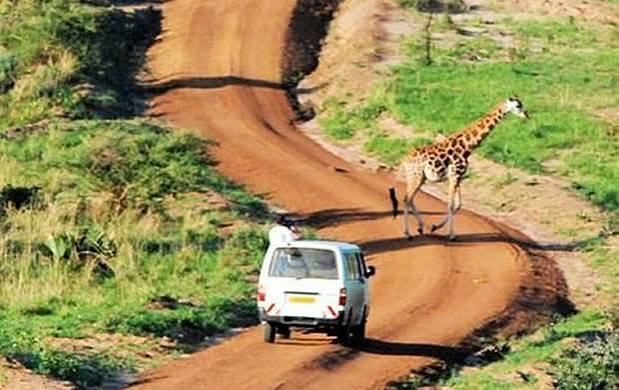
A Uganda safari should follow a logical route. Long distances and road conditions can make an overloaded itinerary tiring.
Visitors starting in Entebbe can travel west through Lake Mburo, Queen Elizabeth, Kibale, and Bwindi. Alternatively, they can begin with Murchison Falls before continuing south.
Kidepo Valley normally requires a separate northern route or domestic flight. Meanwhile, Mount Elgon lies in eastern Uganda and combines well with Jinja or Sipi Falls.
Travellers should also consider activity permits. Gorilla and chimpanzee permits have limited availability. Therefore, these permits should guide the final travel dates.
Murchison Falls National Park
Murchison Falls National Park lies in northwestern Uganda. It is Uganda’s largest national park and one of the country’s oldest protected areas.
The Victoria Nile passes through the park. At Murchison Falls, the river enters a narrow gorge before dropping into a powerful pool below. Afterwards, it continues west towards Lake Albert.
The park contains open savannah, woodland, riverine forest, wetlands, and palm-dotted plains. Therefore, it supports both land and water-based wildlife experiences.
Uganda Wildlife Authority reports that Murchison Falls supports 144 mammal species and more than 550 bird species. Uganda Wildlife Authority – Murchison Falls
Wildlife in Murchison Falls National Park
Murchison Falls supports elephants, buffaloes, giraffes, lions, leopards, hippos, crocodiles, hartebeests, waterbucks, Uganda kobs, and warthogs.
The northern section has open plains and provides many of the best game-viewing opportunities. However, wildlife movements change with the season and water supply.
Giraffes are a major attraction. Large mammals also gather near the Nile, especially during drier periods.
Leopards remain difficult to find because they often move alone and use woodland or dense vegetation. Therefore, visitors should enjoy the whole ecosystem rather than focus on one rare sighting.
Game Drives in Murchison Falls
Game drives usually explore the northern and central areas. Early morning provides cool temperatures and active wildlife.
Afternoon drives can also be productive. However, some animals rest in shaded areas during the hottest hours.
An experienced guide can study tracks, habitats, and alarm calls. Moreover, the guide knows which routes suit current road conditions.
Visitors should allow at least two nights in the park. Three nights provide more time for game drives, boating, and the waterfall.
Nile Boat Cruises
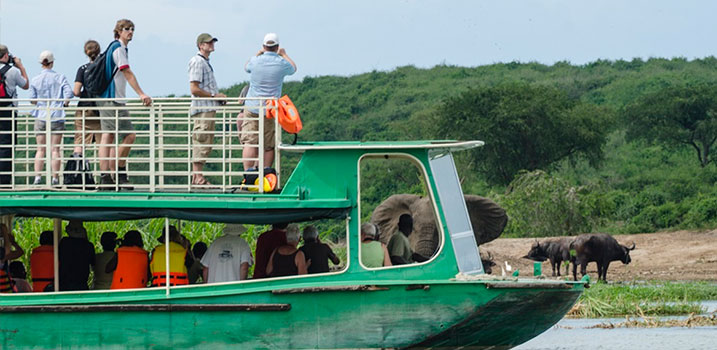
A boat cruise along the Victoria Nile is one of Murchison Falls’ main activities. The journey provides close views of the river ecosystem.
Hippos and crocodiles live in the water. Meanwhile, elephants, buffaloes, antelopes, and other animals may approach the banks.
Birdlife can include kingfishers, fish eagles, herons, cormorants, and other water-associated species.
Boat schedules and routes should be confirmed before travel. In addition, visitors should follow every safety instruction given by the crew.
Visiting Murchison Falls
Visitors can experience the falls from different approved viewpoints. The landscape reveals the power of the Nile as it passes through the gorge.
The guide should confirm the current access route because park conditions and visitor procedures may change.
The falls are especially impressive after periods of stronger rainfall. However, the area remains attractive throughout the year.
Best Time to Visit Murchison Falls
The park stays open throughout the year. Nevertheless, drier months often provide easier roads and more concentrated wildlife near water.
Rainy months create greener landscapes and good birdwatching conditions. However, some roads may become muddy.
December to February and June to September are popular travel periods. Therefore, lodges and activities should be booked early.
Getting to Murchison Falls
The drive from Kampala or Entebbe takes several hours. Therefore, most visitors treat it as a full travel day.
Some itineraries include a stop along the route. Domestic flights can also reduce travel time, although they increase the price.
Murchison Falls combines well with Kibale National Park on a longer western Uganda itinerary.
Queen Elizabeth National Park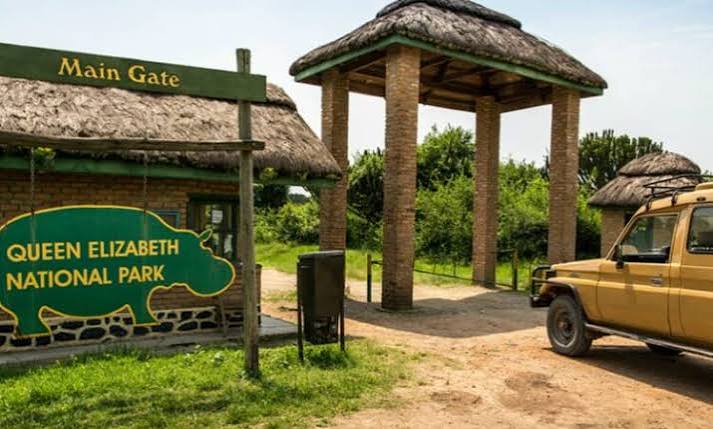
Queen Elizabeth National Park lies in western Uganda. It covers approximately 1,978 square kilometres and stretches across several habitats.
The park includes open savannah, wetlands, crater lakes, forests, and the Kazinga Channel. Moreover, the Rwenzori Mountains form a dramatic background in some areas.
Queen Elizabeth supports more than 95 mammal species and over 600 recorded bird species. Therefore, it is one of Uganda’s most diverse safari destinations. Uganda Wildlife Authority – Queen Elizabeth National Park
The park is also easy to combine with Kibale and Bwindi. As a result, it appears in many Uganda gorilla and chimpanzee safari itineraries.
Wildlife in Queen Elizabeth National Park
Visitors may see elephants, buffaloes, Uganda kobs, waterbucks, warthogs, hippos, crocodiles, baboons, and other animals.
Lions live in several parts of the park. Meanwhile, leopards and hyenas may appear during suitable game drives.
Wildlife numbers and visibility vary between areas. Therefore, visitors should explore more than one habitat when time allows.
The park’s bird diversity is also exceptional. Savannah, forest, wetland, and lake environments support different species.
Kasenyi Plains Game Drives
The Kasenyi Plains provide classic savannah game viewing. Uganda kobs gather in the open grassland and attract predators.
Early morning is a good time to search for lions and other active animals. However, sightings remain natural and cannot be guaranteed.
Elephants, buffaloes, warthogs, and birds may also appear. Moreover, the open landscape provides good photography opportunities.
Kazinga Channel Boat Cruise
The Kazinga Channel connects Lake George with Lake Edward. It supports hippos, crocodiles, waterbirds, and mammals that approach the banks.
A boat cruise allows visitors to observe wildlife from the water. Therefore, it complements the morning game drive.
Elephants and buffaloes sometimes gather near the channel. In addition, birdwatchers can see many water-associated species.
The activity should be reserved in advance during busy travel months.
Ishasha and Tree-Climbing Lions
Ishasha lies in the southern part of Queen Elizabeth National Park. It is widely known for lions that sometimes rest in fig trees.
However, visitors should not expect a guaranteed tree sighting. The lions may rest on the ground or move through another part of their territory.
Ishasha also supports elephants, buffaloes, topis, Uganda kobs, and other wildlife.
The sector lies along a common route between Queen Elizabeth and Bwindi. Therefore, it fits naturally into a gorilla safari.
Kyambura Gorge
Kyambura Gorge forms a forested feature within the wider savannah landscape. It supports primates, birds, and other forest wildlife.
Guided chimpanzee tracking may be available under current park arrangements. However, Kibale generally provides Uganda’s main chimpanzee trekking experience.
The gorge still offers valuable scenery and a strong contrast with the surrounding plains.
Katwe Crater Area
The crater region contains volcanic landscapes, salt lakes, and wide viewpoints.
Visitors can learn about local salt production and the area’s geology through approved experiences. In addition, the crater drive provides attractive views.
Road conditions can change during rainy periods. Therefore, the driver-guide should choose the route carefully.
Best Time to Visit Queen Elizabeth National Park
Queen Elizabeth remains open all year. Drier months often provide easier roads and productive game viewing.
Rainy seasons bring green landscapes and rewarding birdwatching. However, taller vegetation can make some animals harder to see.
At least two nights are recommended. Three nights allow more time for Kasenyi, Kazinga Channel, Ishasha, and the crater region.
Bwindi Impenetrable National Park
Bwindi Impenetrable National Park lies in southwestern Uganda on the edge of the Albertine Rift.
The ancient rainforest protects mountain gorillas, chimpanzees, forest elephants, monkeys, birds, butterflies, and many plants. Uganda Wildlife Authority reports that Bwindi contains around 459 mountain gorillas, more than 120 mammal species, and over 350 bird species. Uganda Wildlife Authority – Bwindi
Bwindi is also a UNESCO World Heritage Site. Its ecological value extends far beyond gorilla trekking.
Gorilla Trekking in Bwindi
Gorilla trekking is Bwindi’s leading activity. Visitors enter the forest with trained rangers and trackers.
The trek can last a few hours or most of the day. Gorilla movements, terrain, rain, and participant pace affect its length.
After finding the assigned family, visitors receive the authorised observation period. They must remain quiet and follow all ranger instructions.
The minimum trekking age is generally 15 years. Moreover, visitors with symptoms of a contagious illness must report them before trekking.
Bwindi’s Four Trekking Sectors
Bwindi has four main trekking sectors: Buhoma, Ruhija, Rushaga, and Nkuringo.
The permit connects the visitor to a specific sector. Therefore, travellers must stay near the correct briefing point.
Driving between sectors can take several hours. As a result, visitors should never book accommodation before confirming their permit location.
Buhoma Sector
Buhoma lies in northern Bwindi. It has a broad range of guesthouses, mid-range lodges, and luxury properties.
The sector combines well with Ishasha in Queen Elizabeth National Park. Therefore, it works well on a north-to-south Uganda route.
Buhoma also offers approved forest and community experiences.
Ruhija Sector
Ruhija lies in eastern Bwindi. It has a cool, high-altitude setting and strong birdwatching opportunities.
The area can connect with Kabale and Lake Bunyonyi. However, travellers must allow enough time for the mountain roads.
Ruhija has fewer lodges than Buhoma. Therefore, early booking is useful during busy months.
Rushaga Sector
Rushaga lies in southern Bwindi. It is convenient for travellers arriving through Kisoro or Kigali.
The sector offers standard gorilla trekking and access to specialised activities under current permit arrangements.
Accommodation ranges from budget camps to comfortable forest lodges.
Nkuringo Sector
Nkuringo also lies in southern Bwindi. Its highland location provides beautiful forest and volcanic views.
The terrain can be demanding. However, trek difficulty depends on the gorillas’ location that day.
Nkuringo connects well with Kisoro, Lake Mutanda, and cross-border routes from Rwanda.
Nature and Birding Experiences in Bwindi
Bwindi protects far more than mountain gorillas. Guided nature walks reveal forest streams, plants, monkeys, and birds.
Birdwatchers visit Bwindi for species associated with the Albertine Rift. In addition, the forest supports hundreds of butterfly species.
Visitors should use authorised guides and remain on approved routes. This protects both travellers and the forest.
Community Experiences Around Bwindi
Community activities may include village walks, crafts, music, farming, and local storytelling.
Responsible programmes should create clear benefits for residents. Moreover, visitors should ask permission before taking photographs.
Batwa-led experiences can introduce travellers to the community’s historical relationship with the forest. These activities should present that history with dignity and accuracy.
Best Time to Visit Bwindi
Gorilla trekking operates throughout the year. However, drier months may provide less muddy trails.
Rain can fall at any time because Bwindi is a rainforest. Therefore, every visitor needs waterproof boots and a rain jacket.
June to September and December to February receive strong demand. Travellers should reserve permits and lodges well ahead.
Uganda National Parks Overview 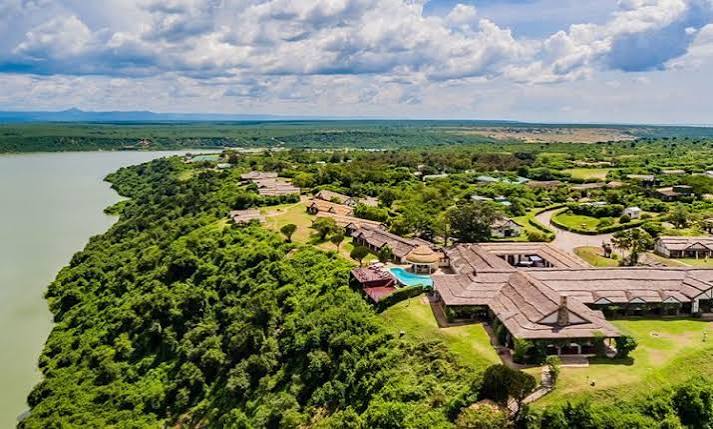
Uganda’s protected areas offer much more than classic game drives. Some parks protect misty volcanoes and rare primates. Others feature open savannah, remote valleys, lakes, and wetlands. Therefore, travellers can enjoy several types of safari within one country.
Part 1A of this Uganda National Parks Overview explored Murchison Falls, Queen Elizabeth, and Bwindi Impenetrable national parks. Part 1B continues with four contrasting destinations: Mgahinga Gorilla, Kibale, Kidepo Valley, and Lake Mburo.
Together, these parks offer gorilla trekking, chimpanzee tracking, birdwatching, boat safaris, guided walks, and traditional game viewing. Moreover, each park has a distinct landscape and atmosphere. Understanding those differences will help you build a balanced Uganda safari itinerary.
Mgahinga Gorilla National Park: Small Park, Remarkable Experiences
Mgahinga Gorilla National Park lies in south-western Uganda, close to Kisoro. It protects the Ugandan slopes of three Virunga volcanoes: Mount Muhabura, Mount Gahinga, and Mount Sabyinyo.
The park covers only 33.7 square kilometres. As a result, it is Uganda’s smallest national park. However, its modest size does not limit its appeal. In fact, Mgahinga combines mountain gorillas, golden monkeys, volcanic scenery, rare birds, and cultural experiences within one compact destination.
The park also shares borders with Volcanoes National Park in Rwanda and Virunga National Park in the Democratic Republic of Congo. These three parks form the wider Virunga Conservation Area. Wildlife can move through this connected mountain ecosystem without following national borders.
According to the Uganda Wildlife Authority’s Mgahinga guide, the park supports more than 76 mammal species and over 180 recorded bird species. Therefore, visitors should not view Mgahinga only as a gorilla destination.
Gorilla Trekking in Mgahinga Gorilla National Park
Gorilla trekking is Mgahinga’s best-known activity. The experience begins with a briefing at the park headquarters. Uganda Wildlife Authority guides then lead visitors into the forest to search for a habituated mountain gorilla family.
The hike may pass through bamboo forest, thick undergrowth, and steep mountain terrain. Its duration changes from one day to another because gorillas move freely through their habitat. Therefore, trekkers should prepare for a flexible schedule.
Once the guides locate the gorillas, visitors can observe their natural behaviour under controlled conditions. A standard trek normally allows one hour with the gorilla family. During that time, travellers may see adults feeding, juveniles playing, or a silverback watching over the group.
Visitors must follow the guide’s instructions throughout the encounter. For example, trekkers should keep the required distance, avoid flash photography, and never feed wildlife. These rules reduce disturbance and help protect gorillas from human illnesses.
Mgahinga often feels quieter than Uganda’s larger gorilla destination, Bwindi. Consequently, it can suit travellers who want a more intimate mountain setting. However, gorilla permits remain limited. Early booking is important, especially during popular travel months.
Golden Monkey Tracking in Mgahinga
Golden monkey tracking gives visitors another reason to explore Mgahinga. These colourful primates live within the bamboo forests of the Virunga Mountains. They move quickly and often travel in active groups.
During a guided trek, visitors follow forest paths while listening for calls and movement above them. Golden monkeys may leap between bamboo stems or descend to feed closer to the ground. Therefore, the experience can feel lively and unpredictable.
Photography may also present a rewarding challenge. The monkeys move fast, while the forest light changes constantly. As a result, photographers may need patience and quick camera settings.
Golden monkey tracking usually demands less time than some gorilla treks. Even so, the trails can still feel steep or slippery. Visitors should wear strong walking shoes and carry rain protection.
Travellers with enough time can combine gorilla trekking and golden monkey tracking on separate days. This plan creates a fuller primate safari without leaving the Kisoro area.
Volcano Hiking in Mgahinga
Mgahinga’s three volcanoes dominate the surrounding landscape. They also provide some of the most scenic hiking opportunities in south-western Uganda.
Mount Muhabura is the highest of the three. Its summit reaches 4,127 metres above sea level. On a clear day, hikers may enjoy wide views across the Virunga ranges and nearby lakes.
Mount Gahinga has a broad summit area and a route that passes through bamboo forest. Its name relates to the piles of volcanic stones that local farmers traditionally cleared from their land. The mountain helped give the national park its name.
Mount Sabyinyo has a more rugged profile. Its name refers to the mountain’s tooth-like peaks. The summit area also marks the meeting point of Uganda, Rwanda, and the Democratic Republic of Congo.
These climbs require official guides and a reasonable level of fitness. Weather can change quickly, while mud may slow progress. Therefore, hikers should carry water, a packed meal, rain gear, and warm layers. Travellers should also discuss the route’s demands with their safari planner before booking.
Birdwatching and Forest Walks
Mgahinga lies within the Albertine Rift, one of Africa’s most important areas for bird diversity. The park protects forest, bamboo, heath, and high-altitude habitats. Consequently, birders can search for species linked to several different ecological zones.
Notable birds may include the Rwenzori turaco, Kivu ground thrush, handsome francolin, and dusky crimsonwing. However, sightings always depend on the season, habitat, and time available.
Guided forest walks can also reveal butterflies, plants, and smaller animals that visitors may overlook during a primate trek. In addition, the slower pace gives guides time to explain how altitude shapes the vegetation.
Travellers who place birding high on their list should consider hiring a specialist bird guide. They should also allow more than one day because rare forest birds can take time to locate.
Cultural Experiences Near Mgahinga
Communities around Mgahinga add an important human dimension to the safari. Guided cultural experiences may introduce visitors to Batwa heritage, local farming, traditional knowledge, crafts, music, and storytelling.
Responsible visits should treat residents as hosts and partners. Therefore, travellers should book through recognised operators or community organisations. They should also request permission before photographing people.
A well-managed cultural experience supports local livelihoods. Moreover, it helps travellers understand the long relationship between people and the forest.
When to Visit Mgahinga Gorilla National Park
Travellers can visit Mgahinga throughout the year. However, the drier periods often make hiking easier. These periods usually fall from June to September and from December to February.
Rain can occur at any time because this is a high-altitude tropical environment. Nevertheless, the wetter months bring rich green scenery and may attract fewer visitors.
Warm layers are useful during early mornings. In addition, every trekker should carry a light waterproof jacket. Even when the day begins with clear skies, mountain weather can change quickly.
How Mgahinga Fits into a Uganda Safari
Mgahinga works well with Bwindi Impenetrable National Park, Lake Bunyonyi, and the wider Kisoro area. It can also support a cross-border itinerary involving Rwanda.
A stay of two or three nights gives travellers time for one major activity and some relaxation. In contrast, a longer stay can include gorilla trekking, golden monkeys, birding, and a volcano hike.
Mgahinga is especially suitable for active travellers. It also appeals to photographers, primate enthusiasts, and visitors who prefer quieter parks.
Kibale National Park: Uganda’s Primate Capital
Kibale National Park protects a rich forest landscape in western Uganda. It is widely known as one of Africa’s leading destinations for chimpanzee tracking.
The park covers about 795 square kilometres. Its habitats include moist evergreen forest, woodland, grassland, and swamp. This variety supports an exceptional range of wildlife.
Kibale has 13 recorded non-human primate species. These include chimpanzees, red colobus monkeys, black-and-white colobus monkeys, L’Hoest’s monkeys, blue monkeys, and grey-cheeked mangabeys.
Uganda Wildlife Authority estimates that almost 1,500 chimpanzees live in Kibale. In addition, its official park brochure lists about 370 bird species and 71 mammal species. These figures help explain why Kibale holds such a strong place in any detailed Uganda National Parks Overview. Read the official Kibale National Park information.
Chimpanzee Tracking in Kibale National Park
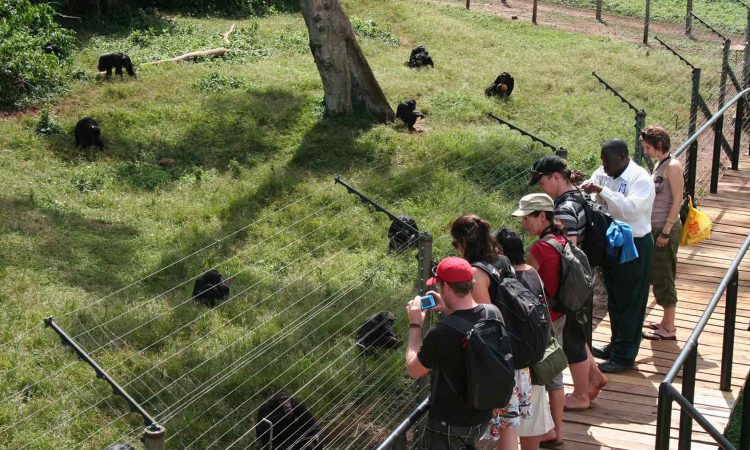
Chimpanzee tracking is Kibale’s signature safari experience. Most organised excursions begin at Kanyanchu Visitor Centre. After a briefing, trained guides lead small groups into the forest.
Guides look for fresh nests, food remains, calls, and movement through the canopy. Chimpanzees can travel quickly, so visitors may need to walk at a steady pace.
The forest provides more than a single wildlife sighting. For instance, trekkers may hear distant calls before seeing a chimpanzee. They may also encounter monkeys, forest birds, butterflies, and unusual plants along the route.
Once visitors find the chimpanzees, they observe them according to current park rules. The animals may feed in trees, rest on the forest floor, groom one another, or move deeper into the vegetation.
Every encounter differs. Therefore, travellers should avoid expecting a staged experience. The uncertainty forms part of an authentic forest safari.
Chimpanzee Habituation Experience
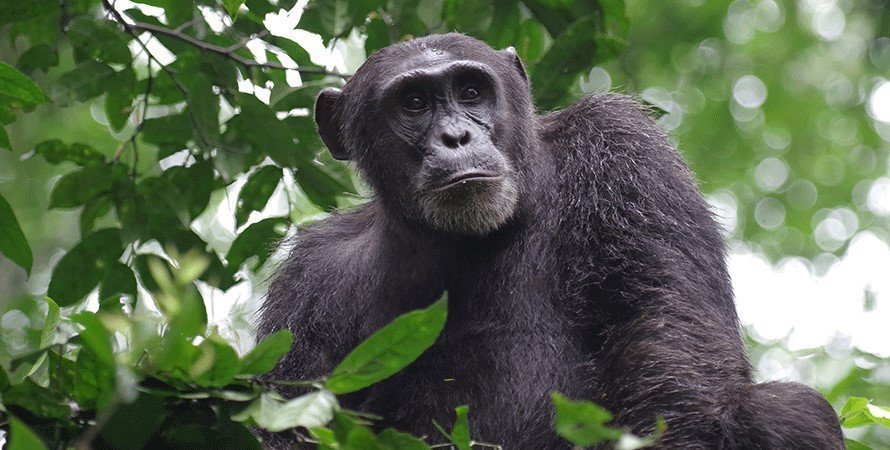
The Chimpanzee Habituation Experience provides more time in the forest than standard chimpanzee tracking. Participants accompany guides and researchers as they follow a semi-habituated chimpanzee community.
Because the activity lasts longer, visitors may observe a wider range of behaviour. They may also learn how researchers identify individuals and record social interactions.
The experience suits dedicated primate enthusiasts and wildlife photographers. However, it can involve several hours of walking over uneven ground. Participants should therefore assess their comfort and fitness before booking.
Permits remain limited. Furthermore, rules and prices can change. Travellers should confirm current information with the Uganda Wildlife Authority or a licensed tour operator before planning their dates.
Other Primates in Kibale Forest
Chimpanzees attract most of the attention, but Kibale’s smaller primates are equally important. Red colobus monkeys often move through the upper canopy. Black-and-white colobus monkeys, meanwhile, stand out because of their contrasting coats and long tails.
Grey-cheeked mangabeys live in social groups and communicate with loud calls. L’Hoest’s monkeys tend to remain closer to the forest floor. Blue monkeys and red-tailed monkeys may also appear along the trails.
A specialised primate walk can help visitors identify these species. Moreover, a knowledgeable guide can explain their feeding habits, calls, and roles within the forest.
Travellers should keep binoculars ready. Many monkeys remain high above the ground, where leaves can hide them from view.
Birdwatching in Kibale National Park
Kibale is also an excellent Uganda birding destination. Its forest shelters species that favour dense vegetation, quiet clearings, and wetland edges.
The green-breasted pitta ranks among the park’s most sought-after birds. However, finding one requires time, skill, and favourable conditions. Other possibilities include great blue turacos, crowned eagles, hornbills, forest robins, and several types of sunbird.
Early morning often provides the best activity. Therefore, serious birders should start before the forest becomes warmer and quieter.
Visitors can also combine Kibale with the nearby Bigodi Wetland Sanctuary. Community-guided walks around Bigodi may reveal monkeys, wetland birds, butterflies, and local plant life. In addition, visitor income supports community projects and conservation.
Nature Walks and Nocturnal Experiences
Daytime nature walks allow travellers to explore Kibale at a slower pace. Guides can point out medicinal plants, animal tracks, insects, and forest ecology.
Some authorised night walks may also be available. These excursions focus on nocturnal wildlife, such as bush babies and other small forest animals. Availability can change, so visitors should confirm the activity locally.
Night walks must take place with an approved guide. Visitors should never enter the forest alone after dark. Besides improving safety, guided access protects wildlife and sensitive habitats.
Best Time to Visit Kibale
Kibale welcomes visitors throughout the year. The drier months usually provide more comfortable forest trails. However, rain remains possible in every season.
The wetter periods often create lush scenery. They may also suit travellers interested in birds, plants, and quieter safari conditions. On the other hand, paths may become muddy.
Light, breathable clothing works well during the walk. Nevertheless, long trousers, covered shoes, gardening gloves, and a waterproof layer can improve comfort. Visitors should also protect cameras and phones from rain.
Reaching Kibale National Park
Fort Portal is the main gateway to Kibale. The city connects the park with crater lakes, tea-growing areas, and other attractions in western Uganda.
Kibale also fits naturally between Murchison Falls and Queen Elizabeth national parks. For example, travellers can arrive from the north, spend two or three nights near Kibale, and then continue south to Queen Elizabeth.
This route reduces unnecessary backtracking. More importantly, it creates a varied journey that combines savannah animals with forest primates.
Kidepo Valley National Park: Uganda’s Remote Wilderness
Kidepo Valley National Park lies in Uganda’s far north-eastern region, near the borders with South Sudan and Kenya. Its remote location creates a very different safari experience from the busy routes of western Uganda.
Wide plains stretch towards rocky mountains. Seasonal rivers cross the landscape, while distant ridges frame the horizon. As a result, Kidepo often feels vast, open, and peaceful.
The park contains more than 77 mammal species and 476 recorded bird species, according to the Uganda Wildlife Authority. Its combination of wildlife, scenery, and relative isolation makes it one of Uganda’s most distinctive safari destinations.
Wildlife Safaris in Narus Valley
Narus Valley forms the main game-viewing area. Its seasonal water sources attract animals, especially during dry conditions.
Visitors may see buffaloes, elephants, giraffes, zebras, Uganda kobs, waterbucks, hartebeests, and warthogs. Predators may include lions, leopards, spotted hyenas, and jackals.
Wildlife sightings depend on movement, rainfall, and luck. Nevertheless, the open landscape often provides long, clear views. Early morning and late afternoon usually bring comfortable temperatures and active wildlife.
A trained driver-guide can read tracks and recognise alarm calls. Therefore, guided game drives often produce a richer experience than simply driving through the park.
Exploring the Kidepo Valley
The Kidepo Valley has a drier appearance than Narus. During parts of the year, its sandy riverbed becomes a striking feature of the landscape.
Borassus palms add contrast to the open terrain. Meanwhile, distant mountains strengthen the park’s wild character.
Excursions towards the valley may include Kanangorok Hot Springs when road and security conditions allow. Visitors should travel only with authorised guidance and follow current park advice.
Kidepo’s remoteness requires careful planning. Roads may change after heavy rain, while journey times can be long. For that reason, a reliable vehicle and an experienced safari operator are essential.
Birdwatching in Kidepo
Kidepo is one of Uganda’s leading birding areas. It supports savannah birds, raptors, dry-country species, and birds linked to the north-eastern region.
The park is particularly notable as Uganda’s main location for wild ostriches. Birders may also search for secretary birds, hornbills, bustards, bee-eaters, eagles, and vultures.
Open habitats make many species easier to observe than forest birds. However, heat can reduce activity during the middle of the day. Early starts usually produce better results.
Because Kidepo lies far from other popular parks, birders should allow several nights. A rushed visit may not justify the long journey.
Community and Cultural Visits
The wider Karamoja region has a strong pastoral heritage. Organised community visits can introduce travellers to local architecture, livestock traditions, music, dance, crafts, and daily life.
These experiences require cultural respect. Visitors should listen to local hosts, ask before taking photographs, and avoid presenting communities as attractions.
A responsible operator should explain how visitor fees support residents. In addition, community members should guide the experience and decide what they wish to share.
When to Visit Kidepo Valley National Park
Kidepo remains open throughout the year. The dry season often concentrates animals near dependable water, which may improve wildlife viewing. Roads may also become easier to use.
However, the green season transforms the plains. Fresh vegetation changes the landscape, while bird activity can be excellent.
Temperatures can become high during the day. Therefore, travellers should carry water, sun protection, and light clothing. A warmer layer may still help during early game drives.
How Long to Stay in Kidepo
A three-night stay gives most travellers two full days for game drives and other activities. Four nights create a slower and more complete visit.
Kidepo can be reached by road or by scheduled and chartered flights, depending on current services. A road trip offers changing scenery and possible stops. However, it requires more time.
Flying reduces travel hours and works well for shorter itineraries. Even so, flight schedules and luggage limits should be confirmed before booking.
Kidepo best suits travellers who value scenery, quiet game viewing, and a sense of distance from heavily visited routes.
Lake Mburo National Park: An Accessible Savannah Escape
Lake Mburo National Park lies between Kampala and south-western Uganda. Its convenient position makes it a useful first or final safari stop.
The park features open savannah, acacia woodland, rocky ridges, wetlands, and several lakes. Unlike Uganda’s larger savannah parks, Lake Mburo has no resident elephants. Consequently, woodland has expanded in parts of the park.
Lake Mburo is well known for zebras and impalas. Visitors may also see elands, buffaloes, topis, waterbucks, warthogs, giraffes, hippos, and several smaller antelopes.
The Uganda Wildlife Authority’s Lake Mburo guide records more than 315 bird species. It also highlights boat trips, game drives, guided walks, and birdwatching among the park’s leading activities.
Game Drives in Lake Mburo
Game drives pass through a compact but varied landscape. Zebras often provide the park’s most memorable sightings. In addition, Lake Mburo is Uganda’s main destination for impalas.
Because the park is relatively small, visitors can enjoy a rewarding drive without spending an entire day in the vehicle. This makes Lake Mburo suitable for families and travellers with limited time.
Morning and evening drives usually provide the best light and wildlife activity. Night drives may also be available through authorised arrangements. They can reveal nocturnal species that visitors rarely see during the day.
Boat Safaris on Lake Mburo
A boat safari offers a different view of the park. Hippos rest in the water, while crocodiles may appear near the shore. Buffaloes and antelopes sometimes approach the lake to drink.
African fish eagles, kingfishers, herons, and other waterbirds add interest above the waterline. Therefore, the cruise works well for wildlife watchers and photographers.
Visitors should remain seated when instructed and follow the boat guide’s safety rules. Wildlife must always receive enough space.
Guided Walking Safaris
Lake Mburo is one of Uganda’s best-known destinations for guided walking safaris. Walking changes the scale of the safari. Instead of focusing only on large animals, visitors notice tracks, plants, insects, sounds, and smaller details.
A ranger leads the activity and chooses a route suited to current conditions. Guests must follow every instruction because wild animals move freely through the area.
Walking safaris often begin early, when temperatures remain comfortable. Strong closed shoes, neutral clothing, water, and sun protection are useful.
Horse Riding and Cycling
Some lodges and approved operators around Lake Mburo offer horse riding or cycling experiences. These activities allow visitors to explore selected areas without relying entirely on a safari vehicle.
Availability, age rules, routes, and experience requirements may vary. Therefore, travellers should verify current conditions before booking.
An organised activity must provide proper equipment and trained supervision. Visitors should never cycle or ride independently through wildlife areas without permission.
Birding in Lake Mburo
Lake Mburo supports wetland, woodland, and open-country birds. As a result, birders can build a varied checklist in a relatively short period.
Possible sightings include African finfoots, pied kingfishers, fish eagles, black-bellied bustards, bare-faced go-away birds, and southern ground hornbills.
The Rwonyo area and lakeshore habitats can be especially productive. A boat trip adds water species, while a guided walk brings attention to smaller woodland birds.
When to Visit Lake Mburo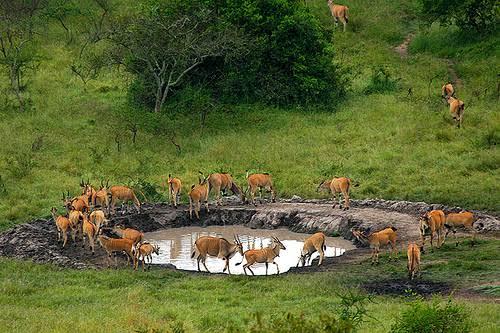
Lake Mburo can be visited in every season. The drier months often make tracks easier to use. Wildlife may also gather near water.
The wetter months create greener scenery and support strong birding. However, some tracks may become muddy after heavy rain.
A one-night stay provides a useful safari break. Two nights allow time for a game drive, boat cruise, and guided walk without rushing.
Combining These Parks in One Uganda Safari
Mgahinga, Kibale, Kidepo, and Lake Mburo serve different travel interests. Therefore, few visitors need to choose one park as the “best” overall.
| National park | Best known for | Ideal stay |
|---|---|---|
| Mgahinga Gorilla | Gorillas, golden monkeys, volcano hiking | 2–4 nights |
| Kibale | Chimpanzees and forest primates | 2–3 nights |
| Kidepo Valley | Remote savannah and dramatic scenery | 3–4 nights |
| Lake Mburo | Zebras, boat trips, and walking safaris | 1–2 nights |
A western Uganda circuit can combine Lake Mburo, Bwindi or Mgahinga, Queen Elizabeth, and Kibale. This route includes primates, savannah wildlife, lakes, and mountain landscapes.
Kidepo requires a separate northern extension in many itineraries. However, travellers can combine it with Murchison Falls when they have enough time. Domestic flights can also reduce long road journeys.
How to Choose the Best Uganda National Parks
Uganda has ten national parks, but most visitors cannot explore all of them during one holiday. Therefore, the best itinerary should focus on personal interests rather than park numbers.
A first-time visitor may want gorillas, chimpanzees, lions, elephants, hippos, and a boat safari. In that case, a western Uganda circuit usually works well. It can connect Murchison Falls, Kibale, Queen Elizabeth, Bwindi, and Lake Mburo.
In contrast, hikers may prefer Rwenzori Mountains, Mount Elgon, and Mgahinga Gorilla national parks. Dedicated birdwatchers may place Semuliki, Kibale, Queen Elizabeth, Murchison Falls, and Lake Mburo high on their list.
Kidepo Valley suits travellers who value remote landscapes and quiet game viewing. However, its distant location requires more time or a domestic flight.
The following table provides a simple starting point.
| Travel interest | Recommended national parks |
|---|---|
| Mountain gorilla trekking | Bwindi and Mgahinga |
| Chimpanzee tracking | Kibale |
| Big-game safaris | Murchison Falls, Queen Elizabeth, and Kidepo Valley |
| Boat safaris | Murchison Falls, Queen Elizabeth, and Lake Mburo |
| Mountain hiking | Rwenzori Mountains, Mount Elgon, and Mgahinga |
| Birdwatching | Semuliki, Queen Elizabeth, Murchison Falls, Kibale, and Lake Mburo |
| Walking safaris | Lake Mburo, Kidepo, and selected authorised areas |
| Quiet wilderness | Kidepo Valley and Semuliki |
| Short safari from Kampala | Lake Mburo or Murchison Falls |
| Primate-focused safari | Bwindi, Mgahinga, and Kibale |
Best Time to Visit Uganda National Parks
Travellers can visit Uganda’s national parks throughout the year. Nevertheless, rainfall affects roads, forest trails, hiking conditions, and wildlife movement.
Uganda’s two broadly drier periods usually occur from December to February and from June to September. These months often suit gorilla trekking, chimpanzee tracking, game drives, and mountain hiking.
The wetter periods commonly fall from March to May and from October to November. However, rain patterns can change. A dry month may still bring showers, while a wet month can include long sunny periods.
Visiting Uganda During the Drier Seasons
Drier conditions often make unpaved roads easier to use. Forest trails may also contain less mud. Therefore, these periods attract many visitors.
Wildlife can gather near rivers, lakes, and other permanent water sources. This behaviour may improve game viewing in savannah parks such as Murchison Falls, Queen Elizabeth, Kidepo Valley, and Lake Mburo.
However, popular lodges and permits can sell out early. Prices may also rise during peak travel periods. Travellers should therefore book important services several months ahead.
Dry weather does not remove every challenge. Dust can affect some roads, while midday temperatures may become high in open landscapes. In addition, rain can still fall in tropical forests and mountain areas.
Visiting Uganda During the Wetter Seasons
The wet seasons produce rich colours and dramatic skies. Savannah areas turn green, while forests become especially lush.
These months can offer excellent birdwatching. Migratory birds may also add variety during parts of the year. Furthermore, some lodges offer lower rates outside peak periods.
However, heavy rain can make forest trails slippery. It may also slow road journeys. A four-wheel-drive vehicle becomes particularly valuable on remote or unpaved routes.
Photographers may appreciate the softer light and greener backgrounds. Still, they should carry waterproof protection for cameras and other equipment.
Best Time for Gorilla Trekking
Gorilla trekking operates throughout the year in Bwindi Impenetrable and Mgahinga Gorilla national parks. The drier months often provide firmer trails, but no season guarantees an easy hike.
Mountain gorillas move freely through the forest. Therefore, trekking duration depends on their location that day. Some groups may remain close to the starting point, while others may move deeper into steep terrain.
The wetter months may create more mud. However, they can also bring fewer visitors and vivid forest scenery.
Permit availability should guide the final travel dates. Travellers should secure a permit before confirming non-refundable accommodation or flights.
Best Time for Chimpanzee Tracking
Kibale National Park offers chimpanzee activities in every season. Drier periods often make walking more comfortable. However, forest rain remains possible at any time.
Chimpanzees change their movement as food sources shift. Consequently, sightings and walking distances differ from one day to another.
Visitors should arrive with realistic expectations. Chimpanzee tracking takes place in a natural forest, not a controlled setting.
Best Time for Mountain Hiking
The drier months generally provide better conditions for hiking in Rwenzori Mountains, Mount Elgon, and Mgahinga Gorilla national parks.
Even so, high-altitude weather changes quickly. Rain, cold air, cloud, and strong sunlight may all occur during one journey. As a result, hikers need suitable layers and waterproof equipment in every season.
Travellers should use authorised guides and established routes. They should also choose an itinerary that matches their experience and the advice of qualified local professionals.
Uganda National Park Entry Fees and Permits
Uganda Wildlife Authority manages park entry fees and many wildlife activities. Fees vary according to nationality, residency status, park, vehicle type, and chosen experience.
Gorilla trekking, chimpanzee tracking, mountain expeditions, boat cruises, guided walks, and game drives may carry separate charges. Therefore, a park entry fee does not always cover every activity.
Uganda Wildlife Authority published a tariff for July 2024 to June 2026. Since that tariff period has ended, travellers planning a current safari should check the latest rates before quoting a final budget. The official UWA rates page lists tariff updates and reservation contacts.
Gorilla Trekking Permits
Every visitor taking part in gorilla trekking needs a valid permit for a specific date and park sector. The permit helps control visitor numbers and supports conservation work.
Standard gorilla tracking normally allows a maximum of one hour with a habituated gorilla family once guides locate it. Visitors must follow all instructions given during the pre-trek briefing.
Permit demand often becomes high during popular travel months. Therefore, travellers should book early through the authorised process.
Foreign non-residents and other eligible visitor categories may need to arrange gorilla and chimpanzee permits through licensed tour operators. UWA’s booking rules can change, so visitors should confirm the current procedure before sending money.
Always request:
- The trekking date and park name
- The correct traveller names
- Written payment confirmation
- The assigned trekking sector, when available
- Clear cancellation and amendment conditions
Travellers should never purchase a permit from an unknown social-media account or unverified seller.
Chimpanzee Permits
Chimpanzee tracking also requires advance booking. Kibale is Uganda’s leading chimpanzee destination, so permits can become limited during busy periods.
Standard tracking and the Chimpanzee Habituation Experience are different products. The habituation experience lasts longer and usually costs more. Therefore, visitors should confirm exactly which activity their quotation includes.
Normal tracking permits generally provide a maximum of one hour with the chimpanzees after guides locate them. The official gorilla and chimpanzee tracking guidelines explain current viewing limits and operating procedures.
Park Entry Validity
Park entry commonly covers a defined period rather than an unlimited stay. Vehicle charges may apply separately. In addition, travellers may need to pay for guides or special activities.
Visitors should check how UWA calculates entry time. For example, an extra hour beyond the permitted period may affect the charge.
A detailed safari quotation should separate:
- Park entrance fees
- Vehicle entrance charges
- Activity permits
- Ranger or guide fees
- Boat safari costs
- Accommodation
- Meals
- Transport
- Taxes or payment charges
Clear cost separation makes different safari offers easier to compare.
How Long Should a Uganda National Parks Safari Last?
A Uganda safari can last from two days to several weeks. However, road distances often feel longer than they appear on a map.
Traffic, road conditions, weather, photography stops, and park gates can affect each transfer. Therefore, travellers should avoid placing too many destinations into a short itinerary.
Three- to Five-Day Uganda Safari
A short safari should focus on one region. Good options include:
- Murchison Falls with a game drive and Nile boat cruise
- Queen Elizabeth with the Kazinga Channel
- Bwindi or Mgahinga for gorilla trekking
- Kibale for chimpanzee tracking
- Lake Mburo with a game drive and boat safari
A gorilla itinerary needs enough time for the road journey and the trek. An extra night can reduce pressure if the schedule includes a long transfer.
Seven-Day Uganda National Parks Itinerary
A one-week itinerary can combine two or three major areas. One possible route includes Kibale, Queen Elizabeth, and Bwindi.
This route balances chimpanzees, savannah wildlife, a boat cruise, and mountain gorillas. However, it still includes several road journeys.
Another seven-day plan can combine Murchison Falls, Kibale, and Queen Elizabeth. That option suits visitors who want game viewing and primates without travelling as far south as Bwindi.
Ten-Day Uganda Safari
Ten days allow a more balanced western circuit. A sample plan could include:
- Arrival near Entebbe
- Travel to Murchison Falls
- Game drive and Nile boat safari
- Transfer towards Kibale
- Chimpanzee tracking
- Transfer to Queen Elizabeth
- Game drive and Kazinga Channel cruise
- Travel to Bwindi
- Gorilla trekking
- Continue to Lake Mburo or return towards Entebbe
This schedule is only a framework. Flight times, permit availability, and preferred travel speed should shape the final plan.
Fourteen-Day Uganda National Parks Itinerary
Two weeks provide time for a richer journey. Visitors can add Lake Mburo, Mgahinga, a second night in key parks, or a community experience.
A slower plan improves flexibility. It also gives travellers more time to enjoy lodges and landscapes between scheduled activities.
Kidepo Valley can fit into a two-week holiday, but its location requires careful route design. Some travellers fly to or from the park to reduce driving time.
Three-Week Uganda Safari
A three-week itinerary can cover both northern and western Uganda. It may connect Kidepo, Murchison Falls, Kibale, Queen Elizabeth, Bwindi or Mgahinga, and Lake Mburo.
Hikers may instead dedicate several days to the Rwenzori Mountains or Mount Elgon. A serious mountain expedition should never be treated as a quick addition between game drives.
Suggested Uganda National Park Safari Routes
A logical route saves time and fuel. It also improves the overall travel experience.
Classic Western Uganda Safari Circuit
The western circuit offers Uganda’s broadest combination of wildlife experiences.
A common route follows:
Entebbe or Kampala → Murchison Falls → Kibale → Queen Elizabeth → Bwindi → Lake Mburo → Entebbe
This route may require 10 to 14 days. Travellers with less time can remove one or two parks.
The circuit offers elephants, lions, hippos, chimpanzees, gorillas, zebras, boat cruises, and forest walks. Consequently, it works well for first-time visitors.
South-Western Primate Safari Route
A primate-focused route may include:
Entebbe → Kibale → Bwindi → Mgahinga → Lake Mburo → Entebbe
Kibale provides chimpanzees and several monkey species. Bwindi and Mgahinga provide mountain gorilla experiences. Meanwhile, Lake Mburo creates a gentle savannah finish.
This itinerary can also include crater lakes, community walks, or birding. Therefore, it suits travellers who want more than primate tracking alone.
Northern Wilderness Route
A northern circuit can follow:
Entebbe or Kampala → Murchison Falls → Kidepo Valley → return by road or air
Murchison Falls adds the Nile, a major waterfall, boat safaris, and game drives. Kidepo then delivers remote plains and dramatic mountain views.
The long road journey requires time. For that reason, travellers should use a reliable vehicle and allow rest stops.
Hiking and Nature Route
Active travellers may combine:
Mount Elgon → Rwenzori Mountains → Mgahinga Gorilla
This route should include recovery time between strenuous activities. Moreover, visitors must use qualified guides and follow current park procedures.
A less demanding version can replace a full Rwenzori expedition with foothill walks, crater-lake visits, or short nature trails.
Driving Between Uganda’s National Parks
Road travel remains the main way to explore Uganda’s national parks. It allows visitors to see farms, towns, hills, wetlands, and everyday life between destinations.
However, driving times can vary. Some routes include smooth paved highways, while others use narrow or unpaved roads.
A four-wheel-drive safari vehicle offers useful clearance and traction. It becomes especially important during rainy periods and on remote tracks.
Travellers should avoid building an itinerary around optimistic driving estimates. Instead, they should allow time for breaks, meals, road delays, and changing weather.
Self-Drive or Guided Safari?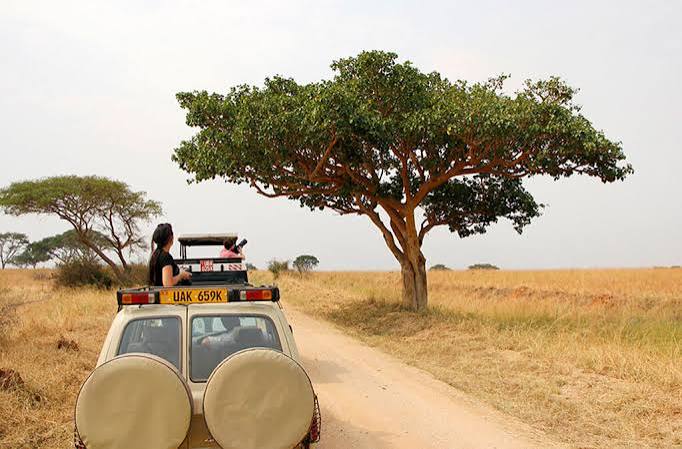
Self-drive travel provides independence. However, it also requires navigation skills, careful route planning, and confidence on unfamiliar roads.
A guided safari reduces those demands. An experienced driver-guide handles routes, park procedures, wildlife spotting, and local logistics.
First-time visitors often benefit from a guided journey. In addition, a skilled guide can explain wildlife behaviour and identify birds that travellers might otherwise miss.
Self-driving visitors must follow park speed limits and stay on approved tracks. They should never leave the vehicle in an unauthorised area.
Domestic Flights
Domestic flights connect Entebbe with airstrips near several tourism areas. Flights can greatly reduce travel time, especially for Bwindi, Queen Elizabeth, Murchison Falls, and Kidepo.
However, schedules may not operate every day. Baggage limits can also be strict.
Travellers should confirm:
- Departure airport
- Check-in time
- Baggage allowance
- Airstrip transfer
- Minimum passenger conditions
- Weather-related policies
- Cancellation terms
A fly-in safari costs more than a full road itinerary. Nevertheless, it may add valuable time inside the parks.
Accommodation Near Uganda National Parks
Uganda offers campsites, simple guesthouses, mid-range lodges, luxury safari camps, and exclusive forest properties.
Location can affect the experience as much as room quality. A cheaper lodge far from a park gate may create long daily transfers. In contrast, a well-positioned lodge can provide more rest and earlier access to activities.
Budget Accommodation
Budget properties usually provide simple rooms, permanent tents, shared areas, or campsites. Some offer private bathrooms, while others use shared facilities.
Travellers should check whether the price includes meals. They should also ask about hot water, electricity, charging points, mosquito nets, and transport to the park gate.
A low room rate does not always produce the lowest total cost. Extra transfers and meals may increase the final amount.
Mid-Range Safari Lodges
Mid-range lodges often balance comfort and value. They may include private bathrooms, full-board meals, attractive views, and organised activities.
These properties suit travellers who want a comfortable bed without choosing a premium safari camp. However, standards vary. Recent reviews and clear room descriptions can help set expectations.
Luxury Safari Lodges
Luxury lodges may provide private cottages, high staff-to-guest ratios, refined meals, panoramic locations, and personalised service.
Some properties focus on design and privacy. Others emphasise access to wildlife or trekking headquarters.
Travellers should compare what the rate includes. Drinks, laundry, transfers, activities, and park fees may not form part of the advertised price.
Choosing a Gorilla Lodge
Bwindi has several trekking sectors, including Buhoma, Ruhija, Rushaga, and Nkuringo. These sectors are not interchangeable at the last minute.
A traveller should normally stay near the sector named on the gorilla permit. Booking a distant lodge may require a difficult early transfer.
Therefore, the permit location should guide the accommodation choice. This single step prevents one of the most common Uganda gorilla safari planning mistakes.
What to Pack for a Uganda National Parks Safari
A practical packing list should support several climates. Uganda can feel warm at lower elevations, cool in the mountains, and damp inside forests.
Travellers should pack light where possible. However, they should not remove essential rain protection or suitable walking shoes.
Essential Safari Clothing
Useful clothing includes:
- Lightweight long trousers
- Breathable shirts with sleeves
- A fleece or light warm layer
- A waterproof jacket
- A sun hat
- Comfortable closed shoes
- Strong hiking shoes for forest treks
- Socks that reduce rubbing
- A modest outfit for community visits
Neutral colours work well in wildlife areas. Bright clothing is not always forbidden, but muted shades can feel less distracting.
Visitors should avoid military-style camouflage because local rules and perceptions may differ.
Gorilla and Chimpanzee Trekking Gear
Forest conditions can include mud, thorns, insects, and sudden rain. Therefore, trekkers should carry:
- Waterproof hiking footwear
- Long trousers
- A light rain jacket
- Gardening-style gloves
- A small backpack
- Drinking water
- A packed meal when advised
- Camera protection
- Any personal medicine they require
A walking stick may help on steep or slippery trails. Porters can also assist with bags and difficult sections. Hiring a porter provides local income while making the trek more comfortable.
Photography Equipment
Wildlife photographers may want a camera with a moderate or long lens. However, heavy equipment becomes tiring during forest treks.
A zoom lens offers flexibility. Spare batteries and memory cards are also useful because charging may be limited at remote lodges.
Visitors must not use flash around gorillas or chimpanzees. They should also avoid blocking other guests while taking photographs.
Health and Personal Items
Travellers should speak with a qualified health professional about current recommendations well before departure. Needs can vary according to travel history, age, itinerary, and medical circumstances.
A personal kit may include prescribed medicine, insect repellent, sunscreen, hand cleaner, plasters, and oral rehydration products.
Travel insurance should cover the activities in the itinerary. Mountain trekking, remote evacuation, and high-altitude travel may require specific coverage.
Visa and Entry Planning for Uganda
Visa requirements depend on nationality and passport type. Therefore, travellers must check the official rules that apply to them.
Uganda’s Directorate of Citizenship and Immigration Control operates an official electronic visa portal. Visa-prone travellers should use the official process and obtain approval before travel.
A Ugandan single-entry tourist visa may be granted for a visit of up to three months. However, approval conditions and required documents can change.
The East African Tourist Visa covers tourism travel in Uganda, Kenya, and Rwanda. It allows multiple journeys within those three countries during its validity. The issuing country must be the traveller’s first entry point. The official East African Tourist Visa page provides further details.
Travellers should check:
- Passport validity
- Visa eligibility
- Required supporting documents
- Health-entry rules
- Return or onward travel requirements
- Rules for children travelling with adults
- Transit-country requirements
They should also review current government travel advice before departure because health, security, and border conditions can change quickly.
Responsible Tourism in Uganda National Parks
Responsible tourism protects wildlife and improves the value of visitor spending.
Every visitor should follow ranger instructions, remain on approved routes, and keep enough distance from animals. Feeding wildlife changes natural behaviour and can create dangerous situations. Therefore, it is prohibited.
Visitors should also keep noise low. Loud calls, music, and repeated vehicle movements can disturb wildlife and reduce the quality of other guests’ experiences.
Reduce Waste
Carry reusable water containers when lodge and safety arrangements permit. Keep all litter until it can reach a proper disposal point.
Wet wipes, batteries, and plastic packaging should never remain on a trail. Even small items can damage habitats.
Support Local Communities
Choose recognised community experiences, local guides, and responsibly managed craft shops. These choices help tourism income reach residents near the parks.
Fair purchasing also matters. Visitors can ask respectful questions about prices, but aggressive bargaining may reduce the benefit to craftspeople.
Respect People and Culture
Always request permission before photographing a person. This rule applies especially in villages, markets, schools, and community tourism projects.
Travellers should listen to local hosts and avoid treating daily life as a performance. Respect creates better cultural exchanges.
Protect Primates
Gorillas and chimpanzees can catch some human illnesses. Visitors who feel unwell should tell the operator or ranger before entering the forest.
During tracking, guests must follow current distance rules and viewing limits. They should never touch, feed, chase, or imitate the animals.
Keep Wildlife Wild
Wild animals do not need help posing for photographs. Drivers should not crowd an animal, block its path, or leave official tracks without permission.
Visitors should accept that some sightings remain distant. A respectful encounter is more valuable than a close photograph obtained through disturbance.
Common Uganda Safari Planning Mistakes
Several mistakes can turn a promising itinerary into a tiring journey.
Including Too Many Parks
Adding more parks does not always improve a safari. Long transfers reduce time for activities and rest.
A smaller number of well-chosen parks often creates a better journey. Therefore, travellers should prioritise quality over a long destination list.
Booking Accommodation Before Permits
Gorilla and chimpanzee permits may determine the final route. A lodge booking should follow permit confirmation whenever possible.
This order reduces the risk of staying in the wrong trekking sector or travelling on unavailable dates.
Ignoring Road Distances
Map distances do not always reflect actual travel time. Weather, road repairs, traffic, and stops can extend journeys.
An itinerary should therefore include realistic transfer days.
Packing Only for Warm Weather
Uganda lies across the equator, but mountains and early mornings can feel cool. Rain can also lower temperatures quickly.
A light warm layer and waterproof jacket remain useful throughout the year.
Choosing a Safari Only by Price
The cheapest quote may exclude important costs. It may also use unsuitable accommodation or place too many activities into one day.
Travellers should compare complete inclusions, vehicles, guide experience, lodge locations, and cancellation terms.
Forgetting Recovery Time
Gorilla trekking, chimpanzee tracking, and mountain hiking can demand energy. Scheduling another long activity immediately afterwards may create unnecessary pressure.
A relaxed afternoon or additional lodge night can improve the journey.
Plan Your Uganda National Parks Safari
Would you like help choosing the right parks, travel route, accommodation, or wildlife activities? Universal Ventures Rwanda can help you create a safari that matches your schedule, interests, and preferred travel style.
The team specialises in East African tour planning, wildlife safaris, primate experiences, private transport, and customised itineraries. Whether you want to track mountain gorillas, explore Uganda’s savannah parks, or combine Uganda and Rwanda, contact the team for personalised assistance.
Contact Universal Ventures Rwanda
-
- Telephone and WhatsApp: +250 781 441 853
- Email: info@universalventuresrwanda.com
- Address: KK 15 Road, opposite IPRC Main Entrance, BGRD Building, Kigali, Rwanda
- Website: Universal Ventures Rwanda