Skip to content
A Kenya Safari for Families is one of the most rewarding ways to experience Africa with children, teenagers, parents, and grandparents. Kenya brings together spectacular wildlife, famous national parks, beautiful landscapes, welcoming communities, comfortable safari lodges, and excellent opportunities for both adventure and relaxation. Families can watch elephants beneath Mount Kilimanjaro in Amboseli, search for lions and cheetahs across the Masai Mara, learn about rhino conservation at Ol Pejeta, explore the Great Rift Valley, and finish their holiday beside the warm Indian Ocean.
What makes Kenya particularly attractive for family travel is the variety of experiences available within one country. A family safari does not need to involve sitting inside a vehicle from sunrise to sunset every day. A carefully planned itinerary can combine morning and afternoon game drives with swimming, nature activities, cultural encounters, conservation experiences, photography, birdwatching, boat excursions, and relaxed afternoons at a family-friendly lodge.
The most successful family safaris are designed around the travelers rather than simply connecting as many national parks as possible. Children need reasonable driving times, comfortable accommodation, good meals, interesting activities, and opportunities to rest. Teenagers may want more adventure and photography, while grandparents may appreciate a slower pace and comfortable rooms. A private safari allows all these needs to be combined into one memorable journey.
This complete Kenya Safari for Families guide explains where to go, when to travel, what wildlife to expect, how many days to spend on safari, where families can stay, what to pack, how to control costs, and how to combine a Kenya safari with a beach holiday or a wider East African adventure.
Why Choose a Kenya Safari for Families?
Kenya has been one of Africa’s leading safari destinations for generations. The country has an established tourism network and an extraordinary range of ecosystems, from the open plains of the Masai Mara to the wetlands of Amboseli, the highlands of Laikipia, the Great Rift Valley lakes, and the tropical Indian Ocean coastline.
For children, seeing wild animals in their natural environment can be completely different from seeing them in a zoo, book, or television documentary. A child can watch elephants communicating with one another, giraffes feeding from acacia trees, lions resting after a hunt, zebras moving across open grasslands, and hippos disappearing beneath the surface of a river.
Kenya also gives parents plenty of flexibility. Families can choose comfortable road safaris, premium fly-in safaris, luxury private journeys, affordable mid-range tours, safari-and-beach holidays, or longer East African trips combining Kenya with Rwanda and Uganda.
A Kenya family safari can therefore work equally well as a child’s first African adventure, a school-holiday trip, a graduation celebration, a family reunion, or a multigenerational holiday.
Best Destinations for a Kenya Safari for Families
Selecting the right safari destinations is more important than simply visiting the largest possible number of parks. Families usually enjoy their journey more when they stay two or three nights in important wildlife areas rather than moving to another hotel every day.
Kenya has several destinations that work particularly well for families.
Masai Mara – The Classic Kenya Family Safari
The Masai Mara is one of Africa’s most famous wildlife destinations and is often the centerpiece of a Kenya Safari for Families.
Its extensive grasslands support an impressive variety of animals. Families can search for lions, elephants, buffaloes, giraffes, cheetahs, leopards, hyenas, zebras, wildebeest, hippos, crocodiles, warthogs, antelopes, and numerous bird species.
The relatively open terrain can be particularly rewarding for children because animals are often easier to spot than in thick woodland.
The Masai Mara is also associated with the Great Migration, when large numbers of wildebeest and zebras move through the wider Serengeti-Mara ecosystem. Migration movements depend on rainfall and natural conditions, so exact locations and river crossings cannot be guaranteed on a particular day.
Families should ideally allow several nights in the Mara rather than rushing through the reserve. This creates time for different game drives while allowing children to rest between wildlife activities.
Amboseli National Park – Elephants and Kilimanjaro
Amboseli National Park is another outstanding destination for a family safari in Kenya.
The park is particularly famous for elephants. Large elephant herds moving through the landscape can provide some of the most memorable wildlife encounters of a family holiday.
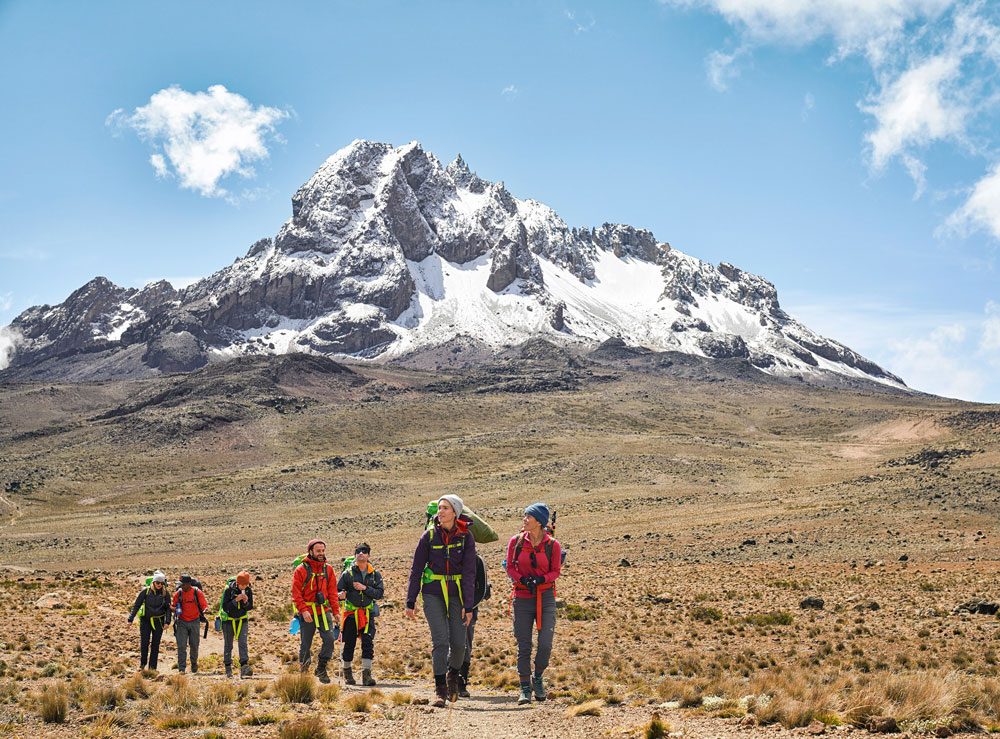
When conditions are clear, Mount Kilimanjaro provides a spectacular background. Although the mountain itself is across the border in Tanzania, its snow-capped summit dominates many classic Amboseli views.
Families may also encounter lions, buffaloes, giraffes, zebras, wildebeest, hippos, hyenas, antelopes, and many birds.
Amboseli’s relatively open landscapes make it particularly attractive for families traveling with children who enjoy easily visible wildlife.
Ol Pejeta Conservancy – Wildlife and Conservation Education
Ol Pejeta Conservancy offers families a combination of wildlife viewing and conservation education.
The conservancy is especially important for rhino conservation and gives families an opportunity to learn about endangered wildlife and the work required to protect it.
For children and teenagers, this adds another dimension to the safari. Instead of simply identifying animals, they begin to understand conservation, habitat protection, anti-poaching work, and the relationship between tourism and wildlife protection.
Ol Pejeta can combine particularly well with the Masai Mara for families interested in both classic wildlife viewing and conservation.
Laikipia – Adventure for Active Families
The wider Laikipia region is excellent for families looking for experiences beyond traditional game drives.
Depending on the lodge, conservancy, season, and children’s ages, activities may include guided nature experiences, conservation programs, cultural encounters, and other outdoor adventures.
Laikipia is particularly attractive to families with school-age children or teenagers who want to become more involved in their safari experience.
The region also offers a quieter atmosphere than some of Kenya’s busiest safari destinations.
Lake Nakuru National Park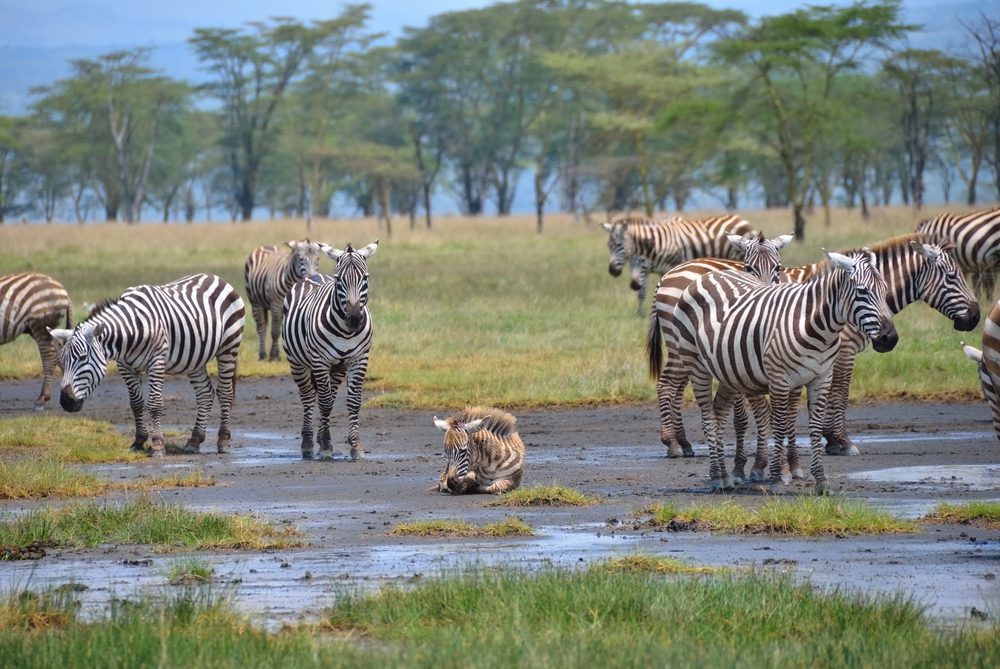
Lake Nakuru is a useful addition to a family road safari through Kenya’s Great Rift Valley.
The park is known for its landscapes, birdlife, and wildlife conservation. Families may encounter rhinos, buffaloes, giraffes, zebras, baboons, antelopes, and other wildlife.
Its relatively compact size can work well for families that prefer shorter game drives.
Lake Nakuru can also be incorporated naturally between Nairobi and western safari destinations, reducing the need for unnecessary detours.
Lake Naivasha for Families
Lake Naivasha offers a welcome change of pace after several days of game drives.
Families can enjoy the freshwater landscape and, depending on the activity selected, experience boat excursions and excellent birdwatching.
Hippos are among the area’s famous residents, although all wildlife should always be observed according to local safety procedures and guide instructions.
A night around Lake Naivasha can provide children with an opportunity to relax before continuing toward another safari destination.
Nairobi for Family Travelers
Nairobi is much more than a gateway to Kenya.
Spending the first night in Nairobi can be particularly helpful for families arriving after a long international flight. Instead of immediately beginning a long road transfer, everyone can rest before starting the safari.
Nairobi National Park also provides a remarkable wildlife experience close to the city.
Families with limited time can incorporate Nairobi attractions into the beginning or end of their safari before flying home or continuing toward the coast.
Samburu National Reserve for Families
Samburu offers a different landscape and wildlife experience from southern Kenya.
Its drier environment is home to species associated with northern Kenya, including reticulated giraffes, Grevy’s zebras, gerenuks, and Beisa oryx. Families may also encounter elephants, lions, leopards, and numerous other animals.
Samburu can be especially interesting for older children who enjoy wildlife identification and want to discover animals they may not encounter as easily in other Kenyan parks.
Because adding Samburu increases travel distances, it is best incorporated into itineraries with sufficient time.
Kenya Safari with Kids – Finding the Right Pace
A Kenya safari with kids should not be planned like an adult-only expedition.
Adults may enjoy spending almost an entire day searching for wildlife. Young children may become tired after several hours.
The answer is not necessarily to reduce the quality of the safari. Instead, the itinerary should be designed intelligently.
Spending two or three nights at the same lodge reduces packing and unpacking. Morning game drives can be followed by lunch and swimming before another shorter wildlife drive in the afternoon.
Some days can include one main safari activity rather than trying to fill every available hour.
This balance often results in children enjoying wildlife more because they do not associate safari with exhaustion.
What Is the Best Age for a Kenya Safari?
There is no universal minimum age for enjoying a safari in Kenya. However, individual camps, lodges, conservancies, and activities may have their own age policies.
Families traveling with very young children should therefore discuss their children’s exact ages before booking.
Young children generally benefit from short game drives, family rooms, swimming pools, familiar food options, and plenty of rest.
Children of school age often become extremely interested in wildlife once a knowledgeable guide begins explaining animal behavior.
Teenagers can participate more deeply in photography, conservation, wildlife identification, and longer game drives.
The best family itinerary should therefore be based on the ages and interests of the children traveling.
Why Private Safaris Work Well for Families
A private safari vehicle provides valuable flexibility.
On shared game drives, travelers must consider the preferences of everyone in the vehicle. A wildlife photographer may want to remain beside a leopard for a long period, while a young child may already be ready to return to the lodge.
With a private safari, the family’s interests determine the pace.
Parents can communicate directly with their driver-guide, adjust the length of activities when possible, spend longer at interesting sightings, and organize breaks according to the family’s needs.
For larger families, the cost of a private vehicle can also become more reasonable when divided among several travelers.
The Importance of an Experienced Family Safari Guide
A professional guide can completely change a child’s safari experience.
A knowledgeable family guide does more than identify animals. The guide explains why elephants live in family groups, how lions communicate, why zebras have stripes, how predators hunt, what different tracks mean, and how animals adapt to their environment.
Children become active participants rather than passive passengers.
A good guide also recognizes when children are becoming tired and can adjust the rhythm of the experience when practical.
When comparing Kenya family safari packages, families should therefore consider guide quality alongside accommodation and vehicle standards.
Family-Friendly Safari Lodges in Kenya
Choosing the right lodge is extremely important when traveling with children.
A beautiful property is not automatically family-friendly.
Families should consider room arrangements, family suites, connecting rooms, swimming pools, flexible meal options, children’s activities, lodge location, safety procedures, and the distance between rooms and common areas.
Many safari camps are located in wildlife areas where animals can move through the grounds. Guests may therefore need staff escorts after dark.
This is normal in safari destinations, but parents should understand the property’s procedures before arrival.
Some lodges offer dedicated family programs or activities designed to introduce children to wildlife, tracks, local culture, conservation, and nature.
Luxury Kenya Safari for Families
A luxury Kenya Safari for Families focuses heavily on comfort, privacy, convenience, and personalized service.
Families may stay in spacious suites, luxury tented camps, private villas, or exclusive safari houses.
Private safari vehicles, personal guides, domestic flights, flexible meals, laundry services, swimming pools, and customized daily schedules can make the journey particularly comfortable.
Luxury fly-in safaris are useful for families who want to minimize long road transfers.
Private villas can be ideal for extended or multigenerational families because the group can stay together while maintaining privacy.
Mid-Range Kenya Family Safari
Families do not need to book Kenya’s most expensive properties to enjoy an excellent safari.
Mid-range lodges and tented camps can provide comfortable accommodation, private bathrooms, quality meals, good locations, and professional service.
A carefully planned mid-range safari can offer exceptional value.
The main priorities should be a reliable safari vehicle, professional guide, suitable accommodation, sensible itinerary, and enough time inside the wildlife areas.
The animals do not know how much guests paid for their rooms. Excellent wildlife viewing is possible across different accommodation categories.
Affordable Kenya Safari for Families
An affordable family safari should focus on value rather than simply choosing the cheapest available options.
Traveling by road instead of taking several domestic flights can significantly reduce costs.
Selecting comfortable mid-range accommodation instead of luxury camps can also lower the total price.
Traveling during shoulder periods may provide more attractive lodge rates than peak season.
Families can also save money by visiting fewer parks and spending longer in each destination. This reduces transport costs while often improving the overall experience.
Best Time for a Kenya Safari for Families
Kenya offers safari opportunities throughout much of the year, but different seasons create different experiences.
The drier periods are popular because vegetation can become less dense and animals often gather around reliable water sources.
July through October is especially famous because migration activity may occur in the Masai Mara during this broader period.
January and February can also provide rewarding safari conditions in many destinations.
The greener months offer their own advantages. Landscapes can become particularly beautiful, birdlife may be excellent, and some destinations can feel less crowded.
Families traveling during school holidays should book well ahead, particularly for July, August, Christmas, New Year, and Easter periods.
Great Migration Family Safaris
For many families, seeing the Great Migration is a major dream.
Large numbers of wildebeest and zebras move through the wider Serengeti-Mara ecosystem in response to seasonal grazing and water availability.
When large herds are present in the Masai Mara, the wildlife experience can be extraordinary.
Predators including lions, cheetahs, leopards, and hyenas may also benefit from the concentration of prey.
However, nature does not operate according to a tourism timetable.
River crossings cannot be guaranteed on a specific date or at a particular hour.
Families should focus on experiencing the entire ecosystem rather than making one dramatic river crossing the only goal of the holiday.
Wildlife to See on a Kenya Family Safari
Wildlife diversity is one of Kenya’s strongest advantages.
Depending on the destinations visited, families can look for lions, elephants, leopards, cheetahs, buffaloes, rhinos, giraffes, zebras, wildebeest, hippos, crocodiles, hyenas, warthogs, baboons, monkeys, gazelles, impalas, waterbucks, elands, and numerous other species.
Kenya is also an outstanding birdwatching destination.
Children who initially have little interest in birds can quickly become fascinated by colorful kingfishers, bee-eaters, hornbills, flamingos, eagles, vultures, and other species once their guide begins explaining them.
Big Five Safari in Kenya for Families
The Big Five are lion, leopard, elephant, buffalo, and rhino.
Kenya offers opportunities to encounter all five, although wild animal sightings can never be guaranteed.
Different destinations provide different strengths. The Masai Mara is famous for its predators and large mammals. Amboseli is particularly celebrated for elephants, while destinations such as Ol Pejeta and Lake Nakuru are important for rhino viewing.
Families should avoid turning the safari into nothing more than a Big Five checklist.
Some of the most memorable moments may involve a giraffe drinking, elephants caring for a calf, cheetah cubs playing, or a colorful bird catching an insect.
Cultural Experiences for Families in Kenya
Kenya is not simply a wildlife destination.
The country has diverse communities, languages, traditions, histories, and contemporary cultures.
Responsible cultural experiences can help children understand the human side of the destination.
In the greater Mara region, for example, families may have opportunities to learn about Maasai culture and community life.
The best cultural encounters should be respectful, educational, and beneficial to the communities involved.
For children, these experiences can become an important reminder that an African safari is about people and landscapes as well as wildlife.
Kenya Safari and Beach Holiday for Families
One of the strongest reasons to choose Kenya for a family holiday is the ability to combine safari with the Indian Ocean.
After several mornings waking early for game drives, families can travel to the coast for swimming and relaxation.
Diani Beach and Watamu are among the well-known options.
A safari-and-beach combination works particularly well for families with ten days or more.
For example, travelers can combine Nairobi, Amboseli, Masai Mara, and the Kenyan coast.
This gives children both adventure and downtime within the same holiday.
Diani Beach Family Holiday
Diani Beach offers a tropical contrast to Kenya’s wildlife reserves.
Families can relax beside the Indian Ocean and enjoy resort facilities and suitable coastal activities.
Spending three or four nights at the beach after safari can create a comfortable conclusion to the trip.
Parents also benefit from having time to relax before the international journey home.
Watamu After a Kenya Safari
Watamu is another attractive coastal destination for families.
Its coastal environment can introduce children to a completely different ecosystem from the savannah.
Depending on season and local conditions, families can enjoy marine and beach experiences before completing their Kenyan holiday.
Combining wildlife and coastal environments makes Kenya particularly versatile for longer family trips.
Road Safari vs Fly-In Safari
Families can explore Kenya by road, domestic flight, or a combination of both.
Road safaris generally provide better value. Families travel with their driver-guide and see more of the countryside between destinations.
However, driving distances should be considered carefully.
A route that appears short on a map may involve several hours of travel.
Fly-in safaris save time and can significantly improve comfort, especially when visiting distant regions.
The main disadvantages are higher costs and stricter baggage restrictions on small aircraft.
A combination often works best: drive shorter sectors and fly between destinations where road travel would consume too much holiday time.
5-Day Kenya Safari for Families
Families with limited time can still experience an excellent safari.
A five-day itinerary should remain simple.
Rather than trying to visit four parks, families might combine two destinations such as Amboseli and the Masai Mara, depending on transportation arrangements.
Another option is to combine the Great Rift Valley with the Masai Mara.
The priority should be quality rather than quantity.
Two carefully selected wildlife destinations can produce a much better experience than five days dominated by road transfers.
7-Day Kenya Safari for Families
Seven days provides more flexibility.
The family can begin with an overnight stay in Nairobi before traveling to Amboseli.
After two nights in Amboseli, the journey can continue toward the Great Rift Valley.
Lake Naivasha or Lake Nakuru can provide a different landscape and wildlife experience.
The final part of the safari can include two or three nights in the Masai Mara.
Families can then return to Nairobi for departure or continue toward Kenya’s coast.
10-Day Kenya Family Safari
Ten days allows families to travel at a more comfortable pace.
The first night can be spent in Nairobi after arrival.
Two nights in Amboseli provide opportunities for elephant viewing.
The journey can then continue to Lake Naivasha, Lake Nakuru, Ol Pejeta, or another selected destination.
Three nights in the Masai Mara provide enough time for extensive wildlife viewing without rushing.
The itinerary can include occasional free afternoons, which can make a major difference for children.
12–14 Day Kenya Safari and Beach Holiday
Families with approximately two weeks can enjoy both safari and beach experiences.
A journey might include Nairobi, Amboseli, Ol Pejeta or Laikipia, Masai Mara, and the Kenyan coast.
Domestic flights can reduce long travel days.
The final three or four nights can be dedicated to relaxing beside the Indian Ocean.
This type of itinerary is particularly suitable for families traveling long distances to reach East Africa because it provides both adventure and genuine vacation time.
Kenya Safari for Families with Teenagers
Teenagers can become highly engaged in safari when they are given meaningful roles.
They can use cameras, keep wildlife lists, learn animal tracks, identify birds, and discuss conservation with guides.
Photography is particularly useful because it encourages teenagers to observe wildlife carefully.
Older children may also be eligible for activities that are unavailable to younger travelers, depending on the lodge and destination.
The key is making them active participants rather than simply passengers in the vehicle.
Multigenerational Family Safaris in Kenya
Kenya is an excellent destination for grandparents, parents, and children traveling together.
Private vehicles make these journeys easier because the group can determine its own schedule.
Accommodation should be selected carefully to suit different mobility and comfort requirements.
Families may prefer properties with fewer stairs, comfortable rooms, good accessibility, swimming pools, and shorter distances between rooms and dining areas.
A slower itinerary with two or three nights at each property usually works better than changing accommodation every day.
Safari Lodges vs Tented Camps
Families sometimes assume that tented camps are basic.
This is not necessarily true.
Modern safari tents can contain comfortable beds, private bathrooms, electricity, furnished verandas, and high-quality furnishings.
Some of Kenya’s premium safari experiences are based in luxury tented camps.
Traditional lodges may offer larger buildings, extensive common areas, swimming pools, and other facilities.
The best choice depends on children’s ages, budget, preferred atmosphere, and desired comfort level.
Food on a Kenya Family Safari
Established safari lodges are accustomed to hosting international travelers.
Meals often include a combination of international and local dishes.
Families should communicate dietary requirements before traveling.
Vegetarian meals, allergies, food intolerances, and other requirements should be discussed during the booking process.
Parents traveling with very selective eaters can also ask about available meal options in advance.
Keeping some familiar snacks available during longer transfer days can be useful.
What to Pack for a Kenya Safari with Kids
Packing for safari should focus on practical clothing and comfort.
Lightweight clothes in neutral shades are useful for wildlife activities. Early mornings can be cool, so a fleece or light jacket is important even when daytime temperatures are warm.
Comfortable closed shoes, hats, sunglasses, sun protection, insect repellent, binoculars, reusable water bottles, and a small day bag are useful.
Children can have their own binoculars or inexpensive cameras to make wildlife drives more interactive.
Families taking domestic safari flights should confirm luggage limits before packing because small aircraft often have different restrictions from international airlines.
Photography on a Kenya Family Safari
Photography can become an enjoyable family activity.
Children can photograph elephants, giraffes, birds, landscapes, and interesting details around the lodge.
Parents can also capture children’s reactions to seeing wildlife for the first time.
Smartphones can produce excellent travel photographs, while cameras with longer lenses provide additional flexibility for distant wildlife.
Families should nevertheless remember to spend time simply observing.
Some experiences are better enjoyed without looking through a screen.
Health and Safety for a Kenya Safari for Families
Families should check current health and entry requirements before traveling to Kenya.
Medical recommendations can depend on the travelers’ ages, health history, itinerary, and countries visited before or after Kenya.
Appropriate travel insurance is strongly recommended.
Inside wildlife areas, families must follow guide and lodge instructions.
Wild animals should never be approached independently.
Parents should make sure children understand that safari parks are natural environments rather than zoos.
Some camps are unfenced, meaning animals can pass through the grounds. Staff may therefore escort guests after dark.
Following professional guidance is an essential part of enjoying safari responsibly.
How to Keep Children Interested During Safari
Children enjoy safari more when wildlife viewing becomes interactive.
Parents can ask them to count giraffes, identify different animals, keep a wildlife diary, or photograph new species.
Guides can explain animal tracks, feeding habits, family relationships, camouflage, communication, and predator behavior.
A child who understands what an animal is doing often becomes much more interested than a child who simply sees another animal beside the road.
Families should also allow children time to relax.
An afternoon beside the swimming pool can sometimes make the following morning’s safari far more enjoyable.
How Much Does a Kenya Safari for Families Cost?
There is no single fixed price for a Kenya Safari for Families.
Costs depend on travel dates, number of travelers, children’s ages, accommodation category, transportation method, safari duration, park selection, and whether the trip is private or shared.
A luxury fly-in safari using premium camps will naturally cost considerably more than a mid-range road safari.
Peak-season travel can also increase accommodation costs.
Families should request quotations based on their exact requirements rather than relying only on generic advertised prices.
A proper quotation should clearly explain accommodation, transportation, meals, park fees, game drives, domestic flights where applicable, and other included services.
How to Make a Kenya Family Safari More Affordable
One of the easiest ways to control costs is to avoid unnecessary destinations.
Every additional park creates transportation costs, accommodation changes, and potentially more park fees.
A carefully designed itinerary focusing on two or three strong destinations can deliver better wildlife viewing and better value.
Traveling by road can reduce costs compared with taking multiple domestic flights.
Mid-range accommodation can also provide excellent comfort without premium luxury prices.
Families should prioritize value, reliability, and experience rather than simply selecting the lowest advertised price.
Private Kenya Safari Packages for Families
A private safari is one of the most comfortable ways for families to explore Kenya.
The vehicle and guide are dedicated to the family.
This gives travelers more flexibility over wildlife interests, game-drive duration, departure times, and rest periods.
Private tours work especially well for families with younger children, teenagers interested in photography, grandparents, or travelers celebrating special occasions.
A customized private safari also allows accommodation and activities to be matched carefully with children’s ages.
Kenya Safari and Rwanda Gorilla Trekking
Families traveling with older children can consider combining Kenya’s savannah wildlife with Rwanda’s primate experiences.
A Kenya safari can include the Masai Mara and Amboseli before travelers fly to Kigali and continue toward Volcanoes National Park.
Rwanda’s mountain gorilla trekking offers a very different wildlife experience from Kenya’s plains.
Age requirements apply to gorilla trekking, so families must confirm eligibility before planning the combination.
For eligible families, Kenya and Rwanda can create an extraordinary East African wildlife journey combining elephants, lions, giraffes, rhinos, and mountain gorillas.
Kenya, Rwanda and Uganda Family Safari
Families with more time can explore several East African countries.
Kenya provides classic savannah wildlife.
Rwanda offers mountain landscapes, primates, cultural experiences, and convenient travel connections.
Uganda adds additional primate destinations, forests, savannah parks, and waterways.
Such journeys should not be rushed.
Families should allow enough days to enjoy each country rather than spending a large proportion of the holiday crossing borders and changing hotels.
Responsible Family Safari Travel
Safari can teach children valuable lessons about conservation.
Wildlife requires protected habitat, functioning ecosystems, conservation programs, and cooperation with communities living around protected areas.
Tourism can contribute to conservation and local employment when travelers use responsible tourism providers.
Parents can use safari experiences to explain why endangered species require protection and why visitors must respect wildlife.
These lessons can remain with children long after the holiday ends.
Frequently Asked Questions About Kenya Safari for Families
Is Kenya good for a family safari?
Yes. Kenya offers outstanding wildlife, varied accommodation, experienced guides, private safari options, and destinations suitable for different age groups.
Where is the best place for a family safari in Kenya?
The Masai Mara, Amboseli, Ol Pejeta, Laikipia, Lake Nakuru, Lake Naivasha, Samburu, and Nairobi can all be incorporated into family itineraries.
How long should a Kenya family safari be?
Seven to ten days is excellent for many first-time visitors. Families combining safari with the beach may prefer ten to fourteen days.
Can children go on safari in Kenya?
Yes. However, age policies vary between lodges and activities, so children’s exact ages should be provided when planning the safari.
Is the Masai Mara suitable for children?
Yes. Its wildlife diversity and open landscapes can make it particularly exciting for families.
Is Amboseli good for families?
Yes. Amboseli is especially famous for elephants and its views toward Mount Kilimanjaro.
Should families book a private safari vehicle?
Private vehicles are highly useful because families have greater control over the daily schedule and game-drive pace.
Can families combine safari and beach holidays in Kenya?
Yes. Kenya is particularly suitable for combining wildlife areas with destinations such as Diani Beach or Watamu.
Can a Kenya safari be combined with Rwanda?
Yes. Families with children old enough to meet gorilla trekking requirements can combine a Kenya wildlife safari with Rwanda.
Plan Your Kenya Safari for Families with Universal Ventures Rwanda
A Kenya Safari for Families should be more than a series of game drives. It should create an African journey that parents and children can experience together.
The right itinerary balances wildlife, comfortable accommodation, reasonable driving times, experienced guiding, family activities, and relaxation.
Some families may prefer the Masai Mara and Amboseli. Others may add Ol Pejeta, Lake Nakuru, Laikipia, or Samburu. Families with additional time can finish at the Kenyan coast or continue into Rwanda and Uganda for a broader East African adventure.
Universal Ventures Rwanda can help organize customized private family safaris according to your travel dates, number of travelers, children’s ages, preferred accommodation level, and budget.
Whether you are searching for a Kenya Safari for Families, Kenya safari with kids, private Kenya family safari, affordable family safari, luxury Kenya safari, Masai Mara family holiday, Kenya safari and beach package, or a Kenya and Rwanda wildlife adventure, your itinerary can be designed around your family’s interests and available time.
Contact Universal Ventures Rwanda
Universal Ventures Rwanda
Location: Kigali, Rwanda
Email: info@universalventuresrwanda.com
Phone / WhatsApp: +250 781 441 853