 Skip to content
Mount Karisimbi – The Ultimate High-Altitude Hiking Experience in Rwanda
Mount Karisimbi is the crown jewel of Rwanda’s mountain landscape and the ultimate challenge for adventurers seeking world-class hiking experiences in Rwanda. Rising to approximately 4,507 meters above sea level, Mount Karisimbi is the highest mountain in Rwanda and the tallest of the Virunga Volcanoes. Its name, derived from the Kinyarwanda word Amasimbi (white shells), refers to the snow-like mist and occasional frost that blankets the summit—an extraordinary sight in equatorial Africa. For travelers passionate about hiking in Rwanda, the mountain represents endurance, altitude, wilderness, and deep connection to Rwanda’s volcanic heritage.
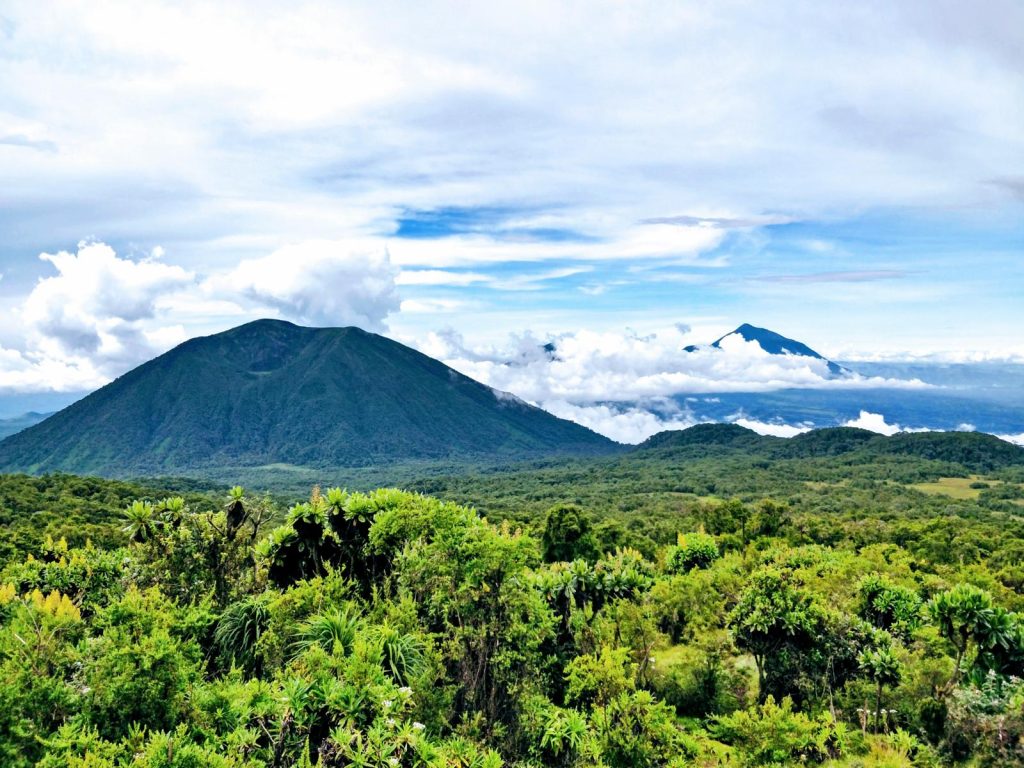
It stands at the pinnacle of Rwanda hiking trips, attracting experienced trekkers, mountaineers, and adventure travelers looking to go beyond standard safaris. As part of hiking in Volcanoes National Park, Mount Karisimbi offers a raw and immersive journey through one of Africa’s most protected and biodiverse mountain environments.
Hiking Mount Karisimbi – Rwanda’s Most Challenging Volcano Trek
Hiking Mount Karisimbi is widely regarded as the most demanding of all hikes in Rwanda, requiring strong fitness, determination, and proper preparation. The trek begins within Volcanoes National Park, a UNESCO-recognized conservation landscape famous for gorilla trekking but equally remarkable for its volcanic terrain. From the lower slopes to the summit, the hike traverses multiple vegetation zones, making it one of the richest hiking excursions in Rwanda in terms of ecological diversity.
The ascent typically takes two days, with an overnight camp at high altitude. On the first day, hikers climb steadily through farmland, bamboo forest, and Hagenia woodland before reaching the alpine zone where vegetation becomes sparse and temperatures drop significantly. The second day begins before dawn, as hikers make the final push to the summit under cold, thin-air conditions. Among all hiking tours Rwanda has to offer, Karisimbi is the most physically and emotionally rewarding.
Mount Karisimbi and Hiking Experiences in Rwanda
Mount Karisimbi plays a central role in shaping Rwanda’s reputation as a serious hiking destination. While many travelers associate Rwanda with gorilla trekking, hiking experiences in Rwanda extend far beyond wildlife encounters. Mount Karisimbi represents the high-adventure side of the country, appealing to travelers seeking altitude, challenge, and solitude. It complements other iconic trails such as Mount Bisoke, Mount Muhabura, and the Congo Nile Trail, creating a diverse hiking portfolio within a compact destination.
What makes hiking in Rwanda unique is the ability to combine demanding mountain ascents with gentler scenic walks and cultural routes. Travelers can hike Mount Karisimbi as the centerpiece of a broader itinerary that includes hiking in Kigali, rainforest trails, and lakeside paths. This flexibility allows Rwanda to cater to a wide range of hikers, from elite trekkers to recreational walkers.
Ecological Zones & Natural Beauty of Mount Karisimbi
The lower slopes are lush and fertile, shaped by volcanic soils that support agriculture and dense forest growth. As hikers gain elevation, bamboo forests dominate, followed by Hagenia woodland and giant lobelia plants in the alpine zone. This vertical diversity makes Mount Karisimbi a living classroom for ecology and conservation, reinforcing its importance within hiking excursions in Rwanda.
The upper slopes are stark and otherworldly, with volcanic rock, mosses, and open skies replacing forest cover. Weather conditions can shift rapidly, adding to the sense of adventure. Fog, wind, and cold temperatures are common near the summit, emphasizing why Mount Karisimbi is considered the most serious of all Rwanda hiking trips.
Mount Karisimbi as Part of a Rwanda Hiking Circuit
Many hikers combine it with Mount Bisoke for a balanced volcano experience or use it as a capstone after gentler routes. Others include forest trails such as Nyungwe National Park, known for its canopy walk and biodiversity, to contrast alpine hiking with rainforest exploration.
Urban and cultural hikes also complement Mount Karisimbi adventures. Hiking in Kigali offers scenic hill walks and community trails that help hikers acclimatize before heading north to the volcanoes. Longer itineraries may also include the Congo Nile Trail, which adds cultural immersion and lakeside scenery to Rwanda’s hiking portfolio. Together, these routes showcase the full spectrum of hiking in Rwanda.
Preparation, Safety & Best Time to Hike Mount Karisimbi
Due to its altitude and duration, Mount Karisimbi requires careful preparation. Physical fitness, proper hiking gear, and mental readiness are essential. Hikers should be equipped with cold-weather clothing, waterproof layers, sturdy boots, and walking poles. Local guides and porters are mandatory and play a vital role in safety, navigation, and support.
The best time for hiking in Volcanoes National Park and Mount Karisimbi is during Rwanda’s dry seasons, from June to September and December to February. During these periods, trails are more stable and visibility is better, though weather can still be unpredictable at high altitude. Responsible guiding and park regulations ensure that Mount Karisimbi remains one of the safest high-altitude hiking experiences in Rwanda.
Why Mount Karisimbi Defines Hiking in Rwanda
Mount Karisimbi stands as the ultimate symbol of adventure within Rwanda’s hiking landscape. It is a test of endurance, a journey through diverse ecosystems, and a powerful reminder of Rwanda’s volcanic origins. For travelers seeking elite hiking experiences in Rwanda, Mount Karisimbi offers something truly exceptional—far beyond a simple trek.
Whether combined with hiking in Kigali, forest walks in Nyungwe, iconic routes like the Congo Nile Trail, or other volcano hikes in Volcanoes National Park, Karisimbi completes Rwanda’s identity as one of Africa’s most compelling hiking destinations. For serious hikers and adventure travelers, conquering this mountain is not just an activity—it is a defining achievement.
