Skip to content

Kenya Safari vs Rwanda Safari is not really a comparison between two versions of the same holiday. Kenya and Rwanda offer very different safari experiences, and understanding those differences can help you choose a trip that matches your expectations instead of simply selecting the destination with the most famous name.
Kenya is one of Africa’s classic safari destinations. Vast savannahs, large concentrations of wildlife, the Maasai Mara, Amboseli, private conservancies and the Great Migration create the traditional image many travelers have when they imagine an African safari. Official Magical Kenya information describes the Maasai Mara as a vast grassland supporting the Big Five and best known for the Great Migration.
Rwanda offers something different. Its biggest wildlife attraction is mountain gorilla trekking in Volcanoes National Park. However, the country is not limited to gorillas. Akagera National Park offers Big Five game viewing, while Nyungwe National Park adds chimpanzees, other primates and ancient rainforest landscapes.
Therefore, the better destination depends on the type of African experience you want.
Kenya Safari vs Rwanda Safari at a Glance
The easiest way to understand the difference is to consider the main strength of each destination.
| Safari Feature | Kenya | Rwanda |
|---|---|---|
| Classic savannah safari | Excellent | Good in Akagera |
| Big Five | Excellent | Available in Akagera |
| Mountain gorillas | No | Excellent |
| Chimpanzees | Limited safari focus | Excellent in Nyungwe |
| Great Migration | Maasai Mara | No |
| Large wildlife herds | Excellent | Smaller scale |
| Short safari from capital | Possible | Excellent |
| Luxury gorilla lodges | No gorilla product | Excellent |
| Family game drives | Excellent | Excellent in Akagera |
| Gorilla trekking with children | Not applicable | Minimum age 15 |
| Landscape style | Savannah, mountains, Rift Valley, coast | Volcanoes, rainforest, lakes, rolling hills |
| Best for first classic safari | Excellent | Good when combined with Akagera |
| Best for primates | Limited | Excellent |
| Beach extension | Excellent Kenya coast | Lake Kivu rather than ocean |
| Compact road itinerary | Moderate | Excellent |
Neither destination wins every category.
Instead, Kenya dominates when the priority is large-scale savannah wildlife, while Rwanda becomes particularly compelling when primates, mountain scenery and a compact itinerary matter most.
What Is the Main Difference Between Kenya and Rwanda Safaris?
The biggest difference is scale.
Kenya offers enormous wildlife landscapes.
A game drive in the Maasai Mara may involve open plains stretching toward the horizon, large groups of herbivores and predators moving through a vast ecosystem.
Rwanda feels more compact.
In Volcanoes National Park, the experience happens on foot inside mountain forest. Rather than watching a lion through an open safari vehicle, you hike through vegetation until trackers lead you toward a mountain gorilla family.
These are completely different wildlife experiences.
Moreover, Rwanda’s savannah safari product in Akagera adds another dimension. Visitors can look for lions, rhinos, elephants, buffalo and leopards while also enjoying wetlands and lake environments. Rwanda’s tourism authority confirms that lions and rhinos were successfully reintroduced to Akagera, restoring the Big Five.
Therefore, Rwanda can deliver both primates and traditional game viewing.
However, Kenya still offers far greater scale and variety when classic savannah safari is the main objective.
Kenya Safari: The Classic African Wildlife Experience
For many travelers, Kenya represents the image they have had of Africa since childhood.
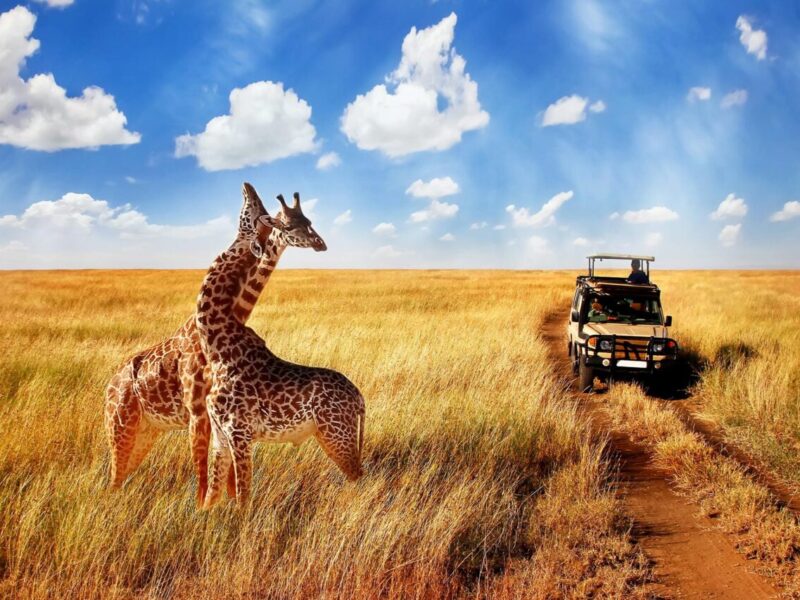
A safari vehicle moves through open grasslands.
Giraffes walk across the horizon.
Elephants gather around water.
Lions rest beneath acacia trees.
Zebras and wildebeest move in large groups.
Kenya’s wildlife tourism infrastructure has developed around these experiences for generations.
The country offers national parks, national reserves, private conservancies and wildlife ranches.
Consequently, travelers can choose from simple camping safaris, private road trips, family safaris, photographic expeditions and some of Africa’s most exclusive luxury camps.
Rwanda Safari: Primates, Mountains and Compact Diversity
Rwanda creates a more concentrated experience.
You can leave Kigali and reach several important tourism regions by road without needing a series of internal flights.
Volcanoes National Park lies in the north.
Akagera National Park lies east of Kigali.
Lake Kivu stretches along the west.
Nyungwe National Park protects ancient rainforest in the southwest.
This geography makes Rwanda particularly attractive to visitors who want several different landscapes in a relatively short trip.
A longer Rwanda itinerary can combine Big Five game viewing, mountain gorillas, chimpanzees and Lake Kivu without leaving the country.
Visit Rwanda itself promotes a nine-day circuit covering the country’s national parks and Lake Kivu, including Big Five wildlife, gorillas and primates.
Kenya Safari vs Rwanda Safari for Wildlife
If your main goal is seeing the greatest possible variety of classic African mammals on game drives, Kenya generally has the advantage.
The Maasai Mara supports the Big Five alongside cheetahs, hyenas, giraffes, zebras, wildebeest, antelope and many other species.
Amboseli provides another excellent wildlife experience, particularly for elephants. Kenya’s official tourism platform describes it as one of Africa’s outstanding places to observe large elephant herds, alongside lions, leopards, giraffes, buffalo and abundant birdlife.
Rwanda’s Akagera offers elephants, buffalo, lions, rhinos, leopards, giraffes, zebras, antelope and rich birdlife. Its mix of savannah, woodland, lakes and wetlands makes it especially scenic.
Nevertheless, Kenya offers more extensive savannah systems and a larger selection of major wildlife destinations.
Kenya Safari vs Rwanda Safari for the Big Five
Both countries now offer the Big Five.
However, the experience is different.
In Kenya, travelers can search for lions, elephants, buffalo, rhinos and leopards across famous wildlife areas including the Maasai Mara and other ecosystems.
In Rwanda, the Big Five experience centers on Akagera National Park.
Akagera has undergone major conservation restoration, including the reintroduction of lions and eastern black rhinos.
Therefore, travelers who want several days of classic Big Five game drives across different parks will normally prefer Kenya.
Visitors who want a compact safari combining Big Five wildlife with gorillas should seriously consider Rwanda.
Kenya Safari vs Rwanda Safari for Gorilla Trekking
Rwanda wins this comparison immediately.
Kenya does not offer mountain gorilla trekking.
Rwanda’s Volcanoes National Park is one of the world’s premier mountain gorilla destinations.
Travelers hike through the Virunga highlands with professional guides and trackers to locate habituated gorilla families.
At the time of writing, the official Visit Rwanda website lists the standard international gorilla permit at US$1,500 per person per day. The minimum age for trekking is 15 years.
For travelers who consider mountain gorillas a lifelong dream, this one factor may decide the entire Kenya Safari vs Rwanda Safari question.
Why Rwanda Gorilla Trekking Feels So Different
Traditional safari wildlife viewing normally happens from a vehicle.
Gorilla trekking requires you to enter the forest on foot.
The trail may pass through bamboo, thick vegetation and uneven mountain terrain.
Eventually, guides lead your group toward a habituated gorilla family.
The experience feels intimate because the forest limits the distance you can see.
Instead of watching an animal hundreds of meters away across an open plain, you become immersed in the gorillas’ forest environment.
That intimacy is difficult to compare directly with a Kenya game drive.
One experience is about scale.
The other is about proximity.
Kenya Safari vs Rwanda Safari for the Great Migration
Kenya wins.
The Maasai Mara forms part of the wider Serengeti-Mara ecosystem and plays a major role in the Great Migration.
Magical Kenya describes the migration as a year-round movement through the wider ecosystem, with the dramatic Mara River phase typically associated with July through October.
Large numbers of wildebeest and zebras move in search of grazing and water.
Predators follow them.
River crossings may occur when conditions push the herds toward the Mara River.
However, nature does not operate according to a guaranteed timetable.
Travelers should never assume that booking a specific date guarantees a dramatic river crossing.
The migration remains a natural wildlife movement influenced by rainfall and grazing conditions.
Maasai Mara Safari Experience
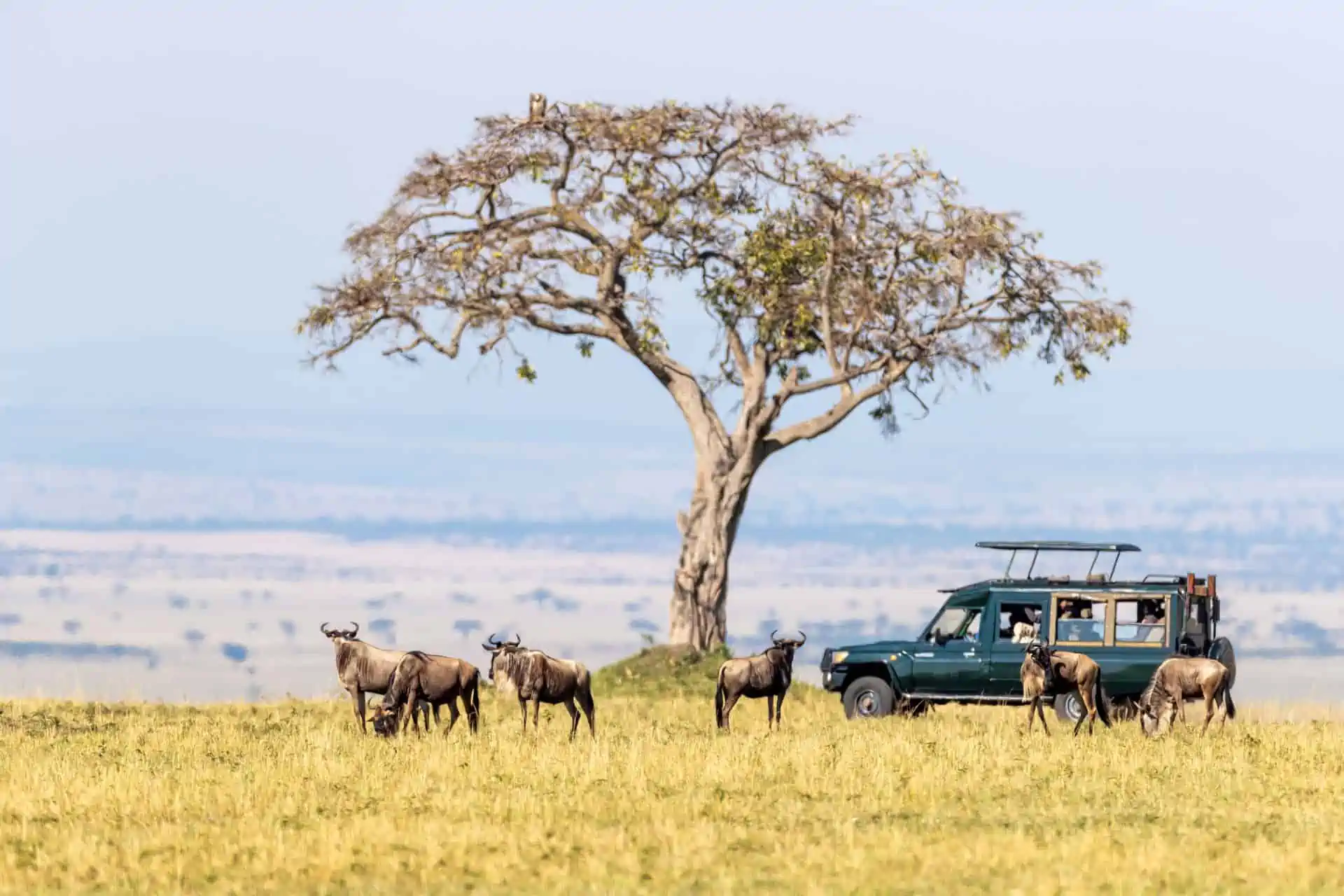
The Maasai Mara is one of Africa’s most recognizable wildlife regions.
Its open grasslands support large numbers of animals throughout the year.
The Great Migration adds another layer during appropriate periods, but the reserve does not become empty once the migratory herds leave.
Predators remain.
Resident herbivores remain.
Therefore, travelers can enjoy excellent game viewing outside migration season as well.
A Kenya safari should not be built entirely around a single possible river-crossing event.
Rwanda Safari Beyond Gorilla Trekking
One mistake in many comparison articles is treating Rwanda as a one-activity destination.
It is not.
Akagera provides savannah wildlife.
Nyungwe offers chimpanzees and numerous other primates.
Lake Kivu provides boating, relaxation, coffee experiences, hiking and cycling.
Volcanoes National Park also offers golden monkey trekking and mountain hiking.
Kigali adds culture, dining and history.
As a result, Rwanda can support a full week or longer itinerary without feeling repetitive.
Akagera National Park Versus the Maasai Mara
This is one of the clearest comparisons between the two countries.
Both provide savannah wildlife.
However, they operate on different scales.
The Maasai Mara offers enormous open grasslands and famous concentrations of wildlife.
Akagera feels quieter and more varied in habitat.
Its landscape includes lakes, wetlands, rolling hills, savannah and woodland.
Visit Rwanda notes that Akagera includes Central Africa’s largest protected wetland and that visitors may sometimes spend long periods without seeing another safari vehicle.
Therefore, travelers who prioritize massive wildlife numbers usually prefer the Mara.
Visitors who value scenery, lower vehicle density and a compact Rwanda itinerary may particularly enjoy Akagera.
Amboseli Versus Rwanda’s Akagera
Amboseli is famous for elephants and its setting near Mount Kilimanjaro.
Official Kenya tourism information highlights its large elephant herds, open plains, swamps, acacia woodland and views beneath Africa’s highest mountain.
Akagera offers a more water-rich environment with lakes and wetlands alongside savannah.
A boat safari on Lake Ihema can reveal hippos, crocodiles and waterbirds, adding an activity that differs from an ordinary game drive.
Both parks are excellent.
However, their visual character feels very different.
Kenya Safari vs Rwanda Safari for Chimpanzees
Rwanda has the stronger mainstream chimpanzee safari product.
Nyungwe National Park protects one of Africa’s oldest rainforests and supports chimpanzees along with numerous other primate species. Visit Rwanda describes the forest as home to chimpanzees and 12 other primate species.
Travelers can therefore build a Rwanda primate journey around both gorillas and chimpanzees.
This combination is especially attractive to wildlife lovers who have already experienced classic game drives elsewhere in Africa.
Kenya offers excellent primate and forest biodiversity in certain areas, but chimpanzee trekking is not one of the country’s signature mainstream safari experiences in the same way.
Kenya Safari vs Rwanda Safari for Landscape
Kenya offers greater geographical scale.
Its safari landscapes can include the Maasai Mara grasslands, Amboseli beneath Kilimanjaro, the Rift Valley, Samburu’s drier northern scenery, Mount Kenya and the Indian Ocean coastline.
Rwanda is smaller but extraordinarily green.
Rolling hills dominate much of the country.
Volcanic mountains rise in the north.
Dense rainforest covers Nyungwe.
Lake Kivu provides dramatic lakeside scenery.
Akagera changes again into warm savannah and wetland.
Therefore, Kenya offers broader geographic variety, while Rwanda provides impressive diversity within shorter driving distances.
Which Country Feels More Like a Classic Safari?
Kenya.
If your dream involves an open safari vehicle surrounded by zebra, giraffe, elephants and lions on endless grasslands, Kenya matches that image almost perfectly.
The Maasai Mara is especially strong.
Amboseli provides another classic scene.
Private conservancies can add night drives, walks and exclusive game viewing.
Rwanda can certainly deliver traditional safari drives in Akagera.
However, Rwanda’s strongest identity comes from combining that experience with forests and primates.
Which Country Offers the More Unique Wildlife Encounter?
Rwanda has the advantage when the comparison centers on gorillas.
Seeing a mountain gorilla family after walking through Volcanoes National Park is fundamentally different from almost every vehicle-based wildlife experience.
The limited trekking system also makes the encounter feel carefully controlled.
However, Kenya can deliver experiences that Rwanda cannot reproduce either.
Watching enormous savannah landscapes full of animals or seeing large migration herds is equally distinctive.
Therefore, “unique” depends on what excites you.
Kenya Safari vs Rwanda Safari for First-Time Visitors to Africa
Kenya is often the stronger choice for someone whose first priority is the traditional African safari.
The wildlife is diverse.
Safari infrastructure is extensive.
Travelers have a huge choice of accommodation and itineraries.
The Maasai Mara alone can satisfy many first-time visitors.
However, Rwanda can be better for a first visit when mountain gorillas are the main dream.
A traveler with only four or five days may also find Rwanda easier to organize into a focused wildlife itinerary.
The decision should follow your priorities rather than the number of countries you have previously visited.
Which Safari Is Better for Repeat Africa Travelers?
Rwanda becomes particularly attractive to travelers who have already experienced large savannah safaris.
Someone who has visited Kenya, Tanzania, Botswana or South Africa may want something completely different on the next trip.
Mountain gorillas provide that difference.
Nyungwe chimpanzees add another layer.
Akagera can still provide traditional game viewing without making the entire journey feel like a repeat of a previous safari.
Kenya Safari vs Rwanda Safari for Families
Kenya generally offers greater flexibility for families with younger children.
Game drives allow children to experience wildlife without long hikes.
Families can choose lodges with pools, family tents and shorter safari schedules.
Moreover, Kenya provides many combinations of wildlife and beach travel.
Rwanda also works very well for families, particularly when Akagera and Lake Kivu are included.
However, gorilla trekking has a minimum age of 15 according to the official Visit Rwanda guidance.
Therefore, families with younger children need alternative arrangements during the gorilla trek.
Kenya Safari vs Rwanda Safari for Teenagers
Teenagers old enough to trek gorillas may find Rwanda particularly memorable.
The physical journey through the forest adds a sense of adventure.
Gorilla encounters also feel much more active than sitting in a vehicle.
However, some teenagers may prefer the variety of Kenya’s game drives, swimming pools, balloon safaris and broader road-trip possibilities.
Parents should match the itinerary to the children’s personalities rather than assuming one country automatically works better.
Safari With Young Children
Kenya usually wins for very young children.
A family can remain inside a vehicle during game drives.
Activities can be shortened when necessary.
Lodges can provide family accommodation.
Beach extensions also work well.
Rwanda can still provide an excellent young-family holiday through Kigali, Akagera and Lake Kivu.
The key difference is that gorilla trekking must wait until children meet the age requirement.
Kenya Safari vs Rwanda Safari for Couples
Both destinations work extremely well.
Kenya suits couples who want a romantic tented safari surrounded by classic wildlife.
Private conservancies can provide intimate camps and fewer vehicles.
A beach extension to the Kenyan coast can turn the journey into a complete honeymoon.
Rwanda offers a different type of romance.
A luxury lodge beneath the Virunga volcanoes, an extraordinary gorilla trek and several nights beside Lake Kivu create a highly distinctive trip.
Therefore, couples should decide whether they imagine their safari around savannah or mountains.
Kenya Safari vs Rwanda Safari for Honeymoons
Kenya offers one of the classic African honeymoon combinations: safari plus beach.
Couples can spend several days in the Maasai Mara or another wildlife area before flying or driving toward the Indian Ocean.
Rwanda’s honeymoon style centers more strongly on high-end lodges and unique experiences.
A honeymoon may combine Volcanoes National Park, Lake Kivu and Akagera.
Some couples then continue from Rwanda to another East African country or island destination.
Both approaches can be exceptional.
Luxury Safari: Kenya or Rwanda?
Neither country needs to lose this comparison.
Kenya has decades of experience in luxury safari tourism.
Exclusive tented camps, private conservancies, fly-in safaris and highly personalized guiding create some of Africa’s finest high-end experiences.
Rwanda has built a powerful luxury identity around mountain gorilla trekking.
Volcanoes National Park contains internationally known high-end lodges and intimate properties designed around the gorilla experience.
Akagera and Nyungwe also provide luxury options.
Therefore, luxury travelers should focus on the experience rather than the country’s reputation.
Kenya Luxury Safari Style
Kenya luxury tends to emphasize space and exclusivity.
A private conservancy can offer fewer vehicles around sightings.
Guests may stay in small tented camps with highly personalized service.
Bush breakfasts, sundowners, night drives and guided walks may form part of the experience depending on the area.
Flights between wildlife regions can reduce road time.
Consequently, a high-end Kenya safari can cover several distinct landscapes smoothly.
Rwanda Luxury Safari Style
Rwanda luxury often centers on privacy, design and extraordinary location.
A high-end gorilla lodge may overlook volcanoes or sit among forest vegetation.
The lodge experience matters because travelers typically return there after a physically demanding trek.
Excellent dining, warm interiors, wellness treatments and conservation experiences can therefore add considerable value.
Luxury also works well in Rwanda because distances between major destinations can be relatively manageable.
Kenya Safari vs Rwanda Safari Cost
This comparison requires care.
There is no single Kenya safari price and no single Rwanda safari price.
Kenya ranges from camping and self-drive trips to extremely expensive private fly-in safaris.
Rwanda also offers budget, midrange and luxury accommodation.
However, gorilla trekking introduces one major fixed cost.
The standard international Rwanda gorilla permit is currently US$1,500 per person per day.
Therefore, any Rwanda itinerary containing gorilla trekking starts with a substantial activity cost.
Kenya costs are usually spread across park fees, accommodation, transport, guiding and game drives rather than concentrated in one permit.
Is Kenya Cheaper Than Rwanda?
Not automatically.
A budget Kenya road safari can certainly cost less than a luxury Rwanda gorilla itinerary.
However, a high-end Kenya fly-in safari can easily exceed the cost of a midrange Rwanda trip.
The correct comparison needs to use similar accommodation levels and trip lengths.
For example, compare midrange Kenya with midrange Rwanda rather than a Kenya camping safari against Rwanda’s most luxurious gorilla lodge.
Travelers should request complete quotations before deciding.
Where Does the Rwanda Safari Budget Go?
The gorilla permit is the most obvious major cost.
Accommodation around Volcanoes National Park can also range widely.
Private transportation, meals and additional activities add further expenses.
However, Rwanda’s compact geography can sometimes reduce the number of expensive internal flights required.
A traveler can cover several destinations by road.
Therefore, the expensive gorilla permit does not tell the entire budget story.
Where Does the Kenya Safari Budget Go?
Kenya’s cost is distributed differently.
Park and reserve fees contribute.
Accommodation can become a major expense, particularly in private conservancies or during high-demand periods.
Transportation also matters because wildlife regions may sit far apart.
Travelers may choose long road transfers or domestic flights.
Adding a balloon safari, private vehicle or beach extension changes the final total again.
Therefore, Kenya can be adapted to many budget levels.
Kenya Safari vs Rwanda Safari for Short Trips
Rwanda is exceptionally strong for travelers with limited time.
A three-day trip from Kigali can include Volcanoes National Park and gorilla trekking.
A slightly longer itinerary can add Lake Kivu.
Akagera can even be visited on a short extension from Kigali.
Official Visit Rwanda itineraries include three-day gorilla programs and six-day combinations of safari and gorilla tracking, illustrating how compact the country can be for tourism planning.
Kenya can also support short safaris from Nairobi.
However, the country’s greatest strength emerges when travelers have enough time to explore more than one wildlife region.
Kenya Safari vs Rwanda Safari for a One-Week Holiday
Both can work.
In Kenya, one week could focus on two or three carefully chosen areas.
For example, travelers might combine Amboseli with the Maasai Mara.
Alternatively, they could focus primarily on the Mara with a Rift Valley stop.
In Rwanda, one week can combine Akagera, Volcanoes National Park and Lake Kivu.
A well-paced trip might include Big Five game viewing, gorilla trekking and lakeside relaxation.
The experiences would be dramatically different despite using the same number of days.
Kenya Safari vs Rwanda Safari for a Two-Week Holiday
Kenya gains a major advantage once travelers have two weeks.
The country’s size allows a longer journey through several ecosystems.
You might combine Samburu, Laikipia, the Rift Valley, Maasai Mara and the coast.
However, Rwanda can use two weeks differently.
Rather than adding endless parks, travelers can combine Akagera, Volcanoes, Lake Kivu, Nyungwe and more time in Kigali.
Another excellent option is to combine Rwanda with Uganda.
Travel Distances in Kenya Versus Rwanda
Kenya is much larger.
That creates opportunities but also increases travel time.
Moving between famous wildlife regions can require long road days or domestic flights.
Rwanda’s compact size simplifies many itineraries.
A traveler can move between Kigali and several major tourism regions by road.
Therefore, people who dislike repeated flights or very long safari transfers may find Rwanda easier.
However, travelers who enjoy road journeys may appreciate Kenya’s scale.
Kenya Safari vs Rwanda Safari for Self-Drive Travel
Both countries can support self-drive trips.
Kenya has a large self-drive and 4×4 rental market.
Travelers can plan routes through the Rift Valley, national parks and camping destinations.
Rwanda is also manageable by road, although travelers planning wildlife drives should choose an appropriate vehicle and understand park conditions.
Akagera specifically allows exploration by vehicle, either with a tour operator or as a self-drive visitor.
The better self-drive destination depends on how adventurous you want the road trip to become.
Kenya Safari vs Rwanda Safari for Photography
Kenya is outstanding for classic wildlife photography.
Open landscapes make it easier to photograph animals against clean backgrounds.
Predator encounters, elephant herds, giraffes and migration scenes offer endless possibilities.
Rwanda provides more specialized photographic opportunities.
Mountain gorillas can produce extraordinarily powerful portraits.
However, forest light is more difficult than open savannah photography.
Akagera gives Rwanda photographers a second environment, while Lake Kivu and the Virunga volcanoes add landscapes.
Therefore, Kenya offers greater volume, while Rwanda can produce highly distinctive images.
Which Is Better for Big-Cat Photography?
Kenya.
The Maasai Mara is famous for lions and other predators.
Large open landscapes allow photographers to follow wildlife behavior across considerable distances.
Private conservancies can further enhance photographic safaris through lower vehicle density and flexible activities.
Akagera does contain lions and leopards, but Kenya provides a deeper big-cat safari product overall.
Which Is Better for Primate Photography?
Rwanda.
Mountain gorillas alone give Rwanda an enormous advantage.
Golden monkeys add another opportunity in the Volcanoes region.
Nyungwe provides chimpanzees and other primates.
Forest photography requires more technical preparation, but the resulting encounters can be extraordinary.
Kenya Safari vs Rwanda Safari for Birdwatching
Both countries are excellent.
Kenya’s enormous range of habitats creates impressive bird diversity.
Wetlands, savannahs, forests, highlands and coastal ecosystems provide very different birding environments.
Rwanda is remarkably strong considering its small size.
Akagera and Nyungwe are particularly important birding destinations, and Visit Rwanda specifically highlights the country’s high bird count relative to its size.
Serious birders may eventually want to visit both.
Kenya Safari vs Rwanda Safari for Culture
Kenya provides enormous cultural diversity.
Different communities, languages and landscapes create opportunities for cultural experiences throughout the country.
Maasai cultural experiences are particularly well known around the Mara and Amboseli regions.
Rwanda also offers rich cultural experiences.
Visitors can explore Kigali, traditional heritage sites, local communities and experiences around the Volcanoes and Lake Kivu regions.
The quality of a cultural experience depends greatly on how responsibly it is organized.
Look for programs that respect communities rather than treating culture as a staged photo opportunity.
Nairobi Versus Kigali as Safari Gateways
Nairobi is one of Africa’s major aviation and business hubs.
It provides excellent connections into Kenya and onward across the region.
Travelers can start road safaris from the city or use domestic flights to wildlife areas.
Kigali offers a smaller and simpler gateway.
Volcanoes National Park, Akagera and other Rwanda destinations can be reached by road.
This makes Kigali particularly convenient for short gorilla trips.
Neither city should merely be treated as an airport.
Both can justify time before or after safari.
Kenya Safari vs Rwanda Safari for Road Comfort
Rwanda often feels simpler because major tourism regions sit relatively close together.
Kenya involves greater distances.
However, fly-in safaris can reduce those road sections dramatically.
Therefore, budget and travel style influence the answer.
Travelers who want to remain on the ground and avoid small aircraft may appreciate Rwanda’s compactness.
Visitors who enjoy light-aircraft safari travel can move efficiently between Kenya’s distant ecosystems.
Best Time for a Kenya Safari
Kenya provides wildlife viewing throughout the year.
However, different seasons suit different goals.
The dramatic Kenya phase of the Great Migration is commonly associated with July through October, although the herds move according to natural conditions rather than a fixed calendar.
Dryer periods can make wildlife easier to locate around water.
Greener periods offer beautiful landscapes, young animals and different photographic conditions.
Therefore, the “best” time depends on what you want to see.
Best Time for a Rwanda Safari
Rwanda also operates year-round.
Drier periods generally make mountain trekking trails easier.
However, rain can occur at any time in the highlands.
Greener months bring lush landscapes and atmospheric forest conditions.
Akagera remains an option throughout the year, although road conditions and wildlife patterns can vary.
Instead of choosing a month based only on weather, travelers should consider gorilla permit availability, accommodation and the wider East Africa itinerary.
Kenya Safari vs Rwanda Safari During the Rainy Season
Rain affects the destinations differently.
In Kenya, heavy rain can make some safari tracks muddy.
However, green landscapes can be spectacular.
Fewer visitors may also create quieter experiences in some areas.
In Rwanda, rain can make gorilla trekking more physically challenging.
Trails become slippery and muddy.
Nevertheless, the rainforest becomes exceptionally lush.
Good hiking boots and waterproof clothing matter more than waiting for a completely dry forecast.
Which Destination Is Better for Adventure Travelers?
Rwanda offers more physical wildlife experiences.
Gorilla trekking requires hiking.
Chimpanzee tracking adds another forest activity.
Volcano hiking, the Nyungwe canopy walkway and the Congo Nile Trail can extend the adventure.
Kenya offers a broader variety.
Depending on location, travelers can combine game drives with walking safaris, mountain adventures, hot-air ballooning, horseback experiences and coastal activities.
Therefore, Rwanda may feel more concentrated around trekking, while Kenya provides a wider adventure menu.
Kenya Safari vs Rwanda Safari for Walking Experiences
Rwanda integrates walking naturally into major wildlife experiences.
Gorillas require trekking.
Chimpanzees involve forest walking.
Golden monkeys also require entering the mountain environment on foot.
Kenya’s classic safari remains more vehicle-based.
However, selected conservancies and safari properties can provide guided bush walks.
If being physically active is important, ask specifically about walking opportunities when selecting the itinerary.
Kenya Safari vs Rwanda Safari for Relaxation
Kenya provides outstanding beach extensions.
After several days of early game drives, travelers can continue toward the Indian Ocean.
Diani and other coastal destinations create a classic bush-and-beach holiday.
Rwanda uses Lake Kivu differently.
The lake provides boating, relaxing hotels and scenic mountain views.
It does not replace an ocean beach, but it works beautifully after gorilla trekking.
The better option depends on whether you imagine ending your safari beside the ocean or a mountain lake.
Kenya Safari vs Rwanda Safari for Conservation-Focused Travelers
Both destinations offer important conservation stories.
Rwanda’s mountain gorilla tourism operates around carefully regulated access and conservation.
Akagera also demonstrates a major restoration story, including the return of lions and rhinos.
Kenya’s conservancy model provides another important approach.
Private and community conservancies can connect wildlife protection, tourism and landowner benefits.
Travelers interested in conservation should ask how their specific lodge or operator contributes rather than judging only at country level.
Kenya or Rwanda for a Safari Without Crowds?
This depends on destination and season.
The Maasai Mara can become busy around major wildlife sightings during popular periods.
Private conservancies can provide a quieter alternative.
Akagera often feels much less crowded, and Visit Rwanda notes that visitors can sometimes spend long periods without seeing another vehicle.
Gorilla trekking is tightly controlled through permits and group procedures.
Therefore, Rwanda can feel more regulated and intimate.
However, specific lodge and route choices matter more than simple national averages.
Kenya Safari vs Rwanda Safari for Luxury Travelers With Limited Time
Rwanda is particularly compelling.
A traveler can land in Kigali and reach the gorilla region by road.
A three- or four-day luxury extension can therefore create a major wildlife experience without requiring a long safari.
Kenya luxury itineraries can also be short, especially when using light aircraft.
However, Kenya rewards additional time because there are so many ecosystems worth combining.
Kenya Safari vs Rwanda Safari for Budget Travelers
Kenya offers more possibilities for lower-cost camping, self-drive and group safari styles.
The country has a huge tourism industry with accommodation at many price levels.
Rwanda can also be traveled at moderate cost.
However, gorilla trekking places a high fixed cost into any itinerary containing that activity.
Therefore, budget travelers who simply want classic wildlife viewing may find Kenya easier.
Travelers whose priority is gorillas need to budget around the Rwanda permit.
Should You Visit Kenya and Rwanda Together?
For many travelers, this is actually the strongest option.
The countries complement each other instead of duplicating experiences.
Kenya provides the classic open-plains safari.
Rwanda provides mountain gorillas.
A traveler could spend several days in the Maasai Mara and then fly to Kigali.
Afterward, Volcanoes National Park adds a completely different wildlife encounter.
This pairing creates one of East Africa’s strongest safari combinations.
Current comparison and itinerary pages increasingly make the same point: the two destinations are complementary rather than direct substitutes.
Kenya First or Rwanda First?
Either order can work.
Starting in Kenya creates a gradual progression from traditional wildlife safari toward the highly focused gorilla encounter.
For some travelers, finishing with gorillas creates a powerful climax.
Starting in Rwanda works differently.
The journey begins with an intimate primate experience and then opens into Kenya’s enormous landscapes.
Flight schedules, lodge availability and permit dates should ultimately determine the route.
Because gorilla permits have limited availability, it is often wise to secure the Rwanda trekking date first and build Kenya around it.
Suggested Kenya and Rwanda Safari Combination
A well-paced combined itinerary might begin with several days in Kenya.
Travelers could spend time in Amboseli or another selected ecosystem before continuing to the Maasai Mara.
After the Kenya safari, a flight connects Nairobi with Kigali.
Spend a night in Kigali if needed.
Then continue toward Volcanoes National Park.
Gorilla trekking forms the Rwanda highlight.
Finally, add Lake Kivu or Akagera when time permits.
A combined itinerary usually works best with at least ten days, although shorter versions are possible.
Kenya Safari vs Rwanda Safari for Seven Days
With only seven days, I would normally choose one country rather than rushing through both.
Choose Kenya when classic game viewing is the primary dream.
Choose Rwanda when gorillas are the priority.
A Rwanda week can include Akagera, Volcanoes and Lake Kivu.
A Kenya week can focus deeply on one or two wildlife regions.
Trying to collect both countries within seven days may consume too much time in airports and transfers.
Kenya Safari vs Rwanda Safari for Ten Days
Ten days creates more possibilities.
You could still dedicate the entire trip to Kenya or Rwanda.
However, a focused combination starts to become realistic.
For example, several nights in the Maasai Mara followed by Rwanda gorilla trekking can create an excellent contrast.
Keep the number of additional destinations limited.
The strength of this combination comes from experiencing two different environments, not from rushing across a long checklist.
Kenya Safari vs Rwanda Safari for Two Weeks
Two weeks provides enough time for a highly rewarding combined journey.
Kenya might contribute several savannah destinations.
Rwanda can then add gorillas and another region such as Akagera or Lake Kivu.
Alternatively, spend most of the trip in one country and add one signature experience in the other.
Good itinerary design is about depth rather than simply maximizing border crossings.
Which Safari Is More Physically Demanding?
Rwanda can be more demanding because of gorilla and chimpanzee trekking.
The forest terrain may include slopes, mud and thick vegetation.
Kenya’s traditional game drives require much less physical effort.
Travelers with limited mobility may therefore find Kenya easier.
However, Rwanda can still provide excellent experiences through Akagera, Kigali and Lake Kivu even when trekking is not suitable.
Kenya Safari vs Rwanda Safari for Older Travelers
Both work well when planned carefully.
Kenya is easier for travelers who prefer wildlife viewing from a vehicle.
Rwanda’s gorilla trek can still work for many older travelers with good mobility.
Porters can provide assistance.
The pace can also be managed during trekking.
The important factor is physical condition, not simply age.
Travelers should communicate mobility concerns before booking.
Kenya Safari vs Rwanda Safari for Food and Accommodation Variety
Kenya’s larger tourism industry gives it a wider overall accommodation range.
Travelers can choose basic camps, mobile tents, family lodges, private conservancy camps and ultra-luxury properties.
Rwanda has fewer total properties but a strong selection around key destinations.
Volcanoes National Park is especially strong in the luxury category.
Kigali also provides excellent international and local dining options.
Therefore, Kenya wins for overall breadth, while Rwanda performs very strongly within a smaller market.
Is Rwanda Only for Luxury Travelers?
No.
This misconception often comes from the high gorilla permit price and famous premium lodges near Volcanoes National Park.
Rwanda has budget and midrange hotels as well.
Akagera, Lake Kivu and Kigali can also be planned across several price levels.
The gorilla permit remains expensive, but travelers do not need to stay in an ultra-luxury lodge to enjoy the trek.
Is Kenya Only About the Maasai Mara?
No.
Another common planning mistake is treating Kenya and the Mara as the same destination.
Amboseli provides exceptional elephant viewing.
Samburu offers a drier northern ecosystem.
Laikipia and private conservancies provide distinctive safari experiences.
Tsavo adds enormous wilderness landscapes.
The Rift Valley brings lakes and birdlife.
Finally, Kenya’s coast allows safari and beach travel within one country.
The Maasai Mara may be the flagship, but it is only one part of Kenya.
Is Rwanda Only About Gorillas?
No.
Akagera’s Big Five safari alone challenges that idea.
Nyungwe adds chimpanzees, other primates, rainforest walks and the canopy experience.
Lake Kivu offers scenic relaxation.
Kigali provides culture and urban experiences.
Volcanoes National Park also offers golden monkeys and hiking.
Gorillas are Rwanda’s strongest international wildlife attraction, but they are not the country’s only reason to travel.
Kenya Safari vs Rwanda Safari: Which Has Better Roads?
The answer varies by route.
Rwanda’s major tourism routes are relatively compact, and transfers between key regions are straightforward by road.
Kenya has good highways but much greater distances.
Safari access roads can become rough in both countries.
Therefore, road quality alone should not determine your choice.
Consider how many hours you want to spend traveling between destinations.
Which Country Has Better Safari Vehicles?
Both countries have professional safari operators using appropriate 4×4 vehicles.
In Kenya, extended safari Land Cruisers with viewing roofs are common.
Rwanda operators also use Land Cruisers and other suitable 4x4s for park travel and transfers.
Vehicle quality ultimately depends on the individual operator.
Ask about seating, air conditioning, viewing roof, luggage space and whether every passenger receives a comfortable window position.
Guided Safari or Self-Drive?
Kenya works especially well for travelers who enjoy independent road trips.
A strong 4×4 rental market supports self-drive travel.
However, professional guides add tremendous value in wildlife areas.
Rwanda can also support self-drive travel, including Akagera, where official information confirms visitors may explore by self-drive vehicle.
For gorilla trekking, however, the forest experience itself takes place with official park guides and trackers.
Which Country Is Better for a Private Safari?
Both.
Private travel simply means the itinerary and road vehicle belong to your booking rather than a shared group.
In Kenya, private vehicles provide more control over wildlife viewing.
In Rwanda, private transportation creates flexibility between Kigali, Volcanoes National Park, Akagera and other destinations.
Remember that a private Rwanda road safari does not necessarily mean a private gorilla trekking group.
The official park system controls trek allocation.
Kenya Safari vs Rwanda Safari for Solo Travelers
Both countries are realistic solo destinations when organized properly.
Kenya offers group departures that can help reduce costs.
Private solo safaris provide maximum flexibility but cost more because vehicle expenses are not shared.
Rwanda’s compact distances can simplify logistics for a solo traveler.
A private driver-guide also provides continuity through the itinerary.
Again, the major budget question is whether gorilla trekking is included.
Responsible Tourism in Kenya and Rwanda
Whichever country you choose, responsible tourism matters.
Follow park rules.
Give wildlife enough space.
Avoid pressuring guides to drive too close to animals.
Choose community experiences carefully.
Do not leave waste.
Respect local people when taking photographs.
Support conservation-focused lodges and operators where possible.
Safari tourism has the greatest value when wildlife protection and local economic benefits remain part of the journey.
Common Kenya Safari vs Rwanda Safari Planning Mistakes
One mistake is assuming the countries provide the same experience.
They do not.
Another is choosing Kenya only for the migration without understanding that exact river crossings cannot be guaranteed.
Some travelers choose Rwanda for gorillas but schedule too little recovery time around the trek.
Families may also overlook the 15-year minimum age for Rwanda gorilla trekking.
A further mistake is comparing safari prices without checking what each quotation includes.
Finally, many travelers simply try to cover too much.
A slower itinerary almost always produces a better safari.
Choose Kenya if You Want a Classic African Safari
Kenya is likely the better choice when your priorities include open savannah, extensive game drives, large wildlife concentrations, big cats and the traditional safari atmosphere.
It also suits travelers who want many accommodation choices.
Families with younger children may find it easier.
Photographers looking for classic wildlife scenes will have enormous opportunities.
Furthermore, Kenya becomes especially attractive when safari and beach travel need to happen within the same country.
Choose Rwanda if Mountain Gorillas Are Your Priority
Rwanda should move to the top of your list when gorilla trekking is the experience you would regret missing.
The country’s compact geography also helps travelers with limited time.
A short trip can create an extraordinary wildlife experience.
Longer itineraries can add Akagera’s Big Five, Nyungwe’s primates and Lake Kivu.
Therefore, Rwanda is far more diverse than a simple gorilla extension.
Choose Rwanda if You Prefer a Compact Safari
Some travelers do not enjoy repeated long driving days.
Rwanda works particularly well for them.
You can experience several major regions without crossing enormous distances.
This allows more time for activities and relaxation.
Kenya can solve the distance issue through internal flights, but those flights increase the logistics and can increase cost.
Choose Kenya if Wildlife Quantity Is the Priority
Kenya generally wins for sheer volume of traditional savannah wildlife.
The Maasai Mara alone offers remarkable density and diversity.
Adding Amboseli, Samburu or another region expands the experience further.
For a traveler who wants five or seven consecutive days centered almost entirely around game drives, Kenya is difficult to beat.
Choose Rwanda if Wildlife Variety Matters More Than Wildlife Quantity
Rwanda can give you lions one day and mountain gorillas shortly afterward.
Chimpanzees can follow later in the trip.
Then Lake Kivu changes the pace again.
The numbers of savannah animals may not match Kenya’s largest ecosystems.
However, the variety of experience within a compact itinerary is outstanding.
Kenya Safari vs Rwanda Safari: Which Is Better Overall?
There is no universal winner.
Kenya is better for the classic safari.
Choose it for vast landscapes, large wildlife concentrations, the Maasai Mara, Great Migration possibilities, elephant country, private conservancies and safari-beach combinations.
Rwanda is better for primates and compact diversity.
Choose it for mountain gorillas, chimpanzees, volcanic scenery, a manageable road circuit and the ability to combine a Big Five safari with primate trekking.
For travelers who have enough time and budget, the strongest answer may be neither Kenya nor Rwanda alone.
It may be both.
Frequently Asked Questions About Kenya Safari vs Rwanda Safari
Is Kenya or Rwanda Better for a First Safari?
Kenya usually offers the more traditional first safari because of its extensive savannah wildlife. However, Rwanda is better when mountain gorillas are your main priority.
Does Rwanda Have the Big Five?
Yes. Akagera National Park is home to the Big Five following the reintroduction of lions and rhinos.
Does Kenya Have Mountain Gorillas?
No. Travelers specifically seeking mountain gorilla trekking should choose Rwanda or another gorilla destination in the region.
How Much Is Gorilla Trekking in Rwanda?
Visit Rwanda currently lists the standard international gorilla permit at US$1,500 per person per day.
What Is the Minimum Age for Rwanda Gorilla Trekking?
The official minimum age is 15.
Is Kenya Better for the Big Five?
Kenya provides more extensive classic Big Five safari choices across large savannah environments. Rwanda also offers Big Five viewing in Akagera.
Is Rwanda Good for a Normal Safari?
Yes. Akagera provides traditional game drives with lions, rhinos, elephants, buffalo, leopards, giraffes, zebras and other wildlife.
Which Country Has the Great Migration?
Kenya’s Maasai Mara forms part of the Serengeti-Mara Great Migration ecosystem. The dramatic Kenya phase is commonly associated with July through October, although wildlife movements depend on natural conditions.
Which Is Better for Elephants?
Kenya is particularly strong, with Amboseli famous for its large elephant populations.
Which Is Better for Chimpanzees?
Rwanda has a strong chimpanzee trekking product in Nyungwe National Park.
Which Safari Is Better for Children?
Kenya generally works more easily for younger children because the classic wildlife experience takes place by vehicle. Rwanda gorilla trekking requires participants to be at least 15.
Which Is Better for Honeymoons?
Both. Kenya is excellent for safari-and-beach honeymoons, while Rwanda combines luxury gorilla lodges, mountain scenery and Lake Kivu.
Which Is Better for Luxury Safaris?
Both destinations offer excellent luxury products. Kenya provides extraordinary conservancy and fly-in safaris, while Rwanda excels in high-end gorilla journeys.
Which Is Cheaper?
It depends on trip style. Rwanda gorilla safaris carry the fixed gorilla permit cost, while Kenya has a broader range of camping, group, road and luxury safari options.
Can I Self-Drive in Kenya?
Yes. Kenya has a well-developed 4×4 and self-drive rental market, although travelers need to plan safari roads carefully.
Can I Self-Drive in Rwanda?
Yes. Akagera can be explored by self-drive vehicle, although guides are also available and can improve wildlife viewing.
Can I Visit Kenya and Rwanda on the Same Safari?
Yes. The combination works extremely well because the countries provide complementary wildlife experiences.
How Many Days Do I Need for Kenya?
A focused safari can work within several days, but seven to ten days allows a more rewarding combination of wildlife regions.
How Many Days Do I Need for Rwanda?
Three days can cover a focused gorilla itinerary. Around a week allows a stronger combination of gorillas, Akagera and Lake Kivu, while longer itineraries can add Nyungwe.
Is the Maasai Mara Worth Visiting Outside Migration Season?
Yes. The Mara supports resident wildlife throughout the year and is famous for the Big Five as well as the migration.
Can I See Lions in Rwanda?
Yes. Lions were reintroduced to Akagera National Park and now form part of Rwanda’s Big Five safari experience.
Can I Combine Gorillas With a Big Five Safari in Rwanda?
Yes. Travelers can combine Volcanoes National Park with Akagera National Park.
Can I Combine Gorillas With the Maasai Mara?
Yes. A Kenya-Rwanda itinerary can combine the Maasai Mara with a flight to Kigali and gorilla trekking in Volcanoes National Park.
Which Country Is Better for Photographers?
Kenya offers greater volumes of classic savannah wildlife and open landscapes. Rwanda offers exceptional gorilla, primate and forest photography.
Which Destination Requires More Fitness?
Rwanda can require more physical effort because gorilla and chimpanzee experiences involve trekking.
Which Country Is Better for a Short Trip?
Rwanda is particularly strong for short trips because Volcanoes National Park can be combined with Kigali within a compact itinerary.
Which Country Is Better for a Two-Week Safari?
Kenya offers enormous variety for a two-week safari, while two weeks also provides enough time to combine Kenya with Rwanda.
Why Combine Kenya and Rwanda With Universal Ventures Rwanda?
Choosing between Kenya and Rwanda does not always have to mean giving one up.
A tailor-made East Africa itinerary can combine Kenya’s famous savannah wildlife with Rwanda’s mountain gorillas.
Travelers might begin in Nairobi, explore the Maasai Mara and another Kenya wildlife region, then fly to Kigali.
From Kigali, the journey can continue to Volcanoes National Park for gorilla trekking.
With additional time, Lake Kivu or Akagera can be added.
This approach avoids duplicating similar activities.
Instead, each country contributes its strongest experience.
Final Verdict: Kenya Safari vs Rwanda Safari
The best answer depends on what you want to remember most when you return home.
If you dream of lions on open plains, elephant herds, huge wildlife landscapes and the possibility of seeing the Great Migration, choose Kenya.
If you dream of walking through mountain forest and meeting gorillas, choose Rwanda.
If you want Big Five wildlife and gorillas within one compact country, Rwanda becomes especially attractive.
If you want several large savannah ecosystems, private conservancies and an Indian Ocean beach extension, Kenya has the advantage.
However, if time and budget permit, combine them.
Kenya gives you the scale of the classic African safari.
Rwanda gives you intimacy.
One places you inside an open landscape filled with wildlife.
The other takes you on foot into a mountain forest.
That is why the Kenya Safari vs Rwanda Safari question does not always need a winner.
Together, the two countries can create one of East Africa’s most complete wildlife journeys.
Plan Your Kenya and Rwanda Safari With Universal Ventures Rwanda
Universal Ventures Rwanda can help plan private Rwanda safaris and tailor-made East African itineraries combining gorilla trekking, Big Five wildlife and regional safari experiences.
Share your preferred dates, number of travelers, trip duration, accommodation category and the wildlife experiences that matter most to you.
Universal Ventures Rwanda
Telephone / WhatsApp: +250 781 441 853
Email: info@universalventuresrwanda.com
Website: www.universalventuresrwanda.com
Address: KK 15 Road, Opposite IPRC Main Entrance, BGRD Building, Kigali, Rwanda