 Skip to content

A safari becomes far more personal when you are not following the timetable of strangers. Kenya Safari Private Tours give travelers their own safari vehicle, professional driver-guide and carefully planned itinerary, creating the freedom to experience Kenya at a pace that matches their interests. Instead of joining a large scheduled departure, couples, families, photographers and groups can build a journey around the wildlife, landscapes and experiences that matter most to them.
Choosing a Kenya private safari also changes the experience once you enter the national parks and reserves. If lions are active beside the road, you can spend time watching them instead of leaving because another passenger wants to move on. When elephants appear against Mount Kilimanjaro in Amboseli, your guide can position the vehicle patiently for photographs. In the Masai Mara, early departures can be planned around wildlife activity rather than around the preferences of an unrelated group.
Kenya remains one of Africa’s strongest destinations for this type of journey. Its safari circuit brings together the Masai Mara, Amboseli, Lake Nakuru, Lake Naivasha, Samburu, Ol Pejeta, Tsavo and several private conservancies, while excellent road and air connections make it possible to combine several ecosystems within one holiday.
For travelers who want even more variety, a private Kenya journey can continue to the Indian Ocean or become part of a longer East African safari through Tanzania, Uganda or Rwanda.
Why Kenya Safari Private Tours Offer a Different Experience
A private safari is not simply a luxury version of a normal safari. The biggest difference is control over how your time is used.
Shared safaris normally operate according to predetermined schedules. Travelers meet at set departure points, follow a fixed route and share the vehicle with people who may have completely different interests. This can work well for travelers whose main priority is keeping costs low, but compromises are inevitable.
Private travel removes many of those compromises.
Your party travels in its own vehicle with its own driver-guide. Departure times can often be adjusted within park regulations, stops can be made when something interesting appears, and the daily rhythm can be adapted to the group’s energy levels.
A photographer may want to remain beside a leopard for an hour waiting for the light to improve. A family may prefer a relaxed breakfast before starting the morning game drive. Birdwatchers might spend more time around wetlands, while first-time visitors could concentrate on elephants, lions, giraffes, rhinos and other iconic African wildlife.
This flexibility is one of the reasons private safaris have become such a popular way to explore Kenya. Current Kenya safari marketplaces contain thousands of private itineraries, while leading operators consistently emphasize dedicated vehicles, guides and customizable routes.
What Does a Kenya Private Safari Actually Include?
The word “private” can sometimes be used loosely, so travelers should understand exactly what they are paying for.
On a genuine Kenya private safari, the safari vehicle is normally reserved for your booking rather than being filled with unrelated travelers. A professional driver-guide accompanies you during road transfers and game drives, while accommodation, park arrangements and scheduled activities are organized according to the agreed itinerary.
The accommodation itself does not necessarily become private. You may stay at a lodge or tented camp alongside other guests. What remains exclusive is primarily your transport, guiding arrangements and itinerary.
Some high-end properties also provide exclusive-use villas, private camps, private dining and dedicated game-drive vehicles, but these represent a more luxurious level of private travel rather than the basic definition.
Always ask your safari company whether “private safari” means a completely private vehicle. That single detail can significantly affect the experience.
Private 4×4 Safari Vehicle in Kenya
The safari vehicle is one of the most important parts of any Kenya road safari.
A purpose-built 4×4 Land Cruiser is particularly useful when an itinerary includes remote reserves, rough roads or travel during rainy periods. Safari vehicles are normally modified with elevated seating, large windows and a pop-up roof that improves visibility during game drives.
Having the whole vehicle reserved for your party provides another advantage: space.
In a full shared vehicle, passengers may need to rotate positions or photograph wildlife around other guests. With a couple or small family traveling privately, there is normally much more room for cameras, binoculars, daypacks and personal belongings.
The driver-guide can also position the vehicle according to your group’s priorities. Wildlife photography becomes easier when nobody is competing for the same viewing opening.
For longer journeys between national parks, comfort matters even more. Kenya is a large country, and some safari routes involve several hours on the road. A well-maintained vehicle, experienced driver and sensible itinerary make those transfers considerably more enjoyable.
Masai Mara Private Safari
The Masai Mara National Reserve is usually the first destination people imagine when they think about Kenya.
Wide grasslands stretch toward the horizon while lions, elephants, giraffes, buffaloes, cheetahs and enormous herds of antelope inhabit the ecosystem. Leopards occur around riverine woodland, while spotted hyenas and jackals are frequently encountered across the plains.
The reserve becomes particularly famous during the annual movement of wildebeest and zebras through the wider Serengeti-Mara ecosystem. The precise timing of migration activity depends on rainfall and natural conditions, so no responsible safari operator should guarantee a river crossing on a specific day.
A private vehicle is particularly valuable in the Mara because travelers can decide which wildlife encounters deserve more time.
You may spend the first hours of the morning searching for predators, return to camp during the warmer middle of the day and head back into the reserve later in the afternoon. Alternatively, travelers focused heavily on photography may request extended game drives.
A Kenya private safari in the Mara can also include stays in surrounding conservancies, where the experience may differ considerably from the national reserve. Depending on the property and conservancy, activities can include guided walks, night drives and more exclusive wildlife viewing.
How Long Should You Spend in Masai Mara?
Three nights is an excellent starting point for many travelers.
Two nights can work when the overall holiday is short, but three or four nights provide more opportunities to explore different sections of the ecosystem. Travelers visiting during migration season often benefit from allowing additional time because wildlife does not operate according to a human timetable.
The longer stay also reduces pressure to chase sightings.
Some of the most memorable safari moments happen unexpectedly: lion cubs emerging from the grass, elephants approaching a water source, a cheetah scanning the plains from a termite mound or giraffes moving through the evening light.
Private travel gives those moments room to develop.
Amboseli Private Safari and Mount Kilimanjaro Views
Amboseli National Park delivers a completely different atmosphere.
Here, open plains, wetlands and acacia woodland spread beneath the enormous presence of Mount Kilimanjaro across the border in Tanzania. The mountain is not guaranteed to remain visible throughout the day because clouds frequently gather around its summit, which makes early morning conditions particularly valuable for photography.
Amboseli is especially celebrated for its elephants.
Large family groups frequently move between feeding areas and permanent wetlands, creating some of Kenya’s most recognizable wildlife scenes. Watching elephants cross the landscape with Kilimanjaro rising behind them is one of the classic images of East African safari travel.
The park also supports lions, buffaloes, giraffes, zebras, wildebeest, hippos, hyenas and numerous bird species.
Current safari guides continue to distinguish the Mara for predator-rich plains and Amboseli for its elephant viewing and Kilimanjaro landscapes, which is why combining the two parks remains such a strong itinerary.
Combining Amboseli and Masai Mara
Travelers frequently ask whether they should choose Masai Mara or Amboseli.
For a first Kenya safari, visiting both is often better than treating them as competing destinations.
The landscapes are different enough that the combination does not feel repetitive. Amboseli provides elephant-rich plains and mountain scenery, while the Mara offers extensive savanna, predators and the wider migration ecosystem.
A carefully planned private itinerary can connect them by road, incorporate another destination between them, or use domestic flights when travelers want to minimize driving.
This is where custom planning matters. Simply adding parks to an itinerary does not automatically make the safari better. Travel time, lodge location and the number of nights in each destination need to work together.
Lake Nakuru National Park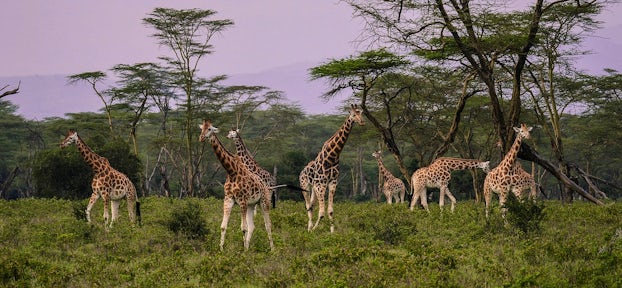
Lake Nakuru is an excellent addition to a private Kenya circuit through the Great Rift Valley.
The national park surrounds a soda lake and combines woodland, open grassland, rocky viewpoints and wetland habitat within a relatively compact area. It is particularly important for rhino conservation and gives travelers an opportunity to search for both black and white rhinos.
Buffaloes, giraffes, zebras, baboons and numerous antelope species are also present.
Flamingos still occur around the lake, although their concentrations can change significantly depending on water levels and feeding conditions. Travelers should therefore avoid planning the entire visit around expectations of enormous flamingo numbers.
Lake Nakuru works particularly well between Nairobi and the Masai Mara or when combined with nearby Lake Naivasha.
Lake Naivasha Safari Experiences
Lake Naivasha adds water-based scenery and a slower rhythm to a wildlife itinerary.
Instead of spending the entire journey inside a safari vehicle, travelers can take a boat excursion across the freshwater lake, observing hippos and numerous bird species while enjoying views toward the surrounding escarpment.
The wider Naivasha region also provides access to Hell’s Gate National Park and other Rift Valley attractions.
Including Naivasha can help balance an itinerary. After several intensive game-drive days, spending part of the afternoon beside the lake offers a welcome change of pace.
Private tours can schedule these experiences according to the group’s interests instead of squeezing them into a rigid program.
Samburu Private Safari
Northern Kenya introduces another side of the country.
Samburu National Reserve occupies a dry and striking landscape along the Ewaso Ng’iro River. Its environment feels very different from the greener plains of the Masai Mara, creating valuable contrast on longer Kenya itineraries.
Wildlife enthusiasts are particularly interested in several species associated with northern Kenya, including Grevy’s zebra, reticulated giraffe, gerenuk, Beisa oryx and Somali ostrich.
Elephants are another major attraction.
The river acts as an important source of water for wildlife, and watching elephants move along its banks can produce exceptional encounters.
Samburu is especially worthwhile for repeat safari visitors, serious photographers and travelers with enough time to move beyond Kenya’s most famous southern circuit.
Why Add Northern Kenya?
A longer safari should deliver variety, not simply more days seeing similar scenery.
Samburu accomplishes that extremely well.
The drier landscapes, distinctive wildlife and cultural character of northern Kenya change the mood of the journey. Pairing Samburu with Ol Pejeta, Lake Nakuru and the Masai Mara can produce one of Kenya’s most rewarding multi-region circuits.
Private arrangements are particularly useful because the route can be adjusted according to available time rather than forcing every traveler into the same standard package.
Ol Pejeta Conservancy
Ol Pejeta Conservancy is another strong addition for travelers interested in conservation and rhinos.
Located in central Kenya near the Mount Kenya region, the conservancy offers wildlife viewing while also providing opportunities to learn about conservation programs.
It fits naturally into itineraries traveling toward Samburu or returning south toward Nairobi.
The scenery is different again from the Mara and Amboseli, giving travelers another reason to include the destination on longer private journeys.
A skilled safari planner can combine Ol Pejeta with overnight stays around Mount Kenya, Laikipia or the northern reserves rather than treating it as an isolated stop.
Tsavo East and Tsavo West Private Safari
Together, Tsavo East and Tsavo West form one of Kenya’s great wilderness regions.
Travelers arriving from or continuing toward Mombasa and the Indian Ocean coast should pay particular attention to Tsavo because the parks can create a natural bridge between wildlife safari and beach holiday.
Tsavo East is famous for its expansive landscapes and red-colored elephants, whose appearance comes from the region’s distinctive soil. The enormous scale of the park gives visitors a sense of wilderness quite different from Kenya’s smaller protected areas.
Tsavo West has more varied terrain, volcanic features and dramatic scenery.
Rather than rushing through both parks, travelers with enough time should allow the route to breathe. Private travel makes it easier to choose lodge locations that reduce unnecessary backtracking.
Kenya Safari and Diani Beach Combination
One of Kenya’s greatest strengths is the ability to combine serious wildlife viewing with an Indian Ocean holiday.
After waking before sunrise for several consecutive game drives, a few days on the coast can feel particularly rewarding.
Diani Beach is one of the most popular choices. Its long white-sand coastline and warm Indian Ocean provide a completely different experience from the national parks.
Other coastal options can also be incorporated depending on the travel style, available flights and overall route.
An eight- to fourteen-day Kenya holiday can therefore include both safari and beach time without requiring international travel between the two experiences.
For honeymooners and couples, this combination is particularly attractive. The safari provides adventure and wildlife; the coast provides privacy, relaxation and a slower conclusion to the holiday.
Private Kenya Safari for Couples
Couples often benefit greatly from private travel because a safari can be planned around shared interests rather than a group timetable.
A romantic itinerary might include a smaller tented camp, private game-drive vehicle, scenic sundowner, bush breakfast and several nights at a beach resort after the wildlife portion.
The experience does not have to be ultra-luxury.
Excellent midrange safari lodges and tented camps can still provide memorable settings while the private vehicle delivers much of the flexibility that couples appreciate.
Honeymoon travelers should mention their trip occasion during the planning stage because lodges may provide special arrangements, room locations or private dining opportunities.
Kenya Private Safari for Families
Family safaris require different planning from adult-only journeys.
Long transfers, very early starts and full-day game drives can become tiring for younger travelers, while teenagers may enjoy an active itinerary but still need variety.
A private vehicle allows parents to control the pace much more effectively.
Game drives can be shortened when necessary. Longer stops can be made for meals or rest. Accommodation can be selected according to family-room availability, swimming pools, children’s activities and convenient park access.
Families should also consider the ages of children when choosing activities. Some properties and activities have minimum-age requirements for safety reasons.
The best family safari does not try to see the maximum number of destinations. It balances wildlife with comfort and enough downtime for everybody to enjoy the journey.
Private Kenya Safari for Photographers
Wildlife photographers are among the travelers who gain the most from a private vehicle.
Photography often demands patience.
Good light may appear only briefly. An animal may need time to move into a cleaner position. A predator could remain asleep for thirty minutes before suddenly becoming active.
On a shared safari, waiting can become difficult when other guests want to continue.
Private arrangements solve much of that problem.
The guide can position the vehicle according to light and animal movement while photographers can use the available seating space for equipment. Removing or leaving certain seats empty may sometimes create even more working room, depending on vehicle configuration.
Serious photographers should tell the tour operator about their equipment before arrival. Large telephoto lenses, beanbags, multiple camera bodies and charging requirements can affect vehicle and accommodation planning.
Birdwatching Safaris in Kenya
Kenya’s safari appeal extends far beyond the Big Five.
The country supports an exceptional diversity of birdlife across forests, lakes, grasslands, wetlands, dry northern landscapes and coastal habitats.
A dedicated birding itinerary therefore looks very different from a conventional wildlife safari.
Instead of racing between lion and elephant sightings, the guide may spend considerable time identifying smaller species, investigating wetland edges or stopping beside seemingly ordinary woodland.
Private tours are ideal for this purpose because birdwatching requires frequent unscheduled stops.
Travelers can combine areas such as the Rift Valley lakes, Samburu, the Masai Mara and other ecosystems to increase habitat diversity.
Luxury Kenya Safari Private Tours
Luxury in Kenya is about much more than an expensive room.
Location frequently matters more.
A beautifully designed camp inside or close to a prime wildlife area can reduce driving time and allow guests to enter good viewing areas during the most productive parts of the day.
High-end camps may also provide excellent guiding, spacious tents or suites, fine dining, private plunge pools, scenic decks and highly personalized service.
Fly-in safaris represent another level of luxury because domestic flights reduce long road transfers between distant destinations.
Guests can leave Nairobi from Wilson Airport and land close to safari camps in the Mara, Amboseli, Samburu and other regions.
For travelers with limited time and a larger budget, flying between wildlife areas can dramatically improve the pace of a safari.
Still, road travel should not automatically be dismissed. Driving reveals the changing Kenyan landscape and works extremely well on routes where the destinations connect logically.
The strongest itineraries often use a combination of road and air transport.
Midrange Kenya Private Safari
Private does not automatically mean expensive luxury.
Midrange safaris represent one of the strongest value categories for Kenya.
Travelers can stay in comfortable lodges or tented camps with private bathrooms, quality meals and good locations while allocating more of the budget toward a reliable private 4×4 and experienced guide.
This approach frequently produces a better safari experience than spending heavily on accommodation while compromising on transport or guiding.
A Kenya private safari can therefore be designed around a realistic budget without losing its essential advantages.
Accommodation standards can also be mixed. Travelers might choose comfortable midrange properties for most of the journey and upgrade for two or three nights in a particularly special location.
Budget Private Safari in Kenya
Travelers working with tighter budgets can still explore private options.
The largest fixed costs of a road safari often include the vehicle, guide and fuel. As more people share those costs within the same booking, the per-person price can become more attractive.
This makes private travel particularly interesting for families and groups of four to six people.
Accommodation can then be chosen from budget lodges, permanent camps and simpler tented properties while retaining the private vehicle.
Traveling during lower-demand periods may provide additional savings, depending on accommodation rates and seasonal pricing.
Reducing unnecessary destinations is another effective strategy.
A well-designed five-day trip focusing on two excellent wildlife areas can deliver considerably more value than trying to squeeze four parks into the same period.
How Much Does a Kenya Private Safari Cost?
There is no reliable single price for a private safari because several variables influence the final quotation.
Travel season matters. Accommodation category matters. Park and conservancy fees matter. The number of travelers sharing the vehicle can significantly affect the per-person cost. Domestic flights, special activities and private conservancy stays can increase the overall price further.
This is why extremely broad online statements about the “average price of a Kenya safari” should be treated cautiously.
A quotation for two people traveling privately in peak season and staying in luxury camps cannot reasonably be compared with a family of six using midrange lodges in a quieter month.
The best approach is to request a detailed quotation based on your actual dates.
A transparent safari proposal should identify the accommodation, meals, transportation, included game drives, park arrangements and major exclusions.
Travelers should compare what is included rather than comparing the final number alone.
What Makes Private Safari Prices Higher?
The vehicle is reserved for one booking instead of having its cost divided among unrelated passengers.
The same applies to the driver’s time, fuel and many logistical expenses.
This explains why a solo traveler or couple generally pays more per person for private arrangements than a group of four or six.
However, price differences sometimes narrow considerably once several friends or family members travel together.
Value also needs to be considered alongside price.
Spending thousands of dollars on flights, parks and accommodation only to experience the wildlife from an overcrowded vehicle may not represent the best use of the overall holiday budget.
For many travelers, the vehicle and guide are precisely where additional investment makes the greatest difference.
Best Time for Kenya Safari Private Tours
Kenya can be visited throughout the year, but the experience changes with rainfall, wildlife movement, visitor numbers and destination.
The dry periods are especially popular because vegetation can be thinner and animals often concentrate around dependable water sources.
July through October receives particularly strong interest because of generally favorable safari conditions and migration activity in the wider Mara ecosystem.
This is also a high-demand travel period, which means popular camps can fill early.
January and February can also deliver excellent wildlife viewing in many areas.
The greener months have their own advantages. Landscapes become lush, birdlife can be exceptional, photographic conditions are often beautiful and some lodges provide more attractive seasonal rates.
Rain does not necessarily mean continuous rainfall every day. Conditions vary by region and year.
The best month therefore depends on what you want most from the trip.
Great Migration Private Safari
The Great Migration is one of Africa’s most famous wildlife events, but it should be understood as an enormous continuous ecosystem movement rather than a performance scheduled for tourists.
Wildebeest and zebras move through the Serengeti-Mara ecosystem in response to grazing and rainfall patterns.
During part of the year, significant numbers can enter Kenya’s Masai Mara ecosystem. River crossings receive enormous attention because of their drama, but predicting the exact day and location of a crossing is impossible.
Travelers planning around migration season should therefore allow enough time in the region.
Three or four nights are usually more sensible than rushing through the Mara in a single full day.
A private vehicle provides additional flexibility because the guide can respond to current wildlife information and spend longer in promising areas.
Green Season Kenya Safaris
Travel outside peak season should not automatically be considered a compromise.
Green landscapes can transform photography, fewer safari vehicles may improve certain wildlife encounters, and some accommodation prices can become more favorable.
Migratory birds and young animals can add additional interest depending on the period and ecosystem.
Road conditions may become more challenging after heavy rainfall, making vehicle quality especially important.
A well-maintained 4×4 and an experienced driver become valuable parts of the safari rather than optional extras.
Travelers willing to accept some weather unpredictability can find the quieter seasons especially rewarding.
Kenya Safari from Nairobi
Nairobi is the main gateway for most Kenya safari circuits.
Jomo Kenyatta International Airport handles international arrivals, while Wilson Airport serves many domestic safari flights.
Depending on arrival time, travelers can spend their first night in Nairobi before beginning the safari the following morning.
Nairobi National Park also makes it possible to begin wildlife viewing surprisingly close to the capital.
Other attractions can be incorporated depending on interests and available time.
The important planning question is not simply where the safari begins, but whether the route after Nairobi makes geographical sense.
Current safari listings reinforce Nairobi’s role as the dominant starting point for Kenya itineraries, with road and air connections spreading from the capital toward the country’s major wildlife regions. Safari Bookings
Short Kenya Private Safari: 3 to 5 Days
Travelers with limited time should resist the temptation to cover too much ground.
A three-day journey generally works best when concentrating on one main safari destination.
The Masai Mara is a popular choice, while Amboseli can also work very well.
Adding more parks in such a short period usually creates excessive driving.
With four or five days, the options expand. Masai Mara can be paired with Lake Nakuru or Naivasha, while Amboseli can form part of a southern route.
The priority should remain meaningful wildlife-viewing time rather than collecting destination names.
Seven-Day Kenya Private Safari
Seven days provides substantially more flexibility.
A classic itinerary can connect Nairobi, Amboseli, Lake Naivasha or Lake Nakuru and the Masai Mara.
Another option could focus on Ol Pejeta, Samburu and the Rift Valley.
The right combination depends on wildlife priorities and travel season.
Seven days is long enough to experience changing landscapes without the journey becoming rushed, especially when lodge locations are selected carefully.
Travelers can also use a domestic flight for one sector when it meaningfully reduces travel time.
Ten-Day Kenya Private Safari
Ten days opens the door to a much deeper journey.
A traveler might combine Amboseli, the Rift Valley and the Masai Mara while allowing several nights in the most important wildlife areas.
Alternatively, the itinerary can travel north to Ol Pejeta and Samburu before turning toward the Mara.
Another possibility combines southern parks such as Amboseli and Tsavo with a coastal extension.
The advantage of having ten days is not that every day must contain a new destination.
The advantage is that travelers can slow down.
Two or three consecutive nights at a good camp often produce better memories than changing accommodation every morning.
Two-Week Kenya Safari
With approximately two weeks available, travelers can explore Kenya at a much more relaxed pace.
Northern and southern wildlife circuits can be combined, or several safari areas can be followed by Diani Beach.
A fourteen-day holiday might involve Nairobi, Ol Pejeta, Samburu, Lake Nakuru, Masai Mara and the coast, depending on transport choices.
Fly-in sectors become particularly useful if the itinerary covers geographically distant regions.
Travelers interested in a broader East African experience can instead use the additional time to continue toward Tanzania, Uganda or Rwanda.
Kenya and Tanzania Private Safari
Kenya and Tanzania form one of Africa’s great combined safari destinations.
The Masai Mara and Serengeti belong to the same wider ecosystem, making the two countries natural partners in a longer itinerary.
Tanzania adds the Serengeti, Ngorongoro Crater, Tarangire and other wildlife destinations.
A combined journey can therefore provide tremendous variety, but border arrangements, vehicle logistics and routing need to be planned carefully.
Travelers should avoid assuming that the same safari vehicle can always move seamlessly through every part of both countries.
An experienced East African tour operator can coordinate transfers, guides and border arrangements so that the transition becomes part of the itinerary rather than an inconvenience.
Kenya and Rwanda Safari
Combining Kenya with Rwanda creates an entirely different safari experience.
Kenya provides classic savanna game viewing, while Rwanda allows travelers to add mountain gorilla trekking in Volcanoes National Park.
This combination is especially attractive for visitors who want both the Big Five safari experience and encounters with primates.
International or regional flights connect the destinations, making it possible to build a journey that starts with the Masai Mara or Amboseli and finishes among the forested volcanic landscapes of Rwanda.
Akagera National Park can also be incorporated for travelers planning a more extensive Rwanda program, while Nyungwe provides chimpanzee trekking and forest experiences.
Universal Ventures Rwanda can help travelers combine these destinations into one coordinated East African itinerary rather than booking each country separately.
Kenya and Uganda Safari
Uganda adds another dimension to a Kenya journey.
Bwindi Impenetrable National Park and Mgahinga Gorilla National Park provide gorilla trekking, while Kibale is particularly famous for chimpanzee tracking.
Queen Elizabeth National Park, Murchison Falls National Park and other wildlife areas can expand the trip further.
A Kenya-Uganda itinerary is ideal for travelers who want to combine open savanna wildlife with tropical forests and primates.
The trip usually requires more time than a straightforward Kenya safari, so careful routing becomes important.
Regional flights can reduce long transfers and preserve more time for activities.
Kenya, Rwanda and Uganda Safari
Travelers with two or three weeks can create an outstanding East African safari by linking Kenya’s savannas with the forests of Rwanda and Uganda.
Such an itinerary could begin in Nairobi, continue through the Masai Mara, then use regional flights to reach Kigali or Entebbe.
From there, gorilla trekking, chimpanzee tracking and additional wildlife experiences can be incorporated.
These multi-country itineraries require more organization than a single-country holiday, but they can deliver extraordinary diversity.
Instead of repeating similar safari landscapes every day, guests experience open grasslands, Great Rift Valley scenery, tropical forests, volcanic mountains and completely different wildlife communities.
Why the Driver-Guide Matters
People sometimes spend weeks comparing lodges and very little time asking about their guide.
That can be a mistake.
A safari guide influences almost every wildlife experience.
Experienced guides understand animal behavior, recognize tracks, know productive wildlife areas and communicate with other professionals in the field. Equally important, they understand when to wait quietly.
Finding wildlife is only part of the job.
Positioning the vehicle responsibly, interpreting behavior, explaining ecology and maintaining safe distances can transform an ordinary sighting into an educational experience.
On long road transfers, the guide also becomes the traveler’s main point of contact.
Professionalism, communication skills, patience, driving ability and local knowledge therefore matter enormously.
Choosing the Right Safari Accommodation
A lodge should never be selected using photographs alone.
Location can determine how much time travelers spend reaching wildlife areas each morning.
A beautiful property positioned far outside the main game-viewing zone may require significant daily driving.
Conversely, an apparently simpler camp in an excellent location can deliver a much stronger safari.
Meal arrangements, room type, electricity, charging facilities, Wi-Fi, swimming pool, family accommodation and accessibility can also influence the decision.
Travelers should tell their tour operator what matters to them instead of assuming every highly rated lodge will fit their needs.
Tented Camps Versus Safari Lodges
Tented camps are one of the defining accommodation experiences of East African safari travel.
The term “tent” should not automatically suggest basic camping.
Permanent safari tents can contain full beds, ensuite bathrooms, electricity, private decks and elegant furnishings while still maintaining a strong connection with the surrounding wilderness.
Traditional safari lodges typically use more solid structures and may offer larger communal facilities.
Neither option is automatically better.
A couple might love the atmosphere of a small tented camp, while a family may prefer a lodge with a swimming pool and spacious interconnected rooms.
Many itineraries deliberately combine both.
Private Conservancies in Kenya
Travelers researching luxury or more exclusive safaris will frequently encounter the word “conservancy.”
Conservancies can complement visits to national parks and reserves by offering different approaches to tourism and land management.
Depending on the location, activities unavailable in certain national parks may be offered, including walking safaris and night drives.
Vehicle density can also be lower in some conservancy areas.
The best choice depends on budget, travel season and the desired style of safari.
A conservancy stay should not necessarily replace famous areas such as the Masai Mara National Reserve; combining different zones can produce a richer experience.
Morning Game Drives Versus Full-Day Safaris
There is no single daily schedule that works for every traveler.
Early morning is often productive because temperatures are cooler and many animals are active.
Late afternoon can also provide excellent sightings and attractive light.
Some guests therefore prefer morning and afternoon game drives with a lodge break around lunchtime.
Others choose full-day drives when exploring a large reserve or searching for particular wildlife.
A private safari makes both approaches possible.
The guide can discuss conditions each day and recommend a plan instead of rigidly following the same schedule throughout the entire journey.
Safari Photography Without Rushing
Modern travelers often arrive with excellent cameras and smartphones, but successful wildlife photography depends on more than equipment.
Light, distance, angle and patience are equally important.
Avoid pressuring guides to approach animals too closely.
Ethical wildlife viewing often produces better photographs because natural behavior continues when animals are not disturbed.
Morning and evening light creates particularly beautiful conditions across Kenya’s landscapes.
Dust, backlighting and storm clouds can sometimes create more dramatic photographs than perfectly clear skies.
Keeping a camera ready during road transfers is also worthwhile because memorable scenes often appear between major game-viewing stops.
Cultural Experiences During a Private Kenya Tour
Wildlife may be the primary reason for visiting Kenya, but the country cannot be understood through animals alone.
Cultural activities can add valuable context when they are arranged responsibly and communities genuinely benefit from tourism.
Travelers should look for experiences that encourage respectful interaction rather than turning culture into a rushed photo stop.
Private itineraries allow more time for these encounters because the day does not need to accommodate the schedule of a large group.
The same principle applies to local markets, food experiences and community-based tourism projects.
Quality matters more than the number of activities added to an itinerary.
Responsible Safari Travel
Wildlife tourism depends on healthy ecosystems.
Travelers therefore have an interest in choosing operators, guides and accommodation providers that respect park regulations and wildlife.
Vehicles should not harass animals simply to achieve a photograph.
Litter should never be left inside protected areas.
Guests should follow guide instructions and maintain appropriate behavior around wildlife.
Choosing conservancies and tourism businesses that support communities and conservation can also increase the positive impact of safari travel.
Responsible tourism does not need to reduce the quality of the experience. In many cases, it improves it.
Watching animals behave naturally from a respectful distance is far more rewarding than participating in a crowded pursuit of a stressed animal.
What to Pack for Kenya Safari Private Tours
Packing should prioritize comfort and practicality.
Neutral-colored lightweight clothing works well during game drives, while warmer layers are useful for early mornings and evenings. Kenya’s safari areas can feel surprisingly cool before sunrise, especially at altitude.
Comfortable closed shoes are useful even when the itinerary contains little walking.
Sun protection is essential, including a hat, sunglasses and sunscreen.
A small day bag can hold binoculars, camera equipment, medication and personal items required during game drives.
Travelers should also carry charging equipment and consider backup power for cameras and phones.
Baggage restrictions deserve particular attention when domestic safari flights are included because smaller aircraft may impose stricter luggage limits than international airlines.
Health and Travel Preparation
Travelers should discuss personal health requirements with an appropriate medical professional well before departure.
Recommendations can depend on the areas being visited, length of stay, travel history and individual health circumstances.
Travel insurance is strongly recommended for an international safari.
A comprehensive policy should be reviewed carefully to understand medical coverage, cancellation protection and any activity exclusions.
Passport validity and entry requirements should also be checked using current official information before departure because travel rules can change.
Do not rely exclusively on an old blog article for immigration or medical requirements.
Kenya Electronic Travel Authorization
International visitors should check Kenya’s current official entry requirements before traveling.
Immigration procedures can change, and eligibility may differ according to nationality and circumstances.
Applications should be made through official government channels rather than unofficial websites that may charge unnecessary service fees.
Your safari company can explain the travel logistics, but travelers remain responsible for ensuring their passports and entry documentation meet current requirements.
Checking again shortly before departure is sensible.
How Far in Advance Should You Book?
Popular safari camps have limited rooms, and good properties can sell out well ahead of peak travel dates.
Travelers planning to visit the Masai Mara during high-demand migration months should therefore begin early, particularly when they want specific camps.
Families requiring multiple rooms or travelers seeking specialized accommodation should also allow extra time.
Outside peak periods, availability may be more flexible, but early planning still creates more choice.
Booking early is particularly important when domestic flights are part of the itinerary.
The goal is not simply to secure “a lodge.” It is to secure accommodation that fits the route, budget and travel style.
Avoid Building an Overloaded Kenya Itinerary
One of the most common safari-planning mistakes is adding too many destinations.
Kenya looks compact on a map, but road journeys take time.
Wildlife viewing also takes time.
Spending one night in every destination usually means arriving late, unpacking, sleeping, completing one short activity and immediately leaving again.
A private safari should use its flexibility to improve the experience, not to create an exhausting race across the country.
Three nights in an outstanding wildlife destination can be more rewarding than three different one-night stops.
When reviewing a proposed itinerary, count how many full mornings and afternoons will actually be spent inside wildlife areas.
That figure often tells you more than the total number of safari days.
Road Safari or Fly-In Safari?
Both can be excellent.
Road safaris provide continuity. Travelers see towns, farms, escarpments and changing landscapes between wildlife areas. The same guide can often remain with the group for a significant portion of the journey.
They can also provide better value, particularly for families and small groups.
Flying saves time.
A transfer that consumes much of a day by road might be replaced by a relatively short domestic flight.
Fly-in safaris work especially well for travelers with limited vacation time or those staying at remote luxury camps.
The best solution sometimes combines the two.
Travel by road through geographically connected areas and fly when the next destination is far away.
Kenya Safari With Children
A child’s first sighting of an elephant, giraffe or lion can become a lifelong memory, but successful family safaris require realistic expectations.
Children may not want to sit quietly inside a vehicle for eight hours.
Properties with swimming pools and flexible meal arrangements can make an enormous difference.
Parents should also consider room layout carefully.
Family tents, interconnected rooms and appropriately located accommodation can make evenings easier and safer.
Private vehicles allow families to return to camp earlier if children become tired.
That flexibility alone can justify choosing a private safari over a shared departure.
Safari for Senior Travelers
Kenya can also be an excellent destination for older travelers when the journey is planned carefully.
The most important considerations include vehicle access, transfer lengths, walking requirements and accommodation design.
Some tented camps may have long paths, steps or uneven ground between rooms and common areas.
Travelers with mobility concerns should mention them during the planning process rather than after accommodation has been confirmed.
Fly-in options can significantly reduce long road journeys.
Private vehicles also allow more frequent comfort stops and a gentler daily pace.
Solo Private Safari in Kenya
Solo travelers can book private safaris as well.
The main challenge is cost because vehicle and guiding expenses are not divided between multiple passengers.
However, travelers who prioritize privacy, photography or complete control over the itinerary may find the additional expense worthwhile.
A mixed approach is another possibility.
The traveler might use private transfers between destinations while joining camp-operated game drives in certain conservancies.
Discussing priorities clearly allows a tour operator to identify where paying for exclusivity provides the greatest benefit.
Choosing Between Private and Group Safaris
Neither option is universally better.
Group travel can be excellent for budget-conscious solo travelers who enjoy meeting other people and do not mind following predetermined schedules.
Private travel is stronger for families, couples, photographers, small groups and travelers who place a high value on flexibility.
The decision should therefore be based on how you want to travel.
If controlling game-drive length, departure times and wildlife priorities matters to you, a Kenya private safari is likely to justify the additional investment.
Questions to Ask Before Booking
Before paying a deposit, establish exactly what the quotation includes.
Confirm whether the vehicle is completely private, which vehicle type will be supplied, whether park fees are included, the exact accommodation and room categories, meal arrangements, airport transfers and any domestic flights.
Ask whether drinking water is provided during game drives.
Understand cancellation conditions and payment schedules.
Check whether optional activities must be booked in advance.
Most importantly, review the daily itinerary carefully.
If several days contain extremely long drives immediately followed by major activities, ask whether the route can be improved.
A professional operator should be able to explain why each destination and overnight stop has been chosen.
Why Customized Safari Planning Matters
Two travelers can visit exactly the same parks and return home with completely different impressions.
The difference often comes from itinerary design.
A photographer may benefit from three nights in the Mara and fewer destinations overall.
A honeymoon couple might prefer a combination of wildlife and beach relaxation.
A family may need swimming pools and short transfers.
Experienced safari travelers could prioritize Samburu, Laikipia or conservancies instead of repeating the most famous circuit.
Customization therefore involves much more than choosing hotel categories.
It means understanding the purpose of the journey and designing the route around it.
Kenya Safari Private Tours for First-Time Visitors
First-time visitors usually want to experience Kenya’s signature landscapes and major wildlife without making the itinerary unnecessarily complicated.
A route incorporating Amboseli, a Rift Valley destination and the Masai Mara works extremely well when enough days are available.
Amboseli introduces elephants and Kilimanjaro scenery.
The Rift Valley changes the landscape and adds lakes, rhinos or water-based activities depending on the stop.
Masai Mara provides the grand finale with outstanding predator viewing and sweeping savanna.
Seven to ten safari days allows this route to develop at a comfortable pace.
Travelers with additional time can add Samburu, Ol Pejeta or a beach extension.
Private Safari for Returning Kenya Visitors
Repeat visitors should consider moving beyond the standard highlights.
Northern Kenya, private conservancies, remote camps, specialized photography safaris and longer stays in one ecosystem can reveal a completely different side of the country.
Returning travelers may also choose a slower safari.
Rather than photographing every major animal again, the focus can shift toward behavior, birds, landscapes, conservation and interactions between species.
Private travel becomes particularly valuable at this stage because the itinerary can be built around very specific interests.
A Better Way to Plan Your Safari
Start with your available number of days rather than a list of parks.
Next, identify your main priorities.
Perhaps you want predators and photography. Maybe elephants are essential. Some travelers want migration season; others prioritize fewer vehicles and quieter camps. Families may value comfort, while honeymooners could want a beach extension.
Accommodation should come after the route begins taking shape.
This prevents the common mistake of selecting famous lodges and then constructing an inefficient itinerary simply to connect them.
Once the route, transport method and accommodation level are clear, the final quotation becomes far more meaningful.
Why Combine Kenya With the Rest of East Africa?
Kenya is exceptional as a standalone destination, but its location also makes it one of the strongest starting points for a larger East African journey.
Tanzania extends the classic savanna experience.
Uganda introduces mountain gorillas, chimpanzees and lush tropical landscapes.
Rwanda combines exceptional gorilla trekking with efficient travel distances and additional wildlife opportunities.
The result can be a journey containing some of Africa’s most distinctive wildlife experiences within a single holiday.
Universal Ventures Rwanda specializes in tailor-made East African travel and can coordinate Kenya with Rwanda, Uganda and neighboring destinations according to the client’s schedule and interests.
Booking Kenya Safari Private Tours With Universal Ventures Rwanda
A successful safari begins long before the first game drive.
Route planning, accommodation selection, transport, park arrangements and cross-border connections all need to work together.
Universal Ventures Rwanda designs private East African safari itineraries for couples, families, friends and small groups. Kenya journeys can be organized as standalone safaris or combined with Rwanda and Uganda for gorilla trekking, chimpanzee tracking and additional wildlife experiences.
Instead of forcing every traveler into the same itinerary, the trip can be designed according to available days, accommodation preference, budget and wildlife priorities.
Travelers looking for midrange safaris can receive comfortable lodge and tented-camp options. Luxury journeys can incorporate premium camps and domestic flights, while families and groups can focus on practical routes that maximize the value of a private safari vehicle.
Frequently Asked Questions About Kenya Safari Private Tours
What is a private safari in Kenya?
A private safari means your traveling party normally has its own safari vehicle and driver-guide rather than sharing with unrelated guests. Accommodation may still be shared with other lodge guests, but your transportation and safari program are arranged for your booking.
Are Kenya Safari Private Tours worth it?
For couples, families, photographers and small groups, private safaris can provide excellent value because they offer greater control over wildlife viewing, departure times, comfort and itinerary pace.
What is the best Kenya safari destination?
Masai Mara is often the strongest all-round choice for first-time visitors because of its excellent wildlife diversity and predators. Amboseli is especially strong for elephants and Kilimanjaro scenery, while Samburu offers distinctive northern wildlife and landscapes.
How many days do I need for a Kenya safari?
Five days can provide an excellent short safari, while seven to ten days allows travelers to combine several major wildlife areas at a more comfortable pace. Around two weeks makes it easier to add northern Kenya or a beach stay.
Can I have my own safari vehicle?
Yes. A genuine private road safari can provide a dedicated safari vehicle for your party. Confirm this explicitly with your operator before booking.
Is a Land Cruiser better for a Kenya safari?
A 4×4 Land Cruiser is an excellent choice for private safaris, particularly on rougher roads and routes where road conditions may be challenging. The pop-up roof also provides good visibility during game drives.
Can Kenya Safari Private Tours start from Nairobi?
Yes. Nairobi is the main starting point for many Kenya road safaris and is also connected to major safari regions through domestic flights from Wilson Airport.
Can I combine Masai Mara and Amboseli?
Yes. They are one of Kenya’s strongest combinations because they offer very different scenery and wildlife experiences. Allow enough days to avoid turning the journey into a rushed road trip.
Can I combine Kenya safari with Diani Beach?
Yes. Bush-and-beach itineraries are extremely popular. Travelers can enjoy several days of wildlife viewing before finishing the holiday on Kenya’s Indian Ocean coast.
Can Kenya be combined with gorilla trekking?
Absolutely. Kenya can be combined with Rwanda or Uganda, allowing travelers to experience savanna wildlife followed by mountain gorilla trekking.
Is a Kenya private safari suitable for children?
Yes, provided the itinerary is designed around children’s ages. Private vehicles are particularly helpful because game drives and rest periods can be adapted to the family’s needs.
What is the best time for the Great Migration in Kenya?
Migration activity in the Masai Mara is commonly associated with the middle and later part of the year, but wildlife movements depend on rainfall and natural conditions. Exact crossings can never be guaranteed.
Should I book a road safari or flying safari?
Road safaris usually provide better value and allow travelers to experience more of the country between parks. Flying safaris reduce transfer time and can be ideal for luxury journeys or short holidays. Combining both can sometimes produce the best itinerary.
How early should I book?
For peak-season travel and popular Masai Mara camps, booking well in advance is advisable. Travelers needing multiple rooms, family accommodation or particular luxury camps should also start planning early.
Can my safari be customized?
Yes. Customization is one of the main advantages of private travel. Parks, accommodation category, number of nights, activities, transportation and extensions can all be adjusted around your priorities.
Start Planning Your Kenya Private Safari
Kenya is not a destination that needs to be rushed.
A lion hunt unfolding across the Mara plains, elephants crossing Amboseli beneath Kilimanjaro, rhinos moving through Lake Nakuru, specialized wildlife in Samburu and the quiet of an evening beside a tented camp are experiences that deserve time.
That is where Kenya Safari Private Tours have their greatest advantage.
Your safari can move according to your interests instead of someone else’s timetable. The vehicle becomes your own wildlife-viewing platform, the guide can concentrate on your priorities, and the route can be designed around the experiences you genuinely want.
Whether your plan is a three-day Masai Mara escape, a seven-day classic Kenya circuit, a two-week safari and beach holiday or a longer East African adventure combining Kenya with Rwanda and Uganda, thoughtful private planning can transform the trip.
Plan Your Safari With Universal Ventures Rwanda
Universal Ventures Rwanda Ltd
Kigali, Rwanda
Email: info@universalventuresrwanda.com
Tel/WhatsApp: +250 781 441 853
Website: universalventuresrwanda.com


